
Motmot

Rostschnäpper vs Zimtkehlschnäpper

Muscicapa ferruginea gegen Ficedula strophiata

Ein Quiz mit Rostschnäpper und Zimtkehlschnäpper spielen
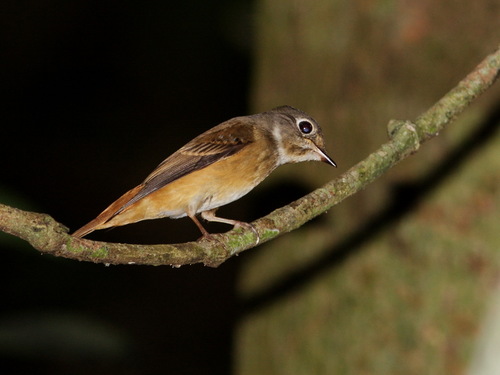
Rostschnäpper (Muscicapa ferruginea) Rostschnäpper
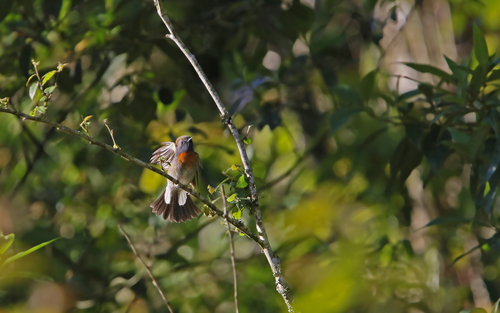
Zimtkehlschnäpper (Ficedula strophiata) Zimtkehlschnäpper

Medien

Laden…

Kurz gesagt

The most reliable field separation between Ferruginous Flycatcher and Rufous-gorgeted Flycatcher is the presence of a distinct rufous throat patch (gorget) on the adult male Rufous-gorgeted, which Ferruginous never shows. Both species are small, similar in size and shape, and overlap in montane forest habitats, but careful attention to throat and breast coloration, especially in perched birds, is key. Juvenile and immature plumages can be confusing, so look for subtle differences in overall coloration and throat pattern. Structure and size are not helpful for separation, as both are nearly identical in mass and proportions.

Bestimmungstipps

  1. **Adult male Rufous-gorgeted Flycatcher has a bright rufous-orange throat patch (gorget) bordered by gray—this is the single best field mark and never shown by Ferruginous Flycatcher.
  2. Ferruginous Flycatcher of all ages and sexes lacks a defined gorget; instead, it is warm rufous-brown above and below, with a more uniform appearance.
  3. Female and immature Rufous-gorgeted Flycatchers lack the bright gorget but may show a pale or whitish throat, which is usually sharply demarcated from the darker breast—Ferruginous is more evenly colored.
  4. Juvenile Ferruginous Flycatcher is overall rufous-brown, including the underparts, while juvenile Rufous-gorgeted is colder gray-brown above and paler below, sometimes with a pale throat.
  5. In poor light, Ferruginous can appear more orange-brown overall, while Rufous-gorgeted (especially females/immatures) often looks grayer or colder-toned.
  6. No strong wing pattern or flight marks are described for either species, so do not rely on upperwing panels or trailing edges for separation.
  7. Both species are small, short-billed, and similar in shape—do not attempt to separate by structure, size, or jizz.
  8. Both species flick their tails and sally for insects in similar fashion; behavior is not a separator.
  9. If seen in the Himalayas or southern China in montane forest, both are possible—use plumage, not location, for ID.
  10. In Southeast Asia (Hainan and further south), Ferruginous is more likely in winter, but Rufous-gorgeted can also occur in northern Indochina.
  11. If you see a bird with a uniform rufous-brown back, wings, and underparts, with no sharp throat patch, Ferruginous is likely.
  12. If you see a bird with a sharply defined rufous throat patch and gray face/breast, it is Rufous-gorgeted (adult male only).
  13. In ambiguous cases (immatures, dull females), look for subtle differences in throat contrast: Ferruginous is more uniform, Rufous-gorgeted more sharply demarcated.
  14. Vocalizations are not described here; do not rely on call or song for separation without further reference.
  15. When in doubt, prioritize clear views of the throat and breast, as this is the most consistent separator in the field.

Größe

Both Ferruginous Flycatcher (12.9g) and Rufous-gorgeted Flycatcher (12.5g) are very similar in body mass, and there are no reliable differences in overall size or proportions that can be used in the field. Bill, tail, and wing lengths are not distinctive between these two species based on available data. Do not rely on size or jizz alone for separation.

Gefieder

Adult male Rufous-gorgeted Flycatcher is easily told by its bright rufous-orange throat patch (gorget), which is sharply demarcated from the gray breast and face—this is absent in Ferruginous Flycatcher of any age or sex. Ferruginous Flycatcher is overall warm rufous-brown above and below, with no sharply defined throat patch; the underparts are more uniformly colored, sometimes with a faint paler belly. In both species, females and immatures are duller, but Ferruginous retains a more uniform rufous-brown tone, while Rufous-gorgeted females/immatures can show a pale throat but never a clear rufous gorget. Juvenile and first-winter birds of both species may lack strong color contrasts, but Ferruginous tends to be more consistently rufous-toned throughout, while Rufous-gorgeted is colder gray-brown above with a paler, sometimes whitish, throat. There are no distinctive upperwing or flight marks described for either species in these sources.

Verhalten

Both species are typical small flycatchers, sallying from low to mid-level perches in the forest, making behavior alone unreliable for separation. Both may flick their tails and wings, but there are no described behavioral differences that are diagnostic in the field.

Lebensraum

Both species occur in subtropical or tropical moist montane forests, often in overlapping ranges in the Himalayas and southern/central China. Rufous-gorgeted Flycatcher extends further into northern Indochina and eastern Vietnam, but habitat preferences are very similar, so context is not a strong separator unless outside the core overlap zone.

Eine bessere Beschreibung senden

Nutze dieselben Abschnitte wie der Vergleich. Dein Text ist sofort veröffentlicht.

The most reliable field separation between Ferruginous Flycatcher and Rufous-gorgeted Flycatcher is the presence of a distinct rufous throat patch (gorget) on the adult male Rufous-gorgeted, which Ferruginous never shows. Both species are small, similar in size and shape, and overlap in montane forest habitats, but careful attention to throat and breast coloration, especially in perched birds, is key. Juvenile and immature plumages can be confusing, so look for subtle differences in overall coloration and throat pattern. Structure and size are not helpful for separation, as both are nearly identical in mass and proportions.

  1. **Adult male Rufous-gorgeted Flycatcher has a bright rufous-orange throat patch (gorget) bordered by gray—this is the single best field mark and never shown by Ferruginous Flycatcher.
  2. Ferruginous Flycatcher of all ages and sexes lacks a defined gorget; instead, it is warm rufous-brown above and below, with a more uniform appearance.
  3. Female and immature Rufous-gorgeted Flycatchers lack the bright gorget but may show a pale or whitish throat, which is usually sharply demarcated from the darker breast—Ferruginous is more evenly colored.
  4. Juvenile Ferruginous Flycatcher is overall rufous-brown, including the underparts, while juvenile Rufous-gorgeted is colder gray-brown above and paler below, sometimes with a pale throat.
  5. In poor light, Ferruginous can appear more orange-brown overall, while Rufous-gorgeted (especially females/immatures) often looks grayer or colder-toned.
  6. No strong wing pattern or flight marks are described for either species, so do not rely on upperwing panels or trailing edges for separation.
  7. Both species are small, short-billed, and similar in shape—do not attempt to separate by structure, size, or jizz.
  8. Both species flick their tails and sally for insects in similar fashion; behavior is not a separator.
  9. If seen in the Himalayas or southern China in montane forest, both are possible—use plumage, not location, for ID.
  10. In Southeast Asia (Hainan and further south), Ferruginous is more likely in winter, but Rufous-gorgeted can also occur in northern Indochina.
  11. If you see a bird with a uniform rufous-brown back, wings, and underparts, with no sharp throat patch, Ferruginous is likely.
  12. If you see a bird with a sharply defined rufous throat patch and gray face/breast, it is Rufous-gorgeted (adult male only).
  13. In ambiguous cases (immatures, dull females), look for subtle differences in throat contrast: Ferruginous is more uniform, Rufous-gorgeted more sharply demarcated.
  14. Vocalizations are not described here; do not rely on call or song for separation without further reference.
  15. When in doubt, prioritize clear views of the throat and breast, as this is the most consistent separator in the field.

Both Ferruginous Flycatcher (12.9g) and Rufous-gorgeted Flycatcher (12.5g) are very similar in body mass, and there are no reliable differences in overall size or proportions that can be used in the field. Bill, tail, and wing lengths are not distinctive between these two species based on available data. Do not rely on size or jizz alone for separation.

Adult male Rufous-gorgeted Flycatcher is easily told by its bright rufous-orange throat patch (gorget), which is sharply demarcated from the gray breast and face—this is absent in Ferruginous Flycatcher of any age or sex. Ferruginous Flycatcher is overall warm rufous-brown above and below, with no sharply defined throat patch; the underparts are more uniformly colored, sometimes with a faint paler belly. In both species, females and immatures are duller, but Ferruginous retains a more uniform rufous-brown tone, while Rufous-gorgeted females/immatures can show a pale throat but never a clear rufous gorget. Juvenile and first-winter birds of both species may lack strong color contrasts, but Ferruginous tends to be more consistently rufous-toned throughout, while Rufous-gorgeted is colder gray-brown above with a paler, sometimes whitish, throat. There are no distinctive upperwing or flight marks described for either species in these sources.

Both species are typical small flycatchers, sallying from low to mid-level perches in the forest, making behavior alone unreliable for separation. Both may flick their tails and wings, but there are no described behavioral differences that are diagnostic in the field.

Both species occur in subtropical or tropical moist montane forests, often in overlapping ranges in the Himalayas and southern/central China. Rufous-gorgeted Flycatcher extends further into northern Indochina and eastern Vietnam, but habitat preferences are very similar, so context is not a strong separator unless outside the core overlap zone.

Änderungen verwerfen?

Du hast ungespeicherte Änderungen. Wenn du jetzt gehst, gehen sie verloren.

Rostschnäpper · Zimtkehlschnäpper · Meine schwierigen Vögel