

Rostflankentapaculo vs Rußtapaculo
Eugralla paradoxa gegen Scytalopus fuscus
Ein Quiz mit Rostflankentapaculo und Rußtapaculo spielen
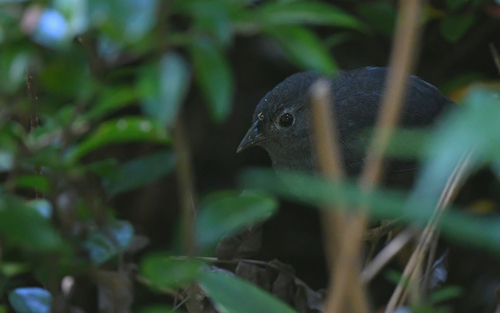 Rostflankentapaculo
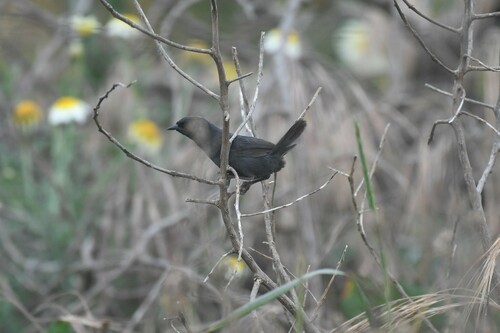 Rußtapaculo
Kurz gesagt
The most reliable field mark to separate Ochre-flanked Tapaculo from Dusky Tapaculo is the presence of ochre or tawny brown flanks and clay-brown lower underparts in the Ochre-flanked, which contrast with the overall dusky gray tones of Dusky Tapaculo. Juvenile Ochre-flanked Tapaculo is distinctly barred cinnamon/rufous over dusky gray, a pattern not seen in Dusky Tapaculo. Structurally, Ochre-flanked Tapaculo is slightly larger and has a unique 'Roman nose' profile, which can help in perched views. Both species are small, secretive tapaculos, but careful attention to flank color and underpart pattern is key.
Bestimmungstipps
- Juvenile barring: Juvenile Ochre-flanked Tapaculo is heavily barred cinnamon or rufous over dusky gray, especially on the underparts and flanks. If you see a barred tapaculo in this region, it is Ochre-flanked; Dusky Tapaculo juveniles are not barred.
- Flank color in adults: Adult Ochre-flanked Tapaculo has distinct ochre or tawny brown flanks, contrasting with its otherwise gray plumage. Dusky Tapaculo lacks this color and is more uniformly dusky gray.
- Abdomen and vent color: Ochre-flanked Tapaculo shows a clay-brown or brownish lower belly and vent, while Dusky Tapaculo remains gray throughout.
- Facial profile: Ochre-flanked Tapaculo has a unique 'Roman nose'—a straight, prominent facial profile—unusual among tapaculos. This can be a subtle but useful structural clue when seen well.
- Overall color impression: Dusky Tapaculo is more uniformly dark gray or dusky, with little contrast between upperparts, flanks, and underparts. Ochre-flanked Tapaculo always shows a two-tone effect with paler underparts and ochre flanks.
- Size and bulk: Ochre-flanked Tapaculo is slightly larger and bulkier, but this is a subtle distinction and not always reliable in the field unless seen side by side.
- Head shape: The head of Ochre-flanked Tapaculo appears more prominent and sloped due to the 'Roman nose,' while Dusky Tapaculo's head is more rounded and typical for the genus.
- Flight views: No distinctive upperwing or flight pattern marks are described for either species, so rely on body color and structure in brief flight glimpses.
- Habitat overlap: Both species can occur in similar dense undergrowth in south-central Chile. Do not rely on habitat alone for separation in areas of overlap.
- Voice: No diagnostic vocal differences are provided in the available notes, but in practice, tapaculo species often separate best by song—consult local recordings if possible.
- Season and age: The barred juvenile pattern is only present in Ochre-flanked Tapaculo and is most useful in late summer and autumn when juveniles are out of the nest.
- Sex differences: No strong sexual dimorphism is reported for either species, so all field marks apply to both sexes.
- Pitfalls: Poor light or brief views can make the ochre flanks of Ochre-flanked Tapaculo appear grayish, so try to confirm with multiple views or look for the clay-brown vent area.
- Direct comparison: If you see both species together, focus on the contrast between the ochre-brown flanks and vent of Ochre-flanked versus the uniform gray of Dusky Tapaculo.
- When in doubt: If you cannot see the flanks or vent clearly, and the bird is not a barred juvenile, identification may remain uncertain without voice or direct comparison.
Größe
Ochre-flanked Tapaculo is slightly larger, with an average body mass of 34.5 g [wikidata], and a length of about 14.5 cm. Dusky Tapaculo's mass is not specified in the available sources, but it is generally considered slightly smaller and more compact. In the field, this size difference is subtle and not always reliable, but Ochre-flanked may appear a bit bulkier, especially in direct comparison.
Gefieder
- Juvenile Ochre-flanked Tapaculo is barred throughout with cinnamon to rufous over dusky gray, a unique feature among tapaculos in the region. This bold barring is absent in Dusky Tapaculo juveniles, which are more uniformly dusky or grayish without strong barring.
- Adult Ochre-flanked Tapaculo shows dark gray upperparts, paler gray breast, and a clay-brown abdomen and vent, with distinct tawny brown (ochre) flanks. Dusky Tapaculo adults are much more uniformly dusky gray overall, lacking the ochre or clay-brown tones on the flanks and belly.
- The face of Ochre-flanked Tapaculo is notable for its 'Roman nose' profile, which is unusual among tapaculos and may be visible in good views. Dusky Tapaculo has a more typical tapaculo head shape.
- No distinctive upperwing or flight pattern differences are described for either species, so separation in flight relies on overall color impression and structure.
Verhalten
Both species are secretive, ground-dwelling birds that skulk in dense undergrowth. There is no diagnostic behavioral difference described in the available sources. Both are likely to be detected by movement in the underbrush or by voice rather than by open activity.
Lebensraum
Ochre-flanked Tapaculo is found in south-central Chile and adjacent western Argentina, while Dusky Tapaculo is endemic to Chile. Both inhabit dense forest undergrowth, but Ochre-flanked may be found slightly further south and into Argentina. In areas of overlap, habitat is not a reliable separator.