
Charrán Común vs Charrán Bengalí
Sterna hirundo frente a Thalasseus bengalensis
Juega un quiz con Charrán Común y Charrán Bengalí
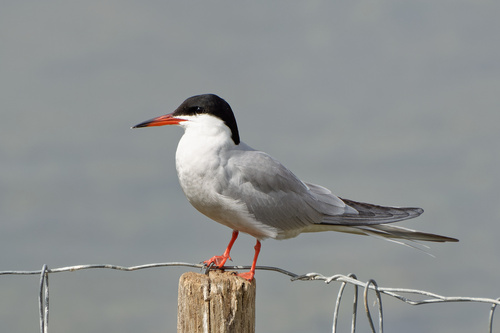 Charrán Común
 Charrán Bengalí
En breve
La marca de campo más confiable para separar el Charrán Común del Charrán Bengalí es el color del pico y las patas en los adultos: el Charrán Común muestra un pico delgado de color naranja-rojo con una punta negra y patas de color rojo brillante, mientras que el Charrán Bengalí tiene un pico largo y afilado, completamente naranja, y patas negras. En vuelo, el Charrán Común (especialmente los adultos) a menudo muestra una cuña oscura en el ala superior y un efecto más translúcido restringido a las primarias más internas, mientras que el Charrán Bengalí tiene alas superiores uniformemente grises con primarias oscurecidas en verano y un rabadilla gris. El Charrán Común juvenil y el Charrán Bengalí son bastante diferentes, siendo el primero más distintivo en los patrones de las alas superiores y terciarias. Estructuralmente, el Charrán Bengalí es más robusto, con una cabeza más pesada y un pico más largo y parecido a un puñal. Ambas especies pueden ocurrir en hábitats costeros, pero el Charrán Bengalí es más estrictamente marino y colonial.
Consejos de identificación
- Color y Forma del Pico (Adulto): El Charrán Común tiene un pico delgado de color naranja-rojo con una punta negra; el Charrán Bengalí tiene un pico largo, afilado y completamente naranja. Esta es la marca más confiable en los adultos.
- Color de las Patas (Adulto): El Charrán Común muestra patas de color rojo brillante; el Charrán Bengalí tiene patas negras. Verifica el color de las patas cuando los pájaros están posados o de pie.
- Patrón de las Alas Superiores Juveniles: El Charrán Común juvenil tiene barras oscuras fuertes en las terciarias, visibles en el ala cerrada y en vuelo. El Charrán Bengalí juvenil es más pálido, con solo débiles medias lunas oscuras en el manto y sin fuertes barras en las alas superiores.
- Color de la Rabadilla en Vuelo: El Charrán Bengalí siempre tiene una rabadilla gris; el Charrán Común tiene una rabadilla blanca en plumaje de cría, a veces grisácea en no cría.
- Translucidez de las Primarias (Adulto): En luz brillante, solo las cuatro primarias más internas del Charrán Común son translúcidas, mientras que el ala superior del Charrán Bengalí es más uniformemente gris con primarias oscurecidas en verano.
- Cuña en el Ala: El Charrán Común desarrolla una cuña oscura en el ala superior a medida que avanza la temporada de cría; el Charrán Bengalí no muestra esta característica.
- Forma de la Cola: Ambas especies tienen colas ahorquilladas, pero las plumas centrales de la cola del Charrán Bengalí son grises y no tan largas o profundamente ahorquilladas como algunas otras gaviotas; la cola del Charrán Común es más uniformemente blanca.
- Estructura de la Cabeza y el Cuello: El Charrán Bengalí parece más robusto, con una cabeza más pesada y un pico más largo y parecido a un puñal. El Charrán Común es más delicado, con una cabeza más pequeña y un pico más fino.
- Longitud de las Patas: El Charrán Común tiene patas más largas en relación con el tamaño del cuerpo, pero esto es sutil y se utiliza mejor en comparación directa.
- Estilo de Vuelo: El Charrán Común tiene alas más triangulares y rígidas y un vuelo más ágil y ligero. El Charrán Bengalí vuela con aleteos más pesados y directos.
- Contexto del Hábitat: Si se observa en el interior, es mucho más probable que sea el Charrán Común. El Charrán Bengalí es casi siempre costero o marino.
- Estacionalidad del Plumaje: En plumaje de no cría, ambas especies desarrollan una frente blanca, pero el color del pico y las patas siguen siendo diagnósticos.
- Densidad de la Colonia: El Charrán Bengalí cría en colonias muy densas, a menudo con otros charranes Thalasseus; las colonias del Charrán Común son menos densas y más variadas en ubicación.
- Vocalización: Si se escucha, el Charrán Bengalí emite un llamado fuerte y chirriante similar al Charrán Patinegro, pero esto no siempre es confiable para la separación del Charrán Común.
- Trampas: No confíes únicamente en el tamaño general o la apariencia general de 'charrán'; concéntrate en el color del pico y las patas, el patrón del ala superior (especialmente en juveniles) y el contexto del hábitat para la separación más confiable.
Tamaño
El Charrán Bengalí es notablemente más pesado (masa corporal promedio ~209 g) y más largo (35–43 cm de longitud, 88–105 cm de envergadura) que el Charrán Común, que es más pequeño y más liviano (no se proporciona masa directa, pero el Charrán Común es claramente más ligero y más delicado en el campo). El Charrán Bengalí parece más robusto, con una cabeza más pesada y un pico más largo. En comparación directa, el Charrán Común es más aerodinámico y compacto, con patas más cortas y un pico más fino.
Plumaje
-
Juvenil/Inmaduro: El Charrán Común juvenil muestra barras oscuras distintivas en las terciarias, que son obvias tanto en el ala cerrada como en vuelo; esto no está presente en los juveniles del Charrán Bengalí. El Charrán Bengalí juvenil es más pálido en general, con solo débiles medias lunas oscuras en las plumas del manto y un pico amarillo-naranja, careciendo del fuerte patrón de las alas superiores de los juveniles del Charrán Común.
-
Adulto en Cría: Los adultos del Charrán Común tienen una capucha negra, un pico naranja-rojo con una punta negra y patas de color rojo brillante. Las alas superiores son de color gris pálido con una cuña oscura que se desarrolla a medida que avanza la temporada de cría, y solo las cuatro primarias más internas son translúcidas. Los adultos del Charrán Bengalí tienen una capucha negra completa, un pico largo y afilado de color naranja y patas negras. Sus alas superiores, rabadilla y plumas centrales de la cola son grises, y las partes inferiores son blancas; las plumas de vuelo primarias se oscurecen en verano, y la rabadilla es gris (no blanca como en el Charrán Común).
-
Adulto en No Cría: Ambas especies desarrollan una frente blanca, pero el Charrán Común puede mostrar una rabadilla grisácea, mientras que el Charrán Bengalí siempre tiene una rabadilla gris. El color del pico sigue siendo una diferencia clave: el Charrán Común retiene algo de negro en la punta del pico, el Charrán Bengalí no.
Comportamiento
El Charrán Bengalí típicamente se zambulle directamente para pescar y es más estrictamente marino, alimentándose en ambientes salinos y criando en densas colonias costeras. El Charrán Común también es un zambullidor, pero es más versátil, ocurriendo en aguas interiores así como en costas. En vuelo, el Charrán Común es más ágil y ligero con alas más rígidas y triangulares, mientras que el Charrán Bengalí parece más pesado y más decidido, con un pico más largo y afilado y una cabeza más robusta.
Hábitat
El Charrán Común cría y forrajea en una amplia gama de hábitats, incluyendo lagos interiores, ríos y áreas costeras en regiones templadas y subárticas. El Charrán Bengalí está más restringido a ambientes costeros salinos y cría en densas colonias en costas e islas. Si se observa en el interior, es mucho más probable que sea el Charrán Común.
Voz
El Charrán Bengalí emite un llamado fuerte y chirriante similar al Charrán Patinegro. No se describe ninguna vocalización distintiva para el Charrán Común en las notas proporcionadas, por lo que la voz no es una marca de campo primaria para la separación entre estos dos.