

Camachuelo Alirrojo vs Camachuelo Mongol
Rhodopechys sanguineus frente a Bucanetes mongolicus
Juega un quiz con Camachuelo Alirrojo y Camachuelo Mongol
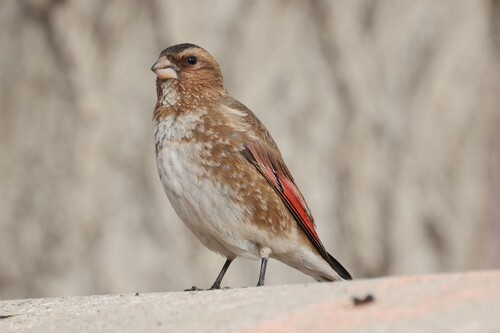 Camachuelo Alirrojo
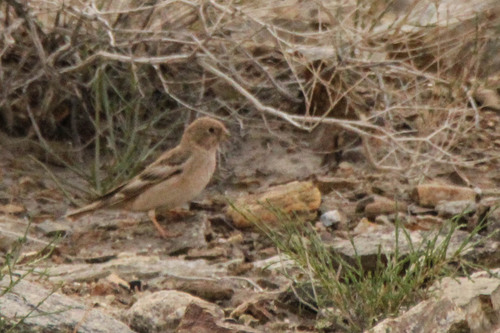 Camachuelo Mongol
En breve
La marca de campo más confiable entre el Camachuelo Alirrojo y el Camachuelo Mongol es la presencia de un extenso color carmesí o rosa en las alas de ambas especies, pero el patrón y la distribución difieren: el Camachuelo Alirrojo muestra un carmesí profundo en las plumas de vuelo y en las coberturas, mientras que el Camachuelo Mongol tiene más blanco y rosa, especialmente obvio en las alas de los machos. El Camachuelo Alirrojo es un pinzón robusto y pálido con un pico pesado y de color amarillo apagado, mientras que el Camachuelo Mongol es más pequeño, con alas largas y un pico más corto y grueso de color gris amarillento. Los machos de ambas especies muestran rosa en la cara y en las partes inferiores, pero los machos del Camachuelo Mongol tienen un rosa más pálido y difuso, y las hembras son mucho más apagadas. Las diferencias estructurales y los sutiles detalles del plumaje, especialmente en la cara y el pecho, ayudan a separarlos cuando se observan bien.
Consejos de identificación
- Color del ala en vuelo (adultos): Busca el patrón y la intensidad del rosa/carmesí en las alas. El Camachuelo Alirrojo muestra un carmesí profundo en las plumas de vuelo y en las coberturas, mientras que el Camachuelo Mongol tiene más blanco y rosa, siendo el rosa más pálido y mezclado con blanco, especialmente en los machos.
- Estructura del pico: El Camachuelo Alirrojo tiene un pico pesado y de color amarillo apagado, notablemente grueso y robusto. El pico del Camachuelo Mongol es más corto, grueso, pero de color gris amarillento y menos voluminoso. El color y la forma del pico son más útiles a corta distancia.
- Forma general: El Camachuelo Alirrojo es robusto y voluminoso, con un cuerpo pesado y una cabeza grande. El Camachuelo Mongol es más pequeño, más esbelto y con alas largas, dando una impresión más ligera y menos compacta.
- Patrón facial (machos, especialmente Camachuelo Alirrojo Asiático): Los machos del Camachuelo Alirrojo Asiático a menudo tienen más rojo extenso en la cara, incluyendo el ante-supercilio, y marcas negras más distintivas en las coberturas de las orejas y el manto. Los machos del Camachuelo Mongol tienen un rubor rosa en la cara pero carecen de marcas faciales negras o rojas fuertes.
- Pecho y garganta: El Camachuelo Alirrojo Asiático muestra manchas negras en los lados del pecho y una garganta y pecho de color marrón amarillento sólido. Las aves africanas tienen un mentón y garganta de color gris-blanco con un tinte rosado, separados por una banda de pecho marrón. El Camachuelo Mongol carece de marcas negras en el pecho y tiene una parte inferior más limpia y pálida.
- Diferencias sexuales: La hembra del Camachuelo Mongol es mucho más apagada que el macho, con casi ningún rosa, apareciendo simple y pálida. La hembra del Camachuelo Alirrojo puede retener algo de rosa/carmesí en las alas, especialmente en plumaje fresco.
- Variación regional: Si estás en el norte de África, espera encontrar el Camachuelo Alirrojo Africano, que es más pálido en general con menos negro y rojo en la cara y la corona. En Asia Central o Turquía, ambas especies son posibles; usa el patrón de las alas y la cara para separarlas.
- Coberturas de la cola superior: El Camachuelo Alirrojo Asiático muestra un extenso rosa en las coberturas de la cola superior, que falta en las aves africanas (que pueden mostrar un lavado vináceo cuando están frescas). El Camachuelo Mongol no muestra esta característica.
- Marcas en la corona: Los machos del Camachuelo Alirrojo Asiático tienen más negro en la corona, a veces extendiéndose más allá de la frente. El Camachuelo Mongol carece de este patrón negro en la corona.
- Banda en el pecho: El Camachuelo Alirrojo Africano tiene una estrecha banda marrón en el pecho debajo de un mentón y garganta de color gris-blanco con un tinte rosado. El Camachuelo Mongol carece de esta banda.
- Jizz en vuelo: El Camachuelo Mongol parece tener alas más largas y ser menos voluminoso en vuelo, mientras que el Camachuelo Alirrojo se ve más pesado y compacto.
- Contexto del hábitat: En el norte de África, un pinzón robusto con cualquier rosa en las alas es casi seguramente un Camachuelo Alirrojo. En Asia Central, verifica el carmesí más profundo y la construcción más pesada del Camachuelo Alirrojo frente al rosa más pálido y mezclado con blanco del Camachuelo Mongol.
- Marcas en la cara y el manto: El Camachuelo Alirrojo Asiático tiene más negro distintivo en las coberturas de las orejas y el manto. El Camachuelo Mongol parece más limpio y menos marcado.
- Aves juveniles/inmaduras: No se describen diferencias específicas en el patrón de las alas o el vuelo para aves inmaduras, así que confía en la estructura y las sutiles diferencias del plumaje.
- Trampas: Las aves descoloridas o desgastadas pueden perder algo del rosa/carmesí en las alas, dificultando la separación. En tales casos, concéntrate en la forma del pico, el volumen general y las marcas faciales/del pecho.
Tamaño
El Camachuelo Alirrojo es más voluminoso y robusto que el Camachuelo Mongol, con una apariencia más pesada y robusta en general. El Camachuelo Mongol es más pequeño, más esbelto y tiene alas proporcionalmente más largas, dándole un aspecto menos compacto en vuelo y cuando está posado. Ambos tienen cabezas grandes y picos gruesos, pero el pico del Camachuelo Alirrojo es más pesado y de color amarillo apagado, mientras que el del Camachuelo Mongol es más corto y de color gris amarillento. Estas diferencias son sutiles a distancia, pero pueden ser útiles con buenas vistas.
Plumaje
- Juvenil/inmaduro/primer invierno: No se describen marcas específicas de patrón de alas o vuelo para ninguna de las especies en las fuentes, por lo que el enfoque está en el plumaje adulto y general.
- Machos adultos (cría): Los machos del Camachuelo Alirrojo tienen un carmesí profundo en las plumas de vuelo y en las coberturas, con un rojo más extenso en la cara (especialmente en las aves asiáticas), y un cuerpo pálido y robusto. Los machos del Camachuelo Mongol tienen un rubor rosa en la cara y en las partes inferiores, pero el rosa es más pálido y difuso. Sus alas muestran un extenso blanco y rosa, pero el patrón es menos profundo y más mezclado con blanco que el carmesí sólido del Camachuelo Alirrojo.
- Hembras: Las hembras de ambas especies son más apagadas, pero las hembras del Camachuelo Mongol muestran casi ningún rosa, haciéndolas parecer mucho más simples que las hembras del Camachuelo Alirrojo, que pueden retener algo de rosa pálido o carmesí en las alas.
- Variación regional: Los Camachuelos Alirrojos Asiáticos muestran más negro en la corona, la cara y los lados del pecho, con un rojo más extenso en la cara y las coberturas de la cola superior. Las aves africanas son más pálidas, con menos negro y rojo, y un mentón y garganta de color gris-blanco con un tinte rosado separados por una banda de pecho marrón.
- Pecho y cara: El Camachuelo Alirrojo (especialmente las aves asiáticas) a menudo muestra manchas negras en los lados del pecho y más negro distintivo en las coberturas de las orejas y el manto. El Camachuelo Mongol carece de estas marcas negras, apareciendo con la cara más limpia y menos marcada en el pecho.
Comportamiento
No se describen diferencias de comportamiento fuertes en las fuentes. Ambas especies son pinzones de terrenos abiertos, rocosos o montañosos y pueden ser vistos alimentándose en el suelo o volando en pequeños grupos. El Camachuelo Mongol puede parecer más activo y menos voluminoso en sus movimientos debido a su tamaño más pequeño y alas más largas.
Hábitat
Ambas especies ocupan hábitats rocosos o montañosos a gran altitud, pero sus rangos solo se superponen en partes de Asia central y Turquía. El Camachuelo Alirrojo se encuentra desde el noroeste de África hasta el noreste de Pakistán, a menudo en elevaciones más altas. El Camachuelo Mongol es más estrictamente asiático, con un rango centrado en Mongolia, Asia Central y partes de Turquía. El hábitat por sí solo no es diagnóstico donde sus rangos se superponen, pero el Camachuelo Alirrojo es más probable en el norte de África y Asia occidental, mientras que el Camachuelo Mongol se espera más hacia el este.
Camachuelo Alirrojo · Camachuelo Mongol · Mis aves difíciles