

Colibrí Caribeño Gorjiverde vs Tirano Dominicano
Eulampis holosericeus frente a Tyrannus dominicensis
Juega un quiz con Colibrí Caribeño Gorjiverde y Tirano Dominicano
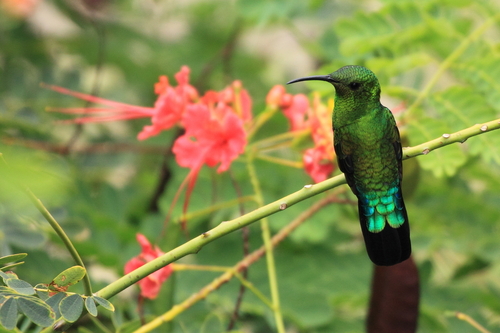 Colibrí Caribeño Gorjiverde
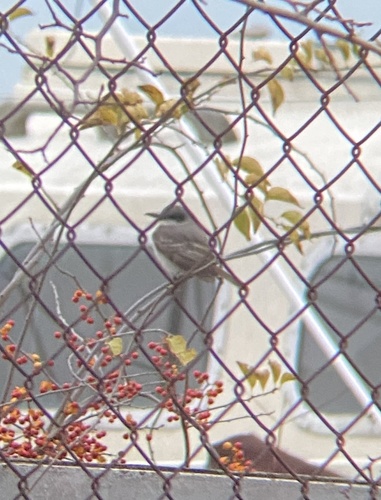 Tirano Dominicano
En breve
La marca de campo más confiable para separar el Colibrí Caribeño Gorjiverde del Tirano Dominicano es la estructura y plumaje en general: el colibrí es un pequeño colibrí compacto de color verde metálico con un pico delgado y curvado hacia abajo, mientras que el tirano es un atrapamoscas mucho más grande y robusto con un pico pesado y recto y plumaje gris y blanco. Los Tirano Dominicanos juveniles pueden mostrar bordes rufo en las alas y la cola, pero incluso entonces, su tamaño, postura erguida y forma de atrapamoscas son inconfundibles en comparación con cualquier colibrí. En vuelo o posado, las partes inferiores pálidas del tirano y las partes superiores grises contrastan fuertemente con la coloración verde brillante y negra del colibrí. La forma y el tamaño del pico son inmediatamente diagnósticos a cualquier edad o estación. La confusión es más probable a distancia o en mala luz, pero la comparación directa de tamaño, estructura y color resolverá casi todos los errores.
Consejos de identificación
- El tamaño es la verificación más rápida: El Colibrí Caribeño Gorjiverde es diminuto (6.2 g), mientras que el Tirano Dominicano es grande y robusto (43.8 g). Incluso a distancia, el tirano eclipsa al colibrí.
- La forma del pico es diagnóstica: El colibrí tiene un pico delgado, ligeramente a fuertemente curvado (más largo y más curvado en las hembras); el tirano tiene un pico grueso, recto y pesado. Esta diferencia es obvia en cualquier vista.
- Color del plumaje: El colibrí es verde metálico por encima con una garganta verde brillante y un vientre negro; el tirano es gris por encima, blanco por debajo, sin colores verdes o metálicos.
- Advertencia sobre el tirano juvenil: Los tiranos jóvenes tienen bordes rufo en las alas y la cola, pero aún muestran colores base grises/blancos y nunca ningún verde metálico. Los inmaduros del colibrí parecen adultos más apagados, nunca mostrando partes inferiores rufo o pálidas.
- Estructura de la cola y las alas: El colibrí tiene una cola corta de color azul-negro oscuro y alas estrechas y puntiagudas; el tirano tiene una cola larga de color marrón y alas anchas y redondeadas.
- Estilo de vuelo: El colibrí se queda suspendido y se mueve rápidamente, a menudo alimentándose en flores; el tirano vuela con fuertes aletazos directos y se posa erguido para lanzarse a atrapar insectos.
- Postura posada: El tirano se sienta erguido y alerta, a menudo alto y expuesto; el colibrí se posa más horizontalmente, más cerca de la vegetación.
- Patrón facial: El tirano tiene una máscara oscura a través del ojo y a veces una franja de corona amarilla oculta; el colibrí carece de cualquier máscara o franja de corona.
- Partes inferiores: El colibrí tiene un vientre negro y un ventrículo verde; el tirano es blanco por debajo con un pecho grisáceo.
- Contexto del hábitat: El colibrí suele estar cerca de flores y vegetación baja; el tirano prefiere áreas abiertas, cables y copas de árboles.
- Vocalizaciones: El colibrí emite agudas notas simples de 'chup!'; el trino fuerte y rodante del tirano 'pipiri, pipiri' es distintivo.
- Diferencias sexuales: Las hembras de colibrí tienen un pico más largo y más curvado y un verde ligeramente más apagado; los sexos del tirano son similares.
- Confusión estacional: Ambas especies son residentes o comunes en sus rangos, pero solo los juveniles del tirano muestran rufo en las alas/la cola; el colibrí nunca lo hace.
- Trampas de iluminación: En mala luz, la cola del colibrí puede parecer negra; la cola marrón del tirano y las partes superiores grises permanecen no iridiscentes.
- Señales de comportamiento: El tirano puede ser visto acosando a aves más grandes; el colibrí defiende parches de flores y rara vez interactúa con aves más grandes.
Tamaño
El Colibrí Caribeño Gorjiverde es dramáticamente más pequeño, pesando alrededor de 6.2 g y midiendo 10.5–12 cm de longitud [wikidata, wikipedia]. En contraste, el Tirano Dominicano es un gran paseriforme, alrededor de 43.8 g y 23 cm de largo—casi cuatro veces la masa y el doble de la longitud del colibrí. La robustez, la cola larga y el cuerpo robusto del tirano son obvios incluso a distancia, mientras que el colibrí es diminuto, delicado y compacto. Esta diferencia de tamaño es tan extrema que incluso una breve vista con binoculares debería hacer que la confusión sea poco probable.
Plumaje
- Tirano Dominicano juvenil/inmaduro: Los tiranos jóvenes tienen bordes rufo en las coberturas de las alas, el rabadilla y la cola, lo que puede añadir un tono cálido a su plumaje en su mayoría gris y blanco. Esto nunca es mostrado por el Colibrí Caribeño Gorjiverde a ninguna edad.
- Colibrí Caribeño Gorjiverde adulto: Ambos sexos son de color verde metálico por encima con una garganta verde brillante, vientre negro, ventrículo verde y una cola de color azul oscuro (que parece negra). Las hembras son ligeramente más apagadas y tienen un pico más largo y más curvado. No hay partes inferiores blancas o grises presentes a ninguna edad.
- Tirano Dominicano adulto: Partes superiores grises, alas y cola marrones, partes inferiores blancas con un pecho grisáceo, y una máscara oscura a través del ojo. Una franja de corona amarilla oculta está presente pero rara vez es visible. No hay colores metálicos o verdes presentes. El plumaje del tirano es siempre mate y pálido en comparación con el brillante y oscuro del colibrí.
- En vuelo: El tirano muestra alas anchas y redondeadas y una cola larga, mientras que las alas del colibrí son estrechas y puntiagudas, típicas de los colibríes.
Comportamiento
El Colibrí Caribeño Gorjiverde se queda suspendido mientras se alimenta en flores y a menudo realiza vuelos rápidos y zigzagueantes; puede defender parches de flores, especialmente los machos. El Tirano Dominicano se posa erguido en ramas expuestas o cables, lanzándose para atrapar insectos de manera típica de atrapamoscas. Los tiranos acosan agresivamente a aves más grandes y son conspicuos en su defensa territorial, mientras que los colibríes están más enfocados en defender fuentes de néctar. El vuelo del colibrí es rápido y similar al de un colibrí, mientras que el vuelo del tirano es directo, con aletazos fuertes y constantes.
Hábitat
Ambas especies se pueden encontrar en hábitats modificados por humanos, pero sus preferencias difieren: el Colibrí Caribeño Gorjiverde frecuenta jardines, crecimiento secundario y vegetación cerca de hogares, especialmente donde las plantas con flores son abundantes. El Tirano Dominicano prefiere áreas abiertas con árboles dispersos, bordes y cables, a menudo visto en entornos costeros o suburbanos. Es más probable que el tirano se vea posado alto y conspicuamente, mientras que el colibrí suele estar más cerca de flores y vegetación baja.
Voz
El Colibrí Caribeño Gorjiverde emite agudos llamados de 'chup!' o 'chuwp!', y puede producir sonajeros o zumbidos de alas durante disputas. El Tirano Dominicano tiene un fuerte y rodante trino 'pipiri, pipiri', que es distintivo y el origen de muchos nombres locales. El llamado del tirano es mucho más fuerte y complejo que las notas simples y agudas del colibrí.
Colibrí Caribeño Gorjiverde · Tirano Dominicano · Mis aves difíciles