

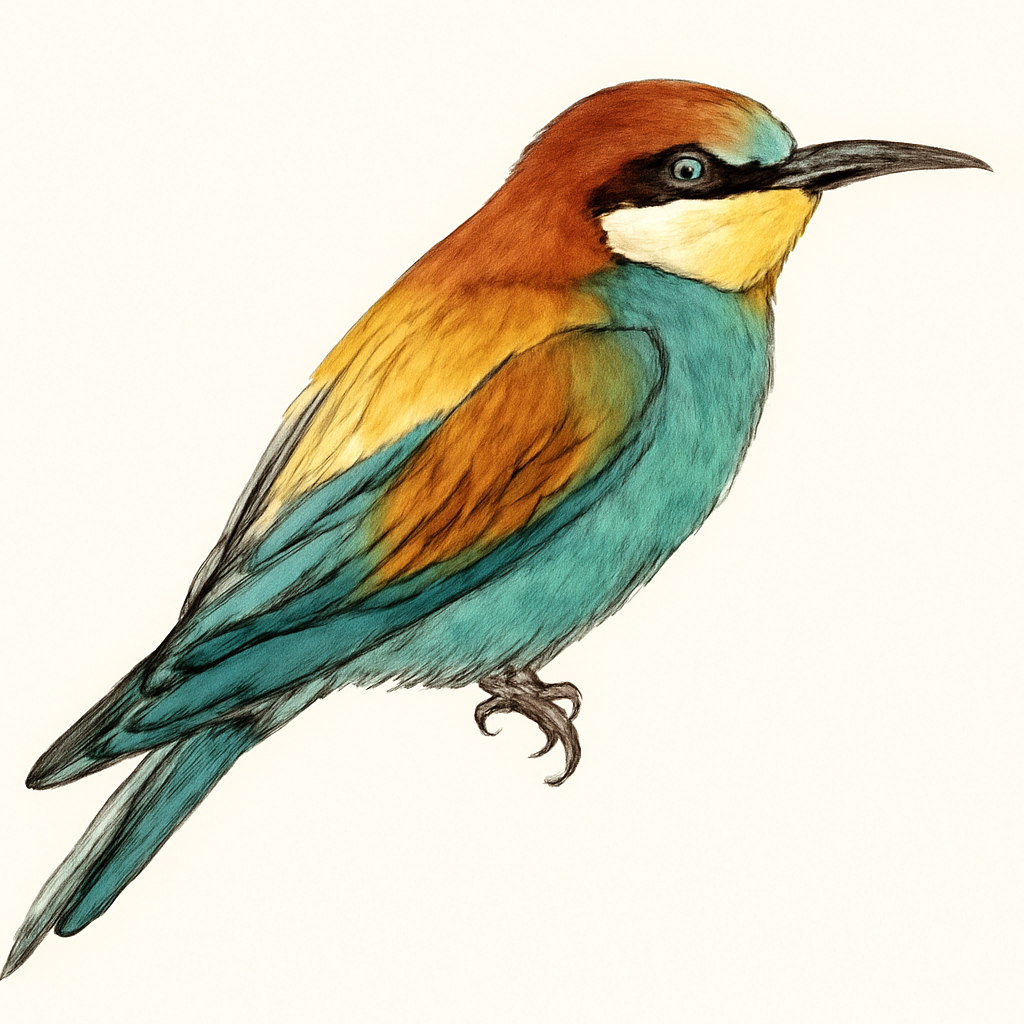
Faire un quiz avec Guêpier d'Europe et des espèces similaires
Voir toutes les photos, vidéos et sons
Relu

O-o, on n’a plus de crédits IA. Je développe Motmot sur mon temps libre, et il n’y a pas de financement pour l’instant. Si tu as envie d’aider à le faire grandir, écris-moi à info@motmot.club.
Comment identifier Guêpier d'Europe
Rédaction des notes d’identification…
Cela cherche des notes d’identification dans des sources ouvertes, puis demande au modèle de les rédiger. Cela peut prendre une minute.
Connecte-toi pour générer des notes d’identification pour cet oiseau.
Souvent mélangé avec
Dans les quiz, les joueurs confondent le plus souvent Guêpier d'Europe avec ces oiseaux—soit cette espèce a été choisie par erreur, soit l’inverse.
| Espèces | Confusions |
|---|---|
| Rollier d'Europe Coracias garrulus | 36 |
| Guêpier de Perse Merops persicus | 31 |
| Martin-pêcheur d'Europe Alcedo atthis | 4 |
| Guêpier à front blanc Merops bullockoides | 4 |
| Guêpier nain Merops pusillus | 4 |
Famille
The bee-eaters are a group of birds in the family Meropidae, containing three genera and thirty-one species. Most species are found in Africa and Asia, with a few in southern Europe, Australia, and New Guinea. They are characterised by richly coloured plumage, slender bodies, and usually elongated central tail feathers.
Ordre
The Coraciiformes are a group of usually colourful birds including the kingfishers, the bee-eaters, the rollers, the motmots, and the todies. They generally have syndactyly, with three forward-pointing toes (and toes 3 & 4 fused at their base), though in many kingfishers one of these is missing. In the past, Coraciiformes encompassed all anisodactyl (including syndactyl) members of the Cavitaves.