

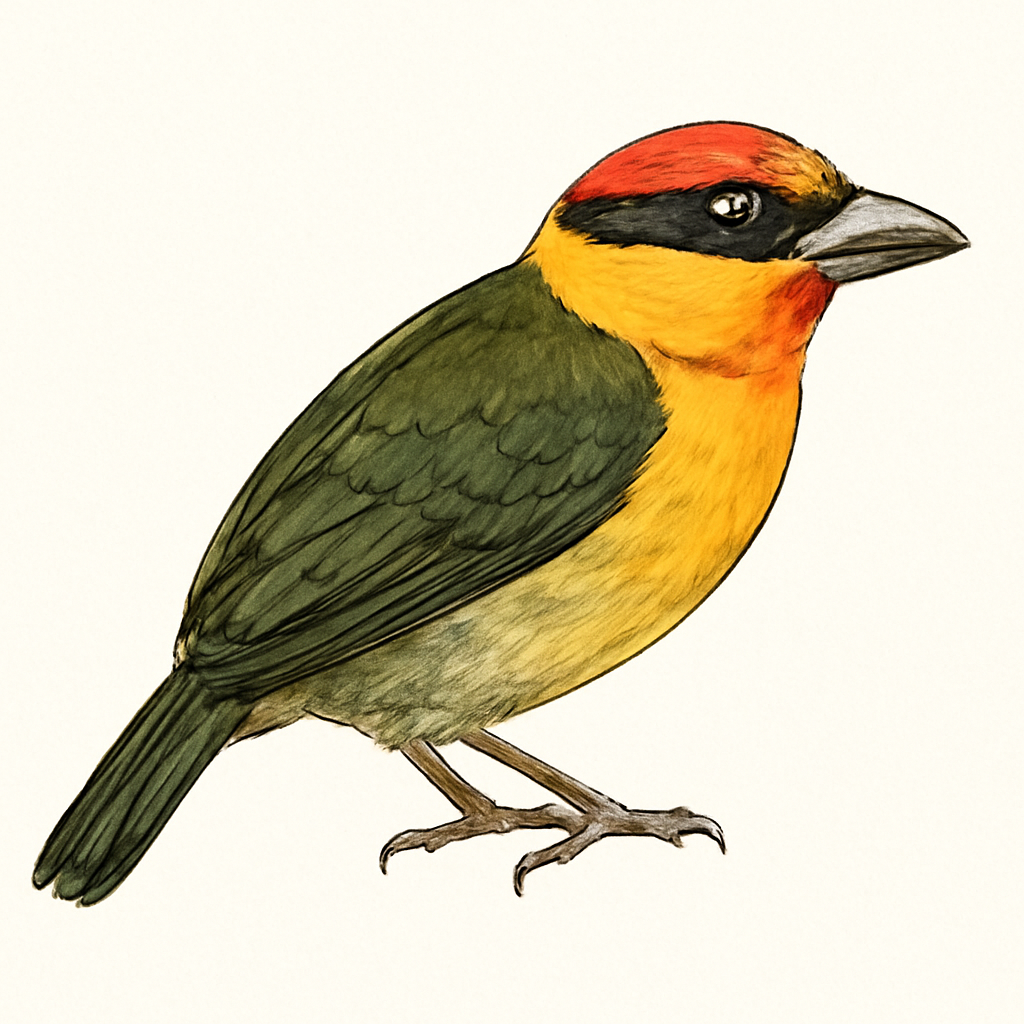
Faire un quiz avec Cabézon doré et des espèces similaires
Voir toutes les photos, vidéos et sons
Relecture nécessaire
Motmot est un projet communautaire, et beaucoup de photos attendent encore un œil humain. Si tu connais cet oiseau, tu peux aider en relisant ses images.

O-o, on n’a plus de crédits IA. Je développe Motmot sur mon temps libre, et il n’y a pas de financement pour l’instant. Si tu as envie d’aider à le faire grandir, écris-moi à info@motmot.club.
Comment identifier Cabézon doré
Rédaction des notes d’identification…
Cela cherche des notes d’identification dans des sources ouvertes, puis demande au modèle de les rédiger. Cela peut prendre une minute.
Connecte-toi pour générer des notes d’identification pour cet oiseau.
Souvent mélangé avec
Dans les quiz, les joueurs confondent le plus souvent Cabézon doré avec ces oiseaux—soit cette espèce a été choisie par erreur, soit l’inverse.
| Espèces | Confusions |
|---|---|
| Dickcissel d'Amérique Spiza americana | 3 |
| Buse à gros bec Rupornis magnirostris | 2 |
| Amazone poudrée Amazona farinosa | 2 |
| Tyran de Cayenne Myiozetetes cayanensis | 2 |
| Calliste septicolore Tangara chilensis | 2 |
Famille
The New World barbets are a family, Capitonidae, of 15 birds in the order Piciformes, which inhabit humid forests in Central and South America. They are closely related to the toucans. The New World barbets are plump birds, with short necks and large heads.
Ordre
Nine families of largely arboreal birds make up the order Piciformes (), the best-known of them being the Picidae, which includes the woodpeckers and close relatives. The Piciformes contain about 71 living genera with a little over 450 species, of which the Picidae make up about half. In general, the Piciformes are insectivorous, although the barbets and toucans mostly eat fruit and the honeyguides are unique among birds in being able to digest beeswax (although insects make up the bulk …