

Amazonian Pygmy-Owl vs Ferruginous Pygmy-Owl
Glaucidium hardyi contro Glaucidium brasilianum
Fai un quiz con Amazonian Pygmy-Owl e Ferruginous Pygmy-Owl
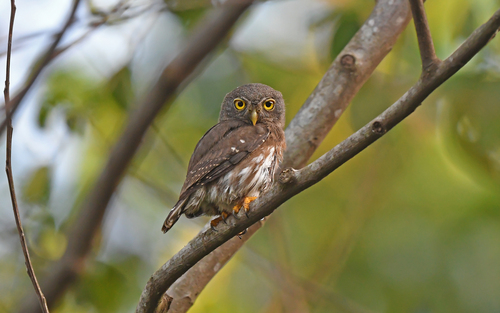 Amazonian Pygmy-Owl
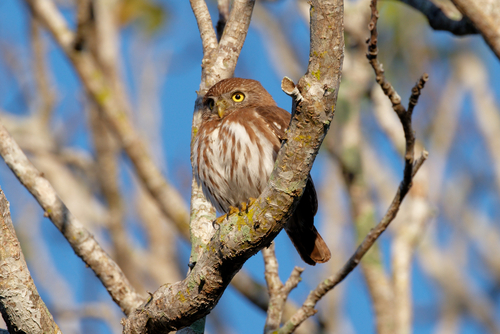 Ferruginous Pygmy-Owl
In breve
Il segno distintivo più affidabile per separare l'Amazonian Pygmy-Owl dal Ferruginous Pygmy-Owl è il motivo della corona: l'Amazonian mostra una corona grigio-marrone con piccoli punti bianchi (adulti) o uniforme (giovanili), mentre il Ferruginous ha una corona con strisce bianche o color sabbia allungate. Entrambe le specie hanno 'falsi occhi' sulla nuca e una forma complessiva simile, ma il Ferruginous Pygmy-Owl è leggermente più pesante e più variabile nel colore, a volte apparendo rufous. L'Amazonian Pygmy-Owl è uno specialista della canopia delle foreste umide amazzoniche, mentre il Ferruginous Pygmy-Owl preferisce boschi semi-aperti ed è molto più diffuso. Il piumaggio giovanile è leggermente diverso, specialmente per quanto riguarda la corona e le striature delle parti inferiori. Le vocalizzazioni sono simili ma non separabili in modo affidabile sul campo.
Consigli di identificazione
- Motivo della corona (adulti): L'Amazonian Pygmy-Owl ha una corona grigio-marrone con piccoli punti bianchi; il Ferruginous Pygmy-Owl ha strisce bianche o color sabbia allungate sulla corona. Questo è il segno distintivo più consistente per gli adulti.
- Motivo della corona (giovanili): I giovani Amazonian Pygmy-Owls hanno una corona uniforme, senza macchie, mentre i giovani Ferruginous Pygmy-Owls mantengono le striature sulla corona. Usa questo per gli uccelli giovani.
- Striature delle parti inferiori: L'Amazonian mostra ampie striature marroni o rufous-marroni su parti inferiori altrimenti bianche; il Ferruginous è più pesantemente e ampiamente striato di bianco, a volte con un aspetto più disordinato.
- Motivo della coda: Entrambi hanno code scure con barre chiare, ma il Ferruginous può apparire più rufous nel complesso e può mostrare una coda rufous più uniforme in alcuni morfi. La coda dell'Amazonian è sempre marrone scuro con grandi macchie/barre bianche.
- Superciliari: Il Ferruginous Pygmy-Owl mostra superciliari bianche prominenti sopra il disco facciale, che possono essere più evidenti rispetto all'Amazonian.
- 'Falsi occhi' sulla nuca: Entrambe le specie hanno due macchie scure sulla nuca; questo non è un separatore.
- Colore del becco e della cere: L'Amazonian ha un becco giallo verdastro e una cere giallo pallido; dettagli del Ferruginous non specificati, quindi non diagnostici.
- Dimensioni e struttura: Il Ferruginous è leggermente più pesante e può apparire più robusto con piedi e artigli più grandi, ma questo è sottile e poco affidabile a meno che non siano visti fianco a fianco.
- Morfi di colore: Il Ferruginous Pygmy-Owl è altamente variabile, con morfi che vanno dal grigio-marrone a ricchi rufous. L'Amazonian è più costantemente grigio-marrone sopra.
- Stile di volo: Il Ferruginous utilizza spesso un volo ondulato, simile a quello dei picchi; lo stile di volo dell'Amazonian non è descritto come distintivo.
- Habitat: L'Amazonian è limitato a foreste amazzoniche alte e umide (canopia/subcanopia); il Ferruginous si trova in una vasta gamma di habitat semi-aperti e di margine, comprese le foreste secche e le aree urbane.
- Distribuzione geografica: L'Amazonian è limitato al bacino amazzonico e alle regioni adiacenti; il Ferruginous è diffuso dal sud degli Stati Uniti all'Argentina. Se si trova al di fuori dell'Amazzonia, è molto più probabile che sia il Ferruginous.
- Comportamento: L'Amazonian si posiziona silenziosamente ed è raramente visto; il Ferruginous è spesso evidente e audace.
- Vocalizzazioni: Entrambe le specie hanno richiami simili ad alta frequenza; non fare affidamento solo sulla voce a meno che non sia ben studiata.
- Dimorfismo sessuale: Entrambi i sessi si somigliano, ma le femmine del Ferruginous possono essere leggermente più rossastre. Questo non è un segno distintivo affidabile.
Taglia
Entrambe le specie sono gufi molto piccoli, ma il Ferruginous Pygmy-Owl è leggermente più pesante (massa media dell'adulto ~69,7 g [wikidata]) rispetto all'Amazonian Pygmy-Owl (~60 g [wikipedia]). Entrambi misurano circa 14–15 cm di lunghezza. In mano o con un confronto diretto, il Ferruginous può apparire un po' più robusto con piedi e artigli più grandi, ma questo è sottile e di solito non diagnostico a distanza.
Piumaggio
Per gli adulti, l'Amazonian Pygmy-Owl ha una corona grigio-marrone con piccoli punti bianchi, mentre il Ferruginous Pygmy-Owl mostra strisce bianche o color sabbia allungate sulla corona. Entrambi hanno macchie scure sulla nuca ('falsi occhi'), copritrici delle ali macchiate di bianco e parti inferiori pesantemente striate di bianco, ma le striature delle parti inferiori dell'Amazonian sono ampie e marroni o rufous-marroni, mentre il Ferruginous tende ad avere striature più pesanti e più estese. Il motivo della coda è simile: entrambi hanno code scure con barre chiare, sebbene il Ferruginous possa mostrare più rufous, e la sua coda può essere più uniformemente rufous in alcuni morfi. I giovani Amazonian Pygmy-Owls hanno una corona uniforme (senza macchie) e striature delle parti inferiori meno distinte, mentre i giovani Ferruginous Pygmy-Owls mantengono le striature sulla corona. Entrambe le specie non presentano dimorfismo sessuale nel piumaggio, sebbene le femmine del Ferruginous possano essere leggermente più rossastre nel complesso.
Comportamento
L'Amazonian Pygmy-Owl è strettamente diurno e si posiziona silenziosamente nella canopia o nella subcanopia, rimanendo spesso immobile per lunghi periodi. Il Ferruginous Pygmy-Owl è principalmente crepuscolare ma spesso attivo durante il giorno, cacciando in habitat più aperti o di margine e talvolta utilizzando un volo ondulato che ricorda quello dei picchi. Entrambe le specie sono soggette a mobbing da parte di piccoli uccelli. L'Amazonian è più riservato e raramente visto, mentre il Ferruginous è audace e spesso evidente.
Habitat
L'Amazonian Pygmy-Owl è uno specialista della canopia e della subcanopia di foreste tropicali sempreverdi alte e umide nel bacino amazzonico, avventurandosi raramente in habitat aperti o di margine. Il Ferruginous Pygmy-Owl è molto più adattabile, occupando una vasta gamma di habitat boschivi semi-aperti dal Texas meridionale e dall'Arizona attraverso gran parte dell'America Centrale e Meridionale, comprese le foreste secche, i boschi galleria e persino i parchi urbani. Se visto in una densa canopia amazzonica continua, è molto più probabile che sia l'Amazonian; in boschi aperti o frammentati, ci si aspetta il Ferruginous.
Voce
Entrambe le specie emettono note o trilli brevi e acuti ripetuti. Il richiamo principale dell'Amazonian Pygmy-Owl è un trillo morbido, discendente e acuto, mentre il Ferruginous Pygmy-Owl emette una serie di brevi cinguettii acuti. In pratica, i loro richiami sono molto simili e non separabili in modo affidabile sul campo senza esperienza o analisi delle registrazioni.
Amazonian Pygmy-Owl · Ferruginous Pygmy-Owl · I miei uccelli difficili