
Gruccione egiziano vs Blue-tailed Bee-eater
Merops persicus contro Merops philippinus
Fai un quiz con Gruccione egiziano e Blue-tailed Bee-eater
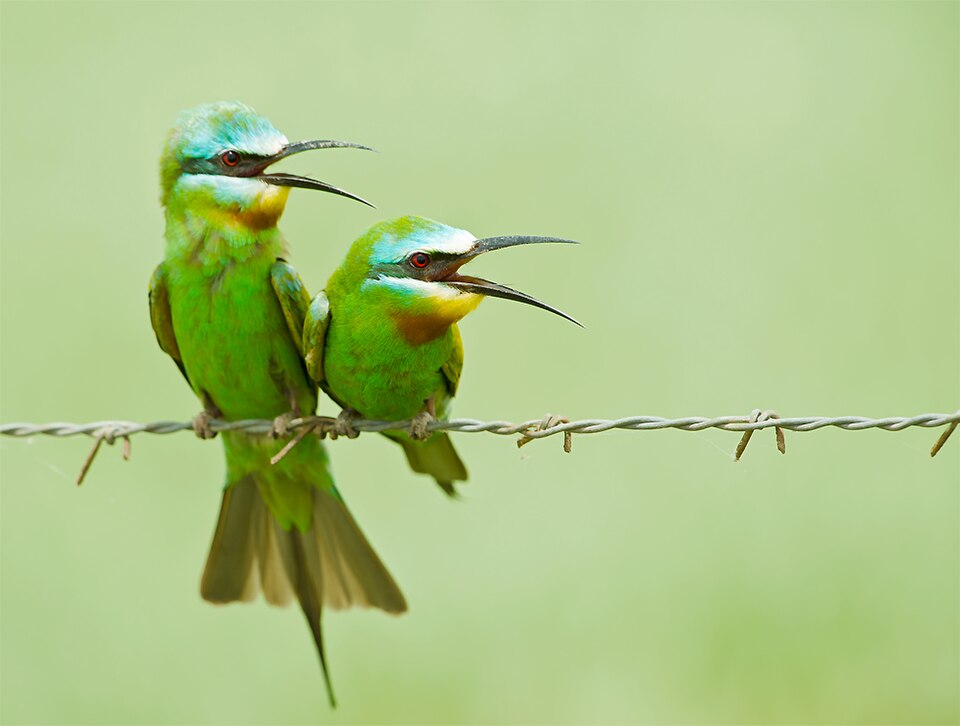 Gruccione egiziano
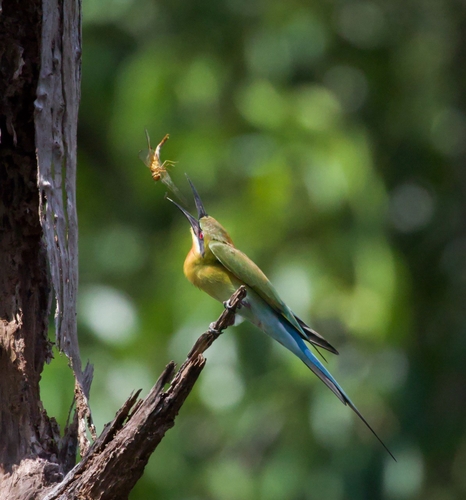 Blue-tailed Bee-eater
In breve
Il segno distintivo più affidabile per separare il Gruccione egiziano dal Blue-tailed Bee-eater è l'estensione e il colore del blu sul viso e il colore del dorso e della parte inferiore della coda: il Gruccione egiziano ha una ampia macchia blu sulla guancia e un dorso/parte inferiore della coda verde, mentre il Blue-tailed mostra solo una stretta macchia blu sulla guancia ma un dorso e una parte inferiore della coda blu brillante. Entrambi sono slanciati, verdi e si nutrono di api, con lunghe penne centrali della coda, ma il Gruccione egiziano è più robusto e più lungo nel complesso. I giovani di entrambe le specie mancano delle penne della coda, rendendo il colore del viso e del dorso ancora più critico. L'habitat può aiutare: il Blue-tailed è solitamente vicino all'acqua, il Gruccione egiziano in paesi più asciutti e aperti.
Consigli di identificazione
- Face pattern: Il Gruccione egiziano ha una ampia macchia blu sui lati del viso ('guance'), mentre il blu del Blue-tailed è limitato a una stretta macchia sotto l'occhio. Questo è il segno più consistente in tutte le età.
- Rump and undertail color: Il Blue-tailed mostra un dorso blu brillante e copritrici blu della parte inferiore della coda, in contrasto con il dorso verde. Il Gruccione egiziano ha un dorso e una parte inferiore della coda verdi, che si fondono con il resto del corpo. Questo è particolarmente evidente in volo o quando la coda è aperta.
- Throat color and extent: Il Blue-tailed ha una gola castana più scura e più estesa, specialmente nei maschi sani, mentre la gola del Gruccione egiziano è più gialla con una sfumatura marrone e meno castana nel complesso.
- Tail streamers: Entrambe le specie hanno penne centrali della coda allungate negli adulti, ma quelle del Gruccione egiziano sono spesso più lunghe, specialmente nei maschi. Le femmine e i giovani hanno streamers più corti o assenti, quindi non fare affidamento solo su questo.
- Juvenile plumage: I giovani di entrambe le specie mancano di streamers della coda e sono più opachi, ma le differenze di colore del viso e del dorso/parte inferiore della coda rimangono affidabili. Cerca la macchia blu sulla guancia (ampia nel Gruccione egiziano, stretta nel Blue-tailed) e il colore del dorso.
- Size and structure: Il Gruccione egiziano è più pesante e più lungo nel complesso, spesso apparendo più robusto e con ali più lunghe. Il Blue-tailed è più slanciato e leggermente più piccolo. Questo è un segno di supporto a meno che entrambi non siano visti insieme.
- Habitat: Il Blue-tailed è quasi sempre vicino all'acqua (fiumi, laghi, estuari), mentre il Gruccione egiziano preferisce paesi più asciutti e aperti con alberi sparsi. Usa questo solo come indizio di supporto, poiché entrambi possono verificarsi in habitat aperti simili.
- Perching behavior: Il Gruccione egiziano spesso si posa su fili o alberi esposti in paesi aperti; il Blue-tailed può posarsi vicino all'acqua, a volte in gruppi.
- Flight jizz: Entrambi sono agili, ma il Gruccione egiziano può apparire più potente e diretto in volo, mentre il Blue-tailed può sembrare più leggero e più galleggiante, specialmente quando si nutre sopra l'acqua.
- Vocalizations: Il richiamo del Blue-tailed è un 'teerp' rotolante e fischiante, spesso emesso in volo. Il richiamo del Gruccione egiziano è più piatto e meno musicale. Usa con cautela a meno che non sia familiare con entrambi.
- Geographic context: Nel sud e nel sud-est asiatico, il Blue-tailed è il default; nel Nord Africa e nel Medio Oriente, ci si aspetta il Gruccione egiziano. Entrambi possono essere migratori o vagabondi, quindi controlla l'area ma non fare affidamento solo su di essa.
- Colony structure: Il Blue-tailed spesso nidifica in colonie dense con molti buchi ravvicinati; il Gruccione egiziano può nidificare solitariamente o in gruppi sciolti, a volte con Gruccioni europei.
- Sex differences: Entrambi i sessi sono simili, ma i maschi hanno streamers della coda più lunghi. Nel Blue-tailed, i maschi sani possono mostrare un verde più brillante e un castano più scuro, mentre le femmine hanno dorso blu più brillante e menti gialle (sottile nel campo).
- Feeding behavior: Entrambi si lanciano per gli insetti, ma il Blue-tailed è più propenso a cercare cibo sopra l'acqua o anche il mare, mentre il Gruccione egiziano preferisce paesi aperti.
- Pitfalls: Gli uccelli immaturi senza streamers della coda sono facilmente confusi; controlla sempre la larghezza della macchia blu sulla guancia e il colore del dorso e della parte inferiore della coda per la separazione più sicura.
Taglia
Il Gruccione egiziano è nettamente più pesante (49.4g [wikidata]) e più lungo (31cm più fino a 7cm di streamers della coda) rispetto al Blue-tailed Bee-eater, che è più piccolo (29–43g, 29cm più 7cm di streamers) [wikipedia, wikidata]. Sul campo, il Gruccione egiziano appare spesso più robusto e con ali più lunghe, specialmente quando è posato. Tuttavia, entrambe le specie hanno un aspetto slanciato e allungato tipico degli apiari, quindi la dimensione è solo un indizio di supporto a meno che non siano visti fianco a fianco.
Piumaggio
I giovani di entrambe le specie mancano delle lunghe streamers centrali della coda, quindi concentrati sul colore del viso e del dorso. Il Gruccione egiziano (tutte le età) mostra una ampia macchia blu sui lati del viso (le 'guance blu'), un dorso e una parte inferiore della coda verdi, e una gola gialla con un po' di marrone. Il Blue-tailed ha solo una stretta macchia blu sul viso, ma un dorso blu brillante e copritrici blu della parte inferiore della coda, che contrastano con il dorso verde. Il castano sulla gola e sul petto superiore è più scuro e più esteso nel Blue-tailed, specialmente nei maschi sani, mentre la gola del Gruccione egiziano è più gialla con una sfumatura marrone. Entrambi hanno una striscia nera sugli occhi e un becco nero. In volo, il dorso blu del Blue-tailed è spesso visibile come un lampo, mentre il Gruccione egiziano appare più uniformemente verde dall'alto e dal basso. I sessi sono simili in entrambe, anche se i maschi hanno streamers della coda più lunghi. I giovani sono più opachi in entrambe, ma le differenze di colore del viso e del dorso/parte inferiore della coda rimangono i migliori indizi.
Comportamento
Entrambe le specie cacciano insetti lanciandosi da posatoi, spesso tornando allo stesso punto. Il Blue-tailed è più propenso a essere visto mentre si nutre e si riposa in modo comunitario, a volte con aiutanti al nido, e spesso cerca cibo sopra l'acqua o anche il mare. Il Gruccione egiziano può nidificare solitariamente o in piccole colonie sciolte, a volte con Gruccioni europei, e preferisce posatoi aperti come i fili telefonici. Entrambe le specie nidificano in tunnel in sponde sabbiose o argillose, ma il Blue-tailed forma spesso colonie dense.
Habitat
Il Gruccione egiziano nidifica in paesi asciutti e aperti con alberi sparsi (spesso acacia) nel Nord Africa, nel Medio Oriente e in Asia Centrale, e sverna in Africa tropicale, a volte essendo residente nel Sahel [wikipedia]. Il Blue-tailed si trova in habitat aperti vicino all'acqua in tutto il sud e sud-est asiatico, nidificando colonialmente in valli fluviali e sponde di sabbia argillosa. Se l'uccello è vicino all'acqua, specialmente nel sud/sud-est asiatico, è più probabile che sia un Blue-tailed; se si trova in terreni più asciutti e aridi, specialmente nel Nord Africa o nel Medio Oriente, è favorito il Gruccione egiziano.
Voce
Il richiamo del Gruccione egiziano è descritto come 'più piatto' e meno 'flutato' rispetto al Gruccione europeo, ma il confronto diretto con il Blue-tailed non è dettagliato nelle note. Il Blue-tailed chiama principalmente in volo con un 'teerp' rotolante, cinguettante e fischiante. In pratica, entrambi hanno richiami tipici degli apiari, ma il richiamo del Blue-tailed può suonare più musicale o fischiato, mentre quello del Gruccione egiziano è meno così. La voce è un indizio di supporto ma non diagnostico da sola.
Gruccione egiziano · Blue-tailed Bee-eater · I miei uccelli difficili