
Blue-tailed Bee-eater vs Chestnut-headed Bee-eater
Merops philippinus contro Merops leschenaulti
Fai un quiz con Blue-tailed Bee-eater e Chestnut-headed Bee-eater
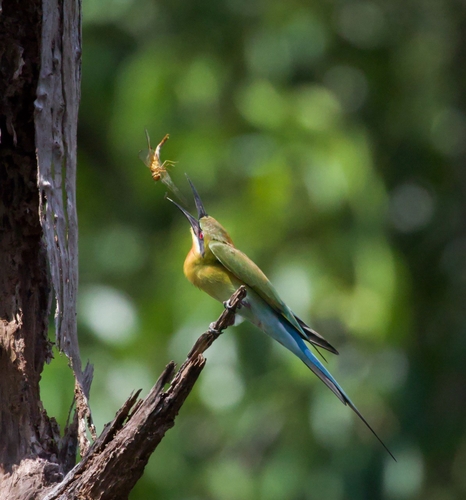 Blue-tailed Bee-eater
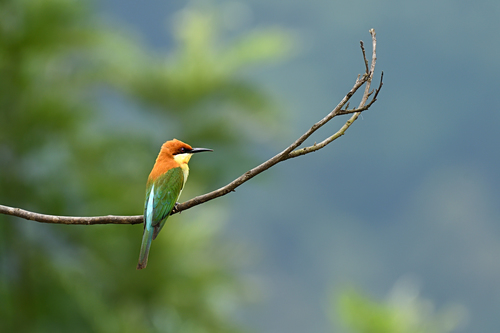 Chestnut-headed Bee-eater
In breve
Il segno di campo più affidabile per separare il Blue-tailed Bee-eater dal Chestnut-headed Bee-eater è la colorazione della testa e della gola: il Blue-tailed ha una testa verde con una gola giallo-marrone, mentre il Chestnut-headed mostra una ricca corona castagna, nuca e mantello con una gola e un viso gialli. Entrambe le specie sono slanciate, verdi e hanno il posteriore e la coda blu, ma il Blue-tailed ha piume centrali della coda più lunghe (soprattutto negli adulti) e una macchia facciale blu più piccola. I giovani di entrambe le specie sono più opachi, ma i giovani Chestnut-headed mancano della testa castagna e mostrano una corona verdognola. In volo o posati, concentrati sul colore della testa e sulla forma della coda per la separazione più rapida.
Consigli di identificazione
- Colore della testa e della gola (tutte le età): Il Blue-tailed Bee-eater ha una testa verde con una gola e un petto giallo-marrone; il Chestnut-headed Bee-eater mostra una ricca corona castagna, nuca e mantello, e un viso e una gola gialli. Questo è il segno più affidabile.
- Forma e lunghezza della coda (adulti): Gli adulti del Blue-tailed Bee-eater hanno lunghe streamers centrali della coda appuntite (soprattutto i maschi), facendo apparire la coda più lunga e più affusolata. Il Chestnut-headed Bee-eater manca di queste streamers; la sua coda è più corta e squadrata.
- Schema facciale: Il Blue-tailed ha una piccola macchia blu sul viso e una striscia nera sugli occhi; il Chestnut-headed ha un viso giallo con una striscia nera sugli occhi e nessuna macchia facciale blu.
- Colore del posteriore e della coda: Entrambi hanno posteriore e coda blu, ma il blu del Blue-tailed è più esteso e include l'intera coda; il blu del Chestnut-headed è per lo più sul posteriore e sulle copritrici superiori della coda, con la coda che è verdognola con margini blu.
- Differenze nei giovani: I giovani Blue-tailed sono di un verde opaco con una gola giallo-marrone e mancano di streamers della coda; i giovani Chestnut-headed hanno una corona e un mantello verdognoli e una gola inferiore gialla, mancando della testa castagna degli adulti.
- Petto e parti inferiori: Il castano del Blue-tailed sulla gola e sul petto è più scuro e più esteso rispetto al Chestnut-headed, che ha una larga banda castagna sotto la gola gialla, poi un gorgetto nero, poi parti inferiori verdi.
- Becco e struttura: Entrambi hanno becchi neri, slanciati e ricurvi tipici dei bee-eaters; la forma del becco non è un separatore.
- Dimensioni: Il Blue-tailed è più grande e lungo, soprattutto con le streamers della coda; la dimensione può aiutare se entrambi sono visti insieme ma non è affidabile da sola.
- Jizz posato: Il Blue-tailed spesso appare più lungo e snello a causa delle streamers della coda; il Chestnut-headed è più compatto.
- Jizz in volo: In volo, le lunghe streamers della coda del Blue-tailed sono evidenti negli adulti; la coda del Chestnut-headed è corta e quadrata.
- Contesto dell'habitat: Il Blue-tailed è più probabile vicino a acque aperte e nelle pianure; il Chestnut-headed è più spesso in boschi aperti e nelle zone montuose, ma c'è sovrapposizione.
- Voce: I richiami sono simili; non è un segno di campo forte a meno che tu non conosca bene entrambe le specie.
- Differenze sessuali: Entrambi sono sessualmente monomorfici per l'occhio umano, sebbene i maschi del Blue-tailed possano avere streamers della coda leggermente più lunghe e gole più scure.
- Trappole: Gli uccelli immaturi possono essere confusi—concentrati sul colore della testa (castagna vs. verdognola) e sulla presenza/assenza di streamers della coda per i migliori risultati.
- Sottospecie: Alcune sottospecie di Chestnut-headed (ad es., Javan) hanno gole completamente gialle e code blu, ma mancano ancora della corona castagna e delle lunghe streamers della coda del Blue-tailed.
Taglia
Il Blue-tailed Bee-eater è visibilmente più grande: circa 29 cm di lunghezza del corpo (escludendo le sue piume centrali della coda allungate, che aggiungono altri 7 cm), e pesa 29–43 g [wikipedia]. Il Chestnut-headed Bee-eater è più piccolo e più compatto, a 18–20 cm e 26–33 g [wikipedia]. La differenza è più evidente quando visti fianco a fianco o quando le streamers della coda del Blue-tailed sono visibili. Tuttavia, la dimensione da sola non è sempre affidabile a distanza o in isolamento.
Piumaggio
- Giovani: I giovani del Blue-tailed Bee-eater sono di un verde più opaco, mancano delle piume centrali della coda allungate, e hanno una piccola macchia blu sul viso con una gola giallo-marrone. I giovani del Chestnut-headed Bee-eater sono più opachi, con una fronte verde, corona anteriore e mantello, e una gola inferiore gialla (non castagna); il loro petto e ventre sono più chiari e più oliva. L'assenza di una testa castagna nei giovani Chestnut-headed è fondamentale.
- Adulti: Gli adulti del Blue-tailed Bee-eater sono per lo più verdi con un posteriore e una coda blu, una piccola macchia blu sul viso, una striscia nera sugli occhi, e una gola e un petto giallo-marrone (più scuri e più estesi rispetto al Chestnut-headed). Le piume centrali della coda sono allungate, soprattutto nei maschi. Gli adulti del Chestnut-headed Bee-eater hanno una ricca corona castagna, nuca e mantello, viso e gola gialli, una striscia nera sugli occhi, e un posteriore blu e copritrici superiori della coda. La loro coda è più corta e manca delle lunghe streamers.
- Visioni in volo: Entrambe le specie mostrano posteriore e coda blu, ma la coda del Blue-tailed è più lunga e più appuntita a causa delle streamers. Il blu del Chestnut-headed è più limitato al posteriore e alle copritrici superiori della coda, e la coda è più quadrata.
Comportamento
Entrambe le specie sono gregarie, spesso viste nutrirsi e riposare in modo comunitario. Cacciano insetti lanciandosi da posatoi aperti e possono essere viste cercare cibo sopra l'acqua. Il Blue-tailed Bee-eater è più fortemente migratorio ed è noto per migrazioni diurne di massa in alcune aree. Entrambe le specie nidificano colonialmente in banchi sabbiosi, scavando tunnel per i loro nidi. Non c'è una forte differenza comportamentale per la separazione sul campo.
Habitat
Il Blue-tailed Bee-eater favorisce habitat aperti vicino all'acqua—valli fluviali, rive di laghi, estuari, e a volte anche aree costiere. È spesso visto in aree di pianura ed è più probabile trovarlo vicino a acque aperte. Il Chestnut-headed Bee-eater preferisce boschi aperti sub-tropicali ed è più comune nelle aree montuose, sebbene nidifichi anche in banchi sabbiosi. Si verifica sovrapposizione, ma il Blue-tailed è più legato all'acqua, mentre il Chestnut-headed è più associato ai boschi.
Voce
Il richiamo del Blue-tailed Bee-eater è un 'teerp' rotolante, cinguettante, fischiante, dato principalmente in volo. I richiami del Chestnut-headed Bee-eater non sono descritti in dettaglio nelle note fornite, ma entrambi hanno richiami tipici dei bee-eaters—morbidi, rotolanti e fischiati. La voce non è un forte separatore a meno che tu non sia molto familiare con entrambi.
Blue-tailed Bee-eater · Chestnut-headed Bee-eater · I miei uccelli difficili