
Motmot

Coqui Francolin vs Red-crested Bustard

Campocolinus coqui contro Lophotis ruficrista

Fai un quiz con Coqui Francolin e Red-crested Bustard
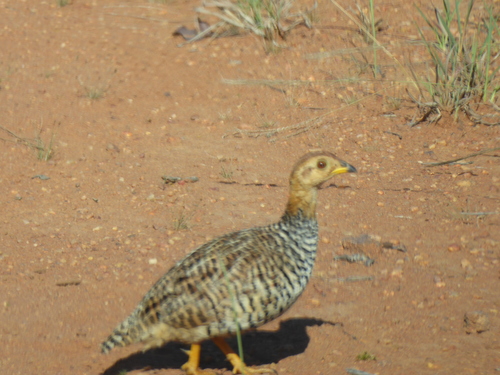
Coqui Francolin (Campocolinus coqui) Coqui Francolin
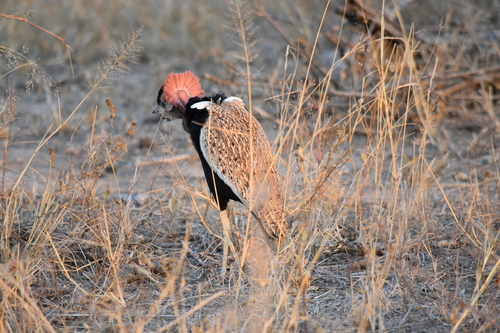
Red-crested Bustard (Lophotis ruficrista) Red-crested Bustard

Media

Caricamento…

In breve

The most reliable field mark to separate Coqui Francolin from Red-crested Bustard is overall structure and size: Red-crested Bustard is much larger, longer-legged, and has a distinctive upright, bustard-like stance, while Coqui Francolin is a compact, round-bodied gamebird with short legs. In flight or perched, the bustard shows a striking V-shaped cream pattern on the wing coverts and a black breast (adult male), whereas the francolin is more uniformly patterned and lacks strong wing markings. Juvenile and female bustards have browner heads, but still show the bustard's long-legged, elongated profile. Habitat and behavior also help: bustards are found in open savanna and bushveld, often walking in open areas, while francolins prefer denser grass or undergrowth and flush explosively. Calls are very different.

Consigli di identificazione

  1. Size and structure: Red-crested Bustard is much larger, with a long neck and legs, and stands upright; Coqui Francolin is small, round, and short-legged. This is reliable at all ages and seasons.
  2. Wing pattern (perched or in flight): Adult and immature bustards show a pale V-shaped cream marking on the folded wing coverts, visible at rest and in flight. Francolin wings are plain and mottled, lacking any strong pattern.
  3. Breast color: Adult male bustards have a striking black breast; francolins never do. Females and immatures bustards have less contrast but still lack the mottled francolin pattern.
  4. Head color (sex/age): Male bustards have a gray-blue head with a reddish nape patch (sometimes raised as a crest); females and immatures have brown heads. Francolins have cryptic, streaked heads with no blue or rufous patches.
  5. Leg color: Bustards have pale yellow legs, often obvious in the field; francolins have duller, less conspicuous legs.
  6. Posture and gait: Bustards walk slowly and upright, often in the open; francolins crouch or run, rarely visible for long, and flush explosively when disturbed.
  7. Habitat: Bustards are found in open savanna, bushveld, or scrub; francolins prefer denser grass or bush. If the bird is in the open foraging, bustard is more likely.
  8. Flight behavior: Bustards may display by flying high and dropping steeply (display flight); francolins flush low and fast, rarely flying high.
  9. Voice: Bustard's call is loud and distinctive, often heard during display; francolin's call is a series of repeated notes, more typical of gamebirds. If you hear a loud, far-carrying call from an open area, suspect bustard.
  10. Crest display: Male bustards can raise a crest during display; francolins never show a crest.
  11. Tail and wing shape: Bustards have longer, broader wings and tail compared to the compact, rounded wings and short tail of francolin.
  12. Plumage pitfalls: Juvenile and female bustards may appear browner and less contrasting, but size, structure, and wing pattern remain good clues. Francolins never show the bustard's pale wing V or long legs.
  13. Context: If you see a bird walking calmly in the open, especially in southern African bushveld, bustard is likely; if it is skulking or flushing from dense cover, francolin is more probable.
  14. Confusion risk: The main risk is with juvenile/female bustards, which are browner, but their size and structure are still distinctive. Always check for the pale wing V and long legs.
  15. When in doubt: Use a combination of size, posture, habitat, and wing pattern; these are reliable at all ages and seasons.

Taglia

Red-crested Bustard is significantly larger, reaching up to 50 cm in length and up to 680 g in weight [wikipedia]. It has a much longer neck and legs, giving it a tall, upright appearance. Coqui Francolin is a small, compact francolin, much shorter and rounder, with proportionally short legs and neck. Even at a distance, the bustard's size and long-legged gait are obvious compared to the squat, chicken-like francolin.

Piumaggio

The Red-crested Bustard (especially adult males) shows a bold V-shaped cream pattern on the folded wing coverts and a black breast. Males have a gray-blue head with a reddish nape patch, which can be raised into a crest during display. Females and immatures have brown heads but retain the pale V-pattern on the wings and the pale yellow legs. In contrast, Coqui Francolin lacks strong wing markings and has a more cryptic, mottled brown and buff plumage overall, blending well with grass. It does not show a black breast or any bold wing pattern in any age or sex. Juvenile and immature bustards may be confused with francolins due to browner heads, but their larger size, pale wing V, and long legs remain distinctive.

Comportamento

Red-crested Bustard is often seen walking slowly and upright in open savanna or bushveld, sometimes displaying by flying high and dropping rapidly (the 'suicide bird' display). It is generally sedentary and not shy, often visible in the open. Coqui Francolin is much more secretive, typically found in denser grass or bush, and when flushed, it explodes from cover with a rapid, low flight. Francolins rarely display in the open and are more likely to be heard than seen.

Habitat

Red-crested Bustard prefers open habitats: dry savanna, bushveld, thorny scrub, and sometimes wet woodland, usually in southern Africa (Angola, Botswana, Eswatini, Mozambique, Namibia, South Africa, Zambia, Zimbabwe) [wikipedia]. It is usually seen in open or semi-open areas. Coqui Francolin favors denser grassland, bushy areas, and undergrowth, and is less likely to be seen in wide open spaces. Habitat context is a strong clue: bustards in the open, francolins in cover.

Voce

Red-crested Bustard has a very distinctive call, described as loud and far-carrying, often given during display flights. Coqui Francolin has a different, more typical francolin call, usually a series of repeated notes or whistles. The calls are not similar and are a reliable separation if heard.

Invia una descrizione migliore

Usa le stesse sezioni del confronto. Il testo viene pubblicato subito.

The most reliable field mark to separate Coqui Francolin from Red-crested Bustard is overall structure and size: Red-crested Bustard is much larger, longer-legged, and has a distinctive upright, bustard-like stance, while Coqui Francolin is a compact, round-bodied gamebird with short legs. In flight or perched, the bustard shows a striking V-shaped cream pattern on the wing coverts and a black breast (adult male), whereas the francolin is more uniformly patterned and lacks strong wing markings. Juvenile and female bustards have browner heads, but still show the bustard's long-legged, elongated profile. Habitat and behavior also help: bustards are found in open savanna and bushveld, often walking in open areas, while francolins prefer denser grass or undergrowth and flush explosively. Calls are very different.

  1. Size and structure: Red-crested Bustard is much larger, with a long neck and legs, and stands upright; Coqui Francolin is small, round, and short-legged. This is reliable at all ages and seasons.
  2. Wing pattern (perched or in flight): Adult and immature bustards show a pale V-shaped cream marking on the folded wing coverts, visible at rest and in flight. Francolin wings are plain and mottled, lacking any strong pattern.
  3. Breast color: Adult male bustards have a striking black breast; francolins never do. Females and immatures bustards have less contrast but still lack the mottled francolin pattern.
  4. Head color (sex/age): Male bustards have a gray-blue head with a reddish nape patch (sometimes raised as a crest); females and immatures have brown heads. Francolins have cryptic, streaked heads with no blue or rufous patches.
  5. Leg color: Bustards have pale yellow legs, often obvious in the field; francolins have duller, less conspicuous legs.
  6. Posture and gait: Bustards walk slowly and upright, often in the open; francolins crouch or run, rarely visible for long, and flush explosively when disturbed.
  7. Habitat: Bustards are found in open savanna, bushveld, or scrub; francolins prefer denser grass or bush. If the bird is in the open foraging, bustard is more likely.
  8. Flight behavior: Bustards may display by flying high and dropping steeply (display flight); francolins flush low and fast, rarely flying high.
  9. Voice: Bustard's call is loud and distinctive, often heard during display; francolin's call is a series of repeated notes, more typical of gamebirds. If you hear a loud, far-carrying call from an open area, suspect bustard.
  10. Crest display: Male bustards can raise a crest during display; francolins never show a crest.
  11. Tail and wing shape: Bustards have longer, broader wings and tail compared to the compact, rounded wings and short tail of francolin.
  12. Plumage pitfalls: Juvenile and female bustards may appear browner and less contrasting, but size, structure, and wing pattern remain good clues. Francolins never show the bustard's pale wing V or long legs.
  13. Context: If you see a bird walking calmly in the open, especially in southern African bushveld, bustard is likely; if it is skulking or flushing from dense cover, francolin is more probable.
  14. Confusion risk: The main risk is with juvenile/female bustards, which are browner, but their size and structure are still distinctive. Always check for the pale wing V and long legs.
  15. When in doubt: Use a combination of size, posture, habitat, and wing pattern; these are reliable at all ages and seasons.

Red-crested Bustard is significantly larger, reaching up to 50 cm in length and up to 680 g in weight [wikipedia]. It has a much longer neck and legs, giving it a tall, upright appearance. Coqui Francolin is a small, compact francolin, much shorter and rounder, with proportionally short legs and neck. Even at a distance, the bustard's size and long-legged gait are obvious compared to the squat, chicken-like francolin.

The Red-crested Bustard (especially adult males) shows a bold V-shaped cream pattern on the folded wing coverts and a black breast. Males have a gray-blue head with a reddish nape patch, which can be raised into a crest during display. Females and immatures have brown heads but retain the pale V-pattern on the wings and the pale yellow legs. In contrast, Coqui Francolin lacks strong wing markings and has a more cryptic, mottled brown and buff plumage overall, blending well with grass. It does not show a black breast or any bold wing pattern in any age or sex. Juvenile and immature bustards may be confused with francolins due to browner heads, but their larger size, pale wing V, and long legs remain distinctive.

Red-crested Bustard is often seen walking slowly and upright in open savanna or bushveld, sometimes displaying by flying high and dropping rapidly (the 'suicide bird' display). It is generally sedentary and not shy, often visible in the open. Coqui Francolin is much more secretive, typically found in denser grass or bush, and when flushed, it explodes from cover with a rapid, low flight. Francolins rarely display in the open and are more likely to be heard than seen.

Red-crested Bustard prefers open habitats: dry savanna, bushveld, thorny scrub, and sometimes wet woodland, usually in southern Africa (Angola, Botswana, Eswatini, Mozambique, Namibia, South Africa, Zambia, Zimbabwe) [wikipedia]. It is usually seen in open or semi-open areas. Coqui Francolin favors denser grassland, bushy areas, and undergrowth, and is less likely to be seen in wide open spaces. Habitat context is a strong clue: bustards in the open, francolins in cover.

Red-crested Bustard has a very distinctive call, described as loud and far-carrying, often given during display flights. Coqui Francolin has a different, more typical francolin call, usually a series of repeated notes or whistles. The calls are not similar and are a reliable separation if heard.

Scartare le modifiche?

Hai modifiche non salvate. Se esci ora, andranno perse.

Coqui Francolin · Red-crested Bustard · I miei uccelli difficili