

Four-banded Sandgrouse vs Savile's Bustard
Pterocles quadricinctus contro Lophotis savilei
Fai un quiz con Four-banded Sandgrouse e Savile's Bustard
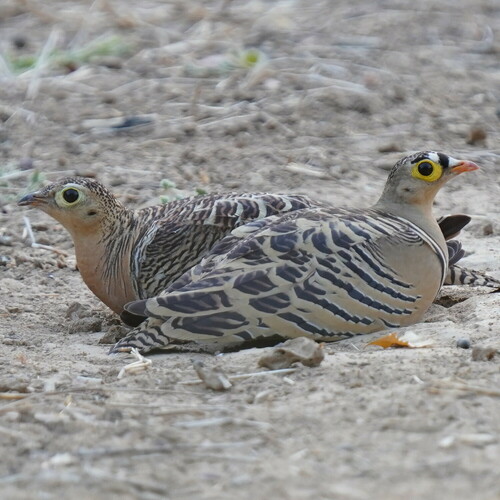 Four-banded Sandgrouse
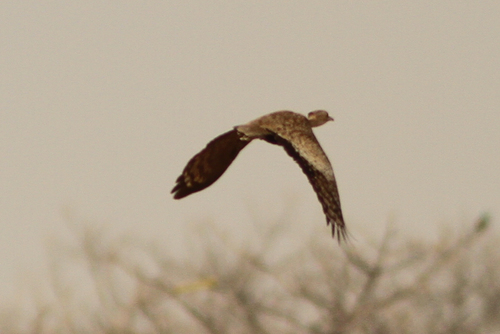 Savile's Bustard
In breve
Il modo più affidabile per separare il Four-banded Sandgrouse dallo Savile's Bustard è attraverso la struttura generale e lo stile di volo: i sandgrouse sono uccelli compatti, simili a piccioni, con ali lunghe e appuntite e un volo veloce e diretto, mentre i bustard hanno una testa più grande, gambe più lunghe e un volo più pesante e lento. In posizioni perpendicolari o da vicino, i maschi di Four-banded Sandgrouse mostrano bande nere e bianche ben definite sulla testa e sul petto, assenti nello Savile's Bustard. Le femmine di sandgrouse sono più criptiche ma mancano comunque del caratteristico motivo della testa e delle parti superiori striate del bustard. Entrambe le specie possono trovarsi in habitat asciutti simili, quindi è essenziale prestare attenzione alla forma e al piumaggio.
Consigli di identificazione
- Flight shape and style: Il Four-banded Sandgrouse ha ali lunghe e appuntite e un corpo compatto, simile a un piccione, volando veloce e direttamente; lo Savile's Bustard è più massiccio, con ali più larghe, una testa più grande e un volo più lento e pesante. Questa è la separazione più rapida sul campo, specialmente a distanza o in volo.
- Head and neck structure: I sandgrouse hanno una testa piccola e arrotondata e un collo corto; i bustard hanno una testa proporzionalmente più grande, un collo più spesso e gambe più lunghe, dando una postura più alta e eretta quando camminano o stanno in piedi.
- Male plumage (close views): I maschi di Four-banded Sandgrouse mostrano bande nere e bianche ben definite sulla fronte e sul petto, e una pancia fortemente barrata. Il maschio dello Savile's Bustard manca di queste bande ma ha una testa grigia con una striscia nera centrale sul mento e un ciuffo rufous sulla nuca durante la display; le parti inferiori sono completamente nere.
- Female plumage: Le femmine di sandgrouse mancano delle bande sulla testa e sul petto ma sono fortemente barrate sulla schiena e sui fianchi, con parti superiori giallo-verdi. Le femmine di bustard hanno una gola bianca, il nero limitato alla pancia e mancano delle marcature blu-grigie e nere sulla testa del maschio.
- Upperwing in flight: I sandgrouse mostrano ali inferiori grigie semplici e ali lunghe e appuntite; i bustard mostrano ali più decorate con terzi terminali beige chiaro, penne da volo nerastre con barre beige sottili e punte nere, dando un aspetto più contrastante in volo.
- Tail and legs: I sandgrouse hanno una coda e gambe corte, spesso nascoste in volo; i bustard hanno una coda più lunga e gambe lunghe visibili, che possono penzolare in volo o essere evidenti quando camminano.
- Back pattern: Le parti superiori dei sandgrouse sono giallo-verdi con forti barre marroni; i bustard hanno parti superiori chiare con strisce nere e segni a forma di freccia.
- Behavior on the ground: I sandgrouse sono gregari, spesso in stormi, e possono alzarsi insieme; i bustard sono solitari o in coppie, camminano eretti e possono accovacciarsi o correre prima di volare.
- Habitat context: Entrambi possono verificarsi in terreni asciutti e aperti, ma i sandgrouse sono più probabili in aree con alberi sparsi, i bustard in pascoli più aperti o cespugli.
- Bill color: I bustard hanno un becco giallastro con un culmine marrone; il colore del becco dei sandgrouse non è specificato ma è meno distintivo.
- Iris and feet: I bustard hanno un'iride chiara macchiata di argilla e piedi giallastri; questi dettagli sono sottili e raramente diagnostici sul campo.
- Sexual dimorphism: Entrambe le specie mostrano differenze sessuali, ma quelle dei sandgrouse riguardano più le bande, mentre quelle dei bustard riguardano il colore della testa e delle parti inferiori.
- Display behavior: Solo il maschio dello Savile's Bustard mostra un ciuffo rufous sulla nuca durante la display, assente nei sandgrouse.
- Contextual clues: Stormi presso le pozze d'acqua o che volano veloci e direttamente sono probabilmente sandgrouse; uccelli solitari e eretti che camminano lentamente in pascoli aperti sono probabilmente bustard.
- When in doubt: Concentrati sulla forma generale (compatta e appuntita per i sandgrouse, eretta e pesante per i bustard) e sullo stile di volo come tuoi principali segni sul campo.
Taglia
Il Four-banded Sandgrouse è un uccello di taglia media e compatto (25–28 cm di lunghezza), con una testa piccola simile a un piccione e una coda corta. Al contrario, lo Savile's Bustard è leggermente più grande in volume apparente, con una testa proporzionalmente più grande, un collo più lungo e gambe più lunghe, dando una postura più alta e eretta. L'apertura alare del bustard è di circa 25 cm per ala (l'apertura alare non è fornita, ma le ali sono relativamente larghe rispetto a quelle lunghe e appuntite del sandgrouse). Sul campo, i sandgrouse appaiono notevolmente più compatti e aerodinamici, mentre i bustard appaiono più massicci e più eretti.
Piumaggio
Nessun motivo specifico per l'età è descritto per le ali superiori di entrambe le specie, ma le differenze nel piumaggio sono comunque forti. I maschi di Four-banded Sandgrouse hanno bande nere e bianche sulla fronte e sul petto, e una pancia fortemente barrata; le femmine mancano delle bande sulla testa e sul petto ma sono fortemente barrate sopra e sui fianchi. Entrambi i sessi di sandgrouse hanno parti superiori giallo-verdi con marcature marroni e ali inferiori grigie in volo. Gli adulti dello Savile's Bustard hanno parti superiori chiare con strisce nere e segni a forma di freccia, una testa grigia con una striscia nera centrale sul mento e una fascia bianca sulla spalla. I maschi hanno parti inferiori completamente nere e un ciuffo rufous sulla nuca in display; le femmine hanno una gola bianca e il nero limitato alla pancia, mancando del motivo della testa del maschio. Le ali del bustard mostrano terzi terminali beige chiaro e penne da volo nerastre con barre beige sottili e punte nere, creando un aspetto più decorato in volo rispetto alle ali inferiori grigie più semplici dei sandgrouse.
Comportamento
I Four-banded Sandgrouse sono gregari, spesso visti in stormi, e volano con un volo veloce e diretto, simile a un piccione. Sono tipicamente visti a terra o volando rapidamente tra i siti di alimentazione e abbeveraggio. Lo Savile's Bustard è più solitario o visto in coppie, camminando lentamente e eretto attraverso i pascoli o il cespuglio aperto. Il loro volo è più pesante e lento, con ali larghe e un decollo più faticoso. I bustard sono meno propensi a decollare a distanza e possono accovacciarsi o correre prima di volare.
Habitat
Entrambe le specie possono essere trovate in habitat asciutti e aperti nell'Africa occidentale e centrale, inclusi savana, cespugli e boschi leggeri. Il Four-banded Sandgrouse preferisce aree aperte con alcuni alberi, mentre lo Savile's Bustard è più legato a pascoli aridi e semi-aridi, cespugli e boschi leggeri, spesso vicino a pozze d'acqua asciutte o arbusti piatti. È possibile un sovrapposizione negli habitat, specialmente nel Sahel e nelle regioni adiacenti, ma i sandgrouse sono più probabili in aree con alberi sparsi, e i bustard in zone più aperte, erbose o cespugliose.
Four-banded Sandgrouse · Savile's Bustard · I miei uccelli difficili