

Cannareccione vs Clamorous Reed Warbler
Acrocephalus arundinaceus contro Acrocephalus stentoreus
Fai un quiz con Cannareccione e Clamorous Reed Warbler
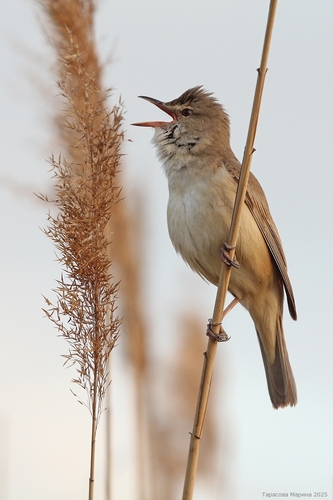 Cannareccione
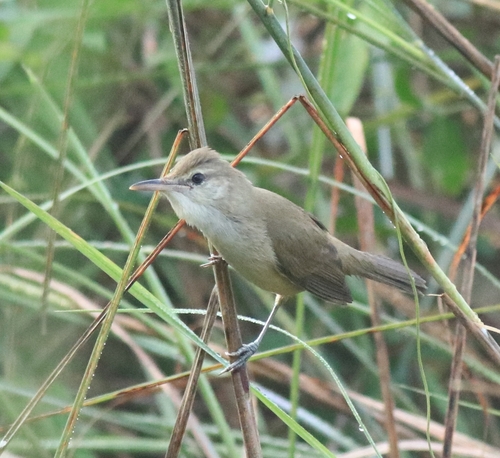 Clamorous Reed Warbler
In breve
Il segno di campo più affidabile tra il Cannareccione e il Clamorous Reed Warbler è il colore delle parti inferiori: il Cannareccione mostra parti inferiori più ricche e color sabbia, mentre il Clamorous Reed Warbler è più chiaro e bianco sotto. Entrambi sono grandi, warbler marroni senza striature con una struttura simile, ma il Cannareccione è generalmente più robusto e leggermente più grande. I loro canti differiscono, con quello del Cannareccione che è più forte e più rauco. Sul campo, le sottili differenze nel tono del piumaggio e nella voce sono i tuoi migliori indizi, poiché struttura e jizz sono molto simili.
Consigli di identificazione
- Underparts color: Il Cannareccione mostra parti inferiori più ricche e color sabbia, specialmente sul mento e sul petto; il Clamorous Reed Warbler è più chiaro e bianco sotto. Questo è il segno di campo più consistente per tutte le età.
- Upperparts tone: Entrambi sono marroni senza striature sopra, ma il Clamorous Reed Warbler (soprattutto i migratori settentrionali) può apparire leggermente più marrone sopra, mentre il Cannareccione è più uniforme.
- Juvenile/immature underparts: I giovani Cannareccioni sono ancora più sabbiosi sotto rispetto agli adulti, esagerando la differenza delle parti inferiori con i giovani Clamorous Reed Warbler, che rimangono chiari.
- Size and bulk: Il Cannareccione è generalmente più grande e robusto, con una corporatura più pesante e un'apertura alare più lunga (16–21 cm vs. 18–20 cm, ma più pesante e robusto nel complesso). Tuttavia, la sovrapposizione delle dimensioni è considerevole e non sempre affidabile a meno che entrambi non siano visti insieme.
- Bill and head structure: Entrambi hanno becchi forti e appuntiti e fronti appiattite; queste caratteristiche non sono utili per la separazione.
- Song: Il canto del Cannareccione è molto più forte, più aspro e più rauco, spesso con una qualità chiacchierina e gracidante. Il canto del Clamorous Reed Warbler è più lento, meno aspro e più chiacchierino, con fischi più pronunciati. Usa il canto solo quando hai un confronto chiaro e diretto.
- Song context: I maschi del Cannareccione usano canti lunghi e complessi per attrarre le femmine e canti brevi e semplici per la difesa del territorio. Il canto del Clamorous Reed Warbler è meno variabile ma include comunque mimetismo.
- Geographic context: Se in Europa o nel Paleartico occidentale, ci si aspetta il Cannareccione; il Clamorous Reed Warbler si trova dall'Egitto verso est attraverso il Sud Asia. Nelle zone di sovrapposizione (Medio Oriente), fai affidamento sul piumaggio e sulla voce.
- Habitat: Entrambi sono specialisti delle canne; l'habitat non è un separatore dove entrambi si trovano.
- Sex and season: Entrambe le specie sono sessualmente monomorfiche; maschi e femmine si somigliano tutto l'anno. Non sono descritte differenze di piumaggio stagionali.
- Flight and jizz: Entrambe le specie sono descritte come della dimensione di un tordo e si comportano in modo simile tra le canne. Lo stile di volo e il jizz non sono separatori affidabili.
- Subspecies variation: Il Clamorous Reed Warbler ha diverse razze, con la forma dello Sri Lanka che è la più scura, ma queste differenze sono sottili e non sempre utili sul campo.
- Pitfalls: Non fare affidamento solo sulla struttura o sul comportamento; concentrati sul colore delle parti inferiori e sul canto. La dimensione è utile solo in confronto diretto.
- When in doubt: Se l'uccello sta cantando e puoi registrare o confrontare il canto, questo è spesso il miglior separatore. Altrimenti, dai priorità al tono delle parti inferiori in buona luce.
- Immature birds in flight: Non sono descritte differenze distintive nei modelli delle ali superiori o nel volo per entrambe le specie; concentrati sul colore delle parti inferiori e sulla dimensione complessiva se viste bene.
Taglia
Il Cannareccione è il più grande warbler di Acrocephalus, misurando 16–21 cm di lunghezza con un'apertura alare di 25–30 cm e una massa di 22–38 g [wikipedia]. Il Clamorous Reed Warbler è anch'esso grande, a 18–20 cm, ma generalmente è leggermente più piccolo e meno robusto [wikipedia]. Entrambi sono descritti come della dimensione di un tordo, ma il Cannareccione tende a sembrare più pesante e robusto, soprattutto in confronto diretto.
Piumaggio
Non sono descritti modelli distintivi delle ali superiori per i giovani o gli immaturi per entrambe le specie; entrambe mancano di striature e mostrano parti superiori marroni semplici a tutte le età [wikipedia]. Per adulti e immaturi, la differenza chiave è sotto: il Cannareccione ha parti inferiori più ricche e color sabbia, specialmente sul mento e sul petto, mentre il Clamorous Reed Warbler è visibilmente più chiaro e bianco sotto. Entrambi hanno schiene marroni senza striature, fronti appiattite e becchi forti e appuntiti. Il Clamorous Reed Warbler mostra alcune variazioni geografiche, con la razza migratoria settentrionale che è la più marrone sopra, e la razza dello Sri Lanka che è la più scura in generale, ma queste differenze sono sottili e non sempre utili sul campo. I giovani Cannareccioni sono descritti come più ricchi di sabbia sotto, il che può esagerare la differenza delle parti inferiori nei giovani freschi.
Comportamento
Entrambe le specie si comportano in modo simile, tipicamente nascondendosi o cantando dalle canne. Non sono notate differenze comportamentali significative nelle fonti per la separazione sul campo. Entrambi possono posarsi in alto per cantare e vengono più spesso rilevati dalla voce piuttosto che dal movimento.
Habitat
Entrambe le specie sono specialisti delle canne durante la stagione di nidificazione. Il Cannareccione nidifica in tutta Europa e nel Paleartico occidentale, mentre il Clamorous Reed Warbler nidifica dall'Egitto verso est attraverso il Sud Asia fino al Sud-est asiatico [wikipedia]. Entrambi svernano in canneti e habitat umidi simili, ma i loro areali non si sovrappongono molto tranne che in alcune parti del Medio Oriente. L'habitat non è un separatore affidabile dove entrambi si trovano.
Voce
Il Cannareccione ha un canto molto forte, che si diffonde lontano, e rauco, con note chiacchierine, gracidanti e aspre (carr-carr-cree-cree-cree-jet-jet), spesso includendo mimetismo [wikipedia]. Il suo canto è variabile, con tipi sia brevi (territoriali) che lunghi (per attrarre un compagno). Anche il canto del Clamorous Reed Warbler è forte e si diffonde lontano, ma è meno rauco, più lento e più chiacchierino (kereet-kereet-kereet), con fischi tipici di Acrocephalus e mimetismo [wikipedia]. In confronto diretto, il canto del Cannareccione è più aspro e più potente.
Cannareccione · Clamorous Reed Warbler · I miei uccelli difficili