

Gray-backed Tern vs Great Crested Tern
Onychoprion lunatus contro Thalasseus bergii
Fai un quiz con Gray-backed Tern e Great Crested Tern
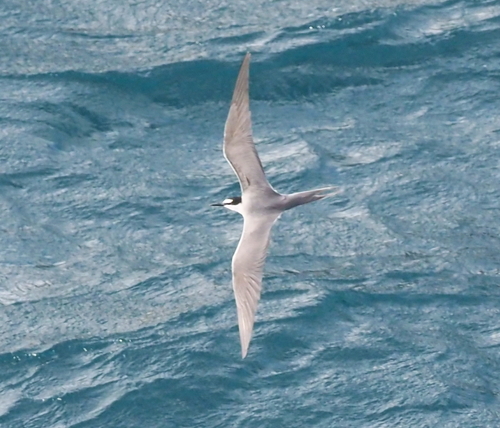 Gray-backed Tern
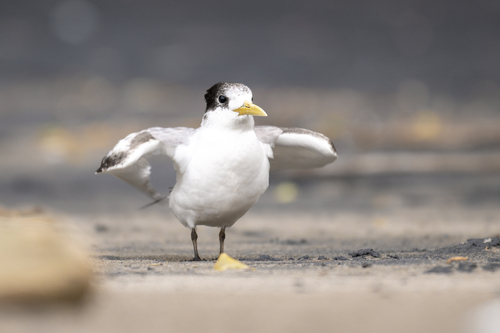 Great Crested Tern
In breve
I giovani e gli immaturi Great Crested Terns mostrano un distintivo e fortemente variegato schema delle ali superiori con barre scure, particolarmente visibile in volo—gli immaturi Gray-backed Tern mancano di questa caratteristica e sono molto più semplici sopra. Per gli adulti, il segno di campo più affidabile è il becco: il Great Crested Tern ha un becco lungo, spesso e giallo-verde, mentre il becco del Gray-backed Tern è più snello e scuro. Il Great Crested Tern è anche molto più grande e massiccio, con una cresta nera più disordinata e un dorso grigio navale più chiaro rispetto al mantello grigio pulito del Gray-backed Tern. Entrambe le specie hanno parti inferiori bianche, ma il modello e la struttura del viso sono fondamentali in qualsiasi stagione.
Consigli di identificazione
- Juvenile/immature upperwing pattern: In volo, cerca un'ala superiore fortemente variegata con barre scure e una barra scura sulle piume di volo interne negli immaturi Great Crested Tern—gli immaturi Gray-backed Tern sono semplici sopra. Questo è il segno migliore per i giovani uccelli.
- Bill color and shape: Il Great Crested Tern ha un becco lungo, spesso, giallo fino a giallo-verde (mai arancione o nero), visibile a qualsiasi età. Il becco del Gray-backed Tern è più snello e scuro. Il colore del becco è affidabile anche a distanza con buona luce.
- Size and structure: Il Great Crested Tern è molto più grande, con un becco più lungo, una testa più pesante e un corpo più massiccio. Il Gray-backed Tern è piccolo, snello e compatto. Usa questo quando entrambe le specie sono presenti, ma fai attenzione alle illusioni di scala quando sono sole.
- Crest and head shape: Il Great Crested Tern mostra una cresta nera lucida e disordinata che si estende bene dietro la testa, specialmente in abito nuziale. Il Gray-backed Tern manca di una cresta disordinata e ha un profilo della testa ordinato e liscio.
- Back color: Il Great Crested Tern ha un dorso grigio navale (più scuro e cupo), mentre il dorso del Gray-backed Tern è di un grigio più pulito e chiaro. Questo è sottile ma può aiutare in buona luce.
- Facial pattern: Il Gray-backed Tern ha una distintiva linea nera intorno all'occhio dal becco alla nuca, dando un aspetto 'con occhiali'. Il Great Crested Tern ha una fronte bianca e una cappelliera o cresta nera, ma manca della linea attraverso l'occhio.
- Underparts: Entrambi sono bianchi sotto; questo non è un separatore utile.
- Wing pattern in adults: Entrambi hanno ali superiori grigie, ma quelle del Great Crested Tern sono più scure e più larghe; quelle del Gray-backed Tern sono più strette e più chiare.
- Perched posture: Il lungo becco e la cresta del Great Crested Tern si notano quando è posato, mentre il Gray-backed Tern appare più delicato e con una testa ordinata.
- Vocalizations: Le chiamate forti e aspre 'kerrak' e 'korrkorrkorr' indicano il Great Crested Tern, specialmente nelle colonie. Il Gray-backed Tern è più silenzioso e meno rauco.
- Colony context: Grandi colonie rumorose e dense su banchi di sabbia aperti o spiagge sono più probabili essere Great Crested Tern. Il Gray-backed Tern è meno probabile che si trovi in tali ambienti.
- Seasonal head pattern: In inverno, la corona del Great Crested Tern diventa bianca con una cresta nera pepata; il Gray-backed Tern mantiene la linea nera intorno all'occhio.
- Association with other terns: Il Great Crested Tern spesso si associa con altri grandi sterni (ad es., Lesser Crested, Royal), e si distingue per dimensione e becco. Il Gray-backed Tern è meno probabile che si trovi in tali gruppi misti.
- Flight style: Il Great Crested Tern vola con forti e profonde battute d'ala e un volo più pesante; il Gray-backed Tern è più leggero e agile.
- When in doubt: Concentrati sul colore e sulla spessore del becco, sulla cresta della testa e—se l'uccello è giovane—sulla presenza o assenza di barre sulle ali superiori.
Taglia
Il Great Crested Tern è sostanzialmente più grande: gli adulti misurano 46–49 cm di lunghezza con un'apertura alare di 125–130 cm e pesano 325–397 grammi [wikipedia]. Il Gray-backed Tern è molto più piccolo e leggero, con una struttura più delicata. Questa differenza di dimensioni è sorprendente in stormi misti o quando visti fianco a fianco, ma può essere più difficile da giudicare a distanza o da solo.
Piumaggio
- Juvenile/immature plumage: I giovani e i primi inverni del Great Crested Tern hanno un'ala superiore audacemente patternizzata con barre scure e un aspetto variegato, inclusa una barra scura sulle piume di volo interne. Questo schema persiste nelle prime piume immature. Gli immaturi del Gray-backed Tern sono molto più semplici, privi di forti barre o variegazioni sulle ali superiori, e mostrano un dorso grigio più uniforme.
- Adult breeding plumage: Gli adulti del Great Crested Tern hanno una fronte bianca, una cresta nera disordinata e un dorso grigio navale e ali interne. Gli adulti del Gray-backed Tern hanno un dorso grigio liscio, una linea nera intorno all'occhio dal becco alla nuca, e mancano della cresta disordinata; il loro modello della testa è 'con occhiali' con una linea nera attraverso l'occhio.
- Non-breeding/winter plumage: La corona del Great Crested Tern diventa bianca con una cresta e una maschera nera pepata, mentre il Gray-backed Tern mantiene la linea nera intorno all'occhio e il dorso grigio. Entrambe le specie hanno parti inferiori bianche tutto l'anno.
Comportamento
Entrambe le specie sono sterne tipiche in volo, ma il Great Crested Tern appare più pesante, con un becco più lungo e spesso e una testa più massiccia. Il suo volo è forte e diretto, spesso con profonde battute d'ala. Il Gray-backed Tern è più leggero e agile, riflettendo la sua dimensione più piccola e la costruzione più leggera. Posato, il lungo becco e la cresta più disordinata del Great Crested Tern sono evidenti, mentre il Gray-backed Tern appare più ordinato e compatto.
Habitat
Entrambi sono sterne costiere e nidificanti su isole, ma il Great Crested Tern è più probabile da vedere in grandi colonie dense lungo coste aperte, banchi di sabbia e isole al largo, spesso con altri grandi sterni. Il Gray-backed Tern è meno comune e più localizzato, spesso trovato su isole remote e meno probabile da trovarsi in grandi stormi misti. Il contesto può aiutare, ma non è sempre diagnostico.
Voce
Il Great Crested Tern è molto vocale, specialmente nelle colonie, emettendo un forte, rauco, simile a un corvo 'kerrak', un 'korrkorrkorr' al nido, e un duro 'wep wep' in volo. La voce del Gray-backed Tern è meno ben descritta nelle fonti, ma non è nota per tali chiamate forti e aspre. Se senti le chiamate caratteristiche del Great Crested Tern, è un forte indizio.
Gray-backed Tern · Great Crested Tern · I miei uccelli difficili