Pivieressa vs Corriere grosso
Pluvialis squatarola contro Charadrius hiaticula
Fai un quiz con Pivieressa e Corriere grosso
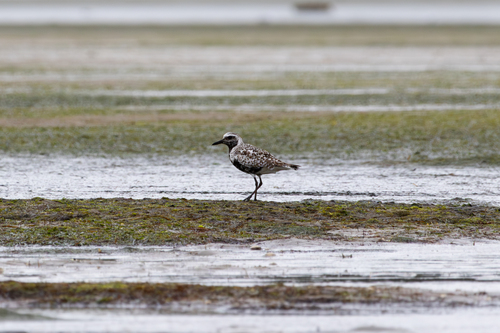 Pivieressa
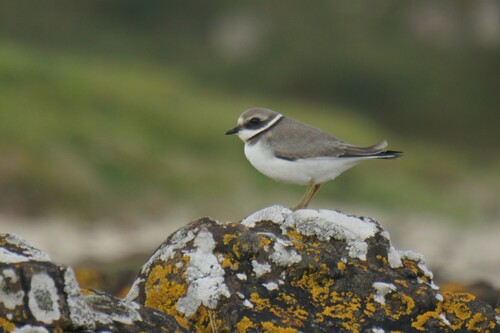 Corriere grosso
In breve
Il segno di campo più affidabile per separare la Pivieressa dal Corriere grosso, specialmente in volo, è la presenza di assi neri solidi (piume 'ascellari' sotto le ali) in tutte le età della Pivieressa—mai mostrato dal Corriere grosso. I giovani e i Pivieressa non in riproduzione mostrano anche un becco più grande e pesante e una struttura più robusta rispetto al Corriere grosso, più delicato e con becco corto. A terra, la Pivieressa è molto più grande e con gambe più lunghe, con parti superiori grigie uniformi in inverno, mentre il Corriere grosso è compatto, con un pattern facciale distinto e una singola banda nera sul petto. Controlla sempre il segno nero sotto l'ala in volo e confronta la dimensione complessiva e la forma del becco quando gli uccelli sono a riposo.
Consigli di identificazione
- Assi neri in volo (tutte le età): La Pivieressa mostra sempre assi neri solidi e copritrici interne sotto l'ala in volo—questo è il segno più affidabile. Il Corriere grosso non mostra mai nero qui; il suo sottoala è completamente bianco.
- Dimensione e struttura: La Pivieressa è molto più grande, alta e robusta rispetto al Corriere grosso. Se viste insieme, la differenza di dimensione è ovvia, ma anche singolarmente, la Pivieressa appare con gambe lunghe e erette, mentre il Corriere grosso è tozzo e compatto.
- Forma e dimensione del becco: La Pivieressa ha un becco lungo, spesso e pesante di colore nero (24–34 mm), mentre il becco del Corriere grosso è corto, fine e arancione con una punta nera negli adulti (scuro nei giovani). La dimensione del becco è un buon controllo a qualsiasi distanza.
- Pattern del petto: La Pivieressa in abito nuziale ha un volto, una gola, un petto e una pancia neri solidi con un bordo bianco netto; il Corriere grosso ha sempre una singola, ordinata banda nera sul petto, mai una pancia nera solida.
- Pattern del volto: Il Corriere grosso mostra una chiara fronte bianca, una maschera nera e un berretto marrone, dando un aspetto 'bandito' sorprendente. La Pivieressa manca di questo pattern, specialmente in abito non riproduttivo, dove il volto è grigio uniforme.
- Parti superiori in inverno/giovanile: La Pivieressa è grigia uniforme sopra in inverno, con macchie pallide sottili nei giovani. Il Corriere grosso è marrone sopra, con un volto e un pannello alare più contrastanti.
- Colore delle gambe: La Pivieressa ha gambe nere in tutti gli abiti. Il Corriere grosso adulto ha gambe arancioni brillanti; i giovani hanno gambe grigio-giallastre opache. Il colore delle gambe è utile a distanza ravvicinata.
- Coda e groppa: In volo, la Pivieressa ha una groppa e una coda bianche con barre nere. Il Corriere grosso ha una coda meno contrastante e nessuna macchia bianca sulla groppa.
- Comportamento: La Pivieressa è spesso solitaria o in piccoli gruppi, sta eretta ed è diffidente. Il Corriere grosso è più probabile da trovare in stormi, corre con rapide fermate e ripartenze, ed è meno eretto.
- Contesto dell'habitat: Su ampie e aperte pianure di marea, specialmente se sola o con trampolieri più grandi, sospetta la Pivieressa. Su piccole spiagge, ghiaia, o mescolata con altri trampolieri piccoli, il Corriere grosso è più probabile.
- Confusione giovanile: Il giovane Pivieressa può sembrare superficialmente simile al Corriere grosso a causa delle piume con bordi chiari, ma controlla sempre la dimensione, il becco e gli assi neri in volo.
- Riproduzione vs non riproduzione: Solo la Pivieressa mostra mai una pancia e un petto completamente neri in abito nuziale; il Corriere grosso non lo fa mai.
- Colore del becco nei giovani: Il giovane Corriere grosso ha un becco scuro, che può causare confusione, ma il becco è sempre molto più corto e fine rispetto a quello della Pivieressa.
- Colore delle gambe nei giovani: Le gambe del giovane Corriere grosso sono grigio-giallastre opache, non arancioni brillanti, ma comunque mai nere come quelle della Pivieressa.
- Stormi misti: Se non sei sicuro, cerca l'uccello più grande e più eretto con un becco pesante e controlla gli assi neri se qualche uccello prende il volo.
Taglia
La Pivieressa è sostanzialmente più grande: 27–30 cm di lunghezza con un'apertura alare di 71–83 cm e un peso di 190–280 g, rispetto ai 17–19,5 cm di lunghezza del Corriere grosso, 35–41 cm di apertura alare e una struttura molto più leggera. La Pivieressa appare alta, con gambe lunghe e robusta, mentre il Corriere grosso è piccolo, compatto e basso a terra. Il becco della Pivieressa è notevolmente più lungo e pesante, mentre il becco del Corriere grosso è corto e fine, con una colorazione arancione e nera distintiva negli adulti.
Piumaggio
- In volo (tutte le età): La Pivieressa mostra sempre assi neri solidi e copritrici interne sotto l'ala, una caratteristica unica tra i trampolieri. Il Corriere grosso ha sottoali completamente bianche senza assi neri.
- Giovanile/primo inverno: Il giovane Pivieressa è simile all'adulto in inverno ma con piume dorsali più nere bordate di bianco crema; mostra ancora assi neri in volo. Il giovane Corriere grosso è più opaco degli adulti, con una banda sul petto meno distinta e spesso incompleta, becco scuro e gambe grigio-giallastre opache, ma non mostra mai assi neri.
- Adulto in riproduzione: La Pivieressa ha un volto, un collo, un petto e una pancia neri sorprendenti con un bordo bianco e una groppa; il Corriere grosso ha una singola banda nera sul collo, una fronte bianca e una maschera nera, senza nero esteso sotto.
- Adulto non in riproduzione: La Pivieressa è grigia uniforme sopra, macchiata di grigio sul petto, bianca sotto, e mostra ancora assi neri in volo. Il Corriere grosso rimane marrone sopra, con un chiaro pattern facciale e una singola banda sul petto.
Comportamento
La Pivieressa spesso sta eretta, apparendo allerta e alta, e può essere vista singolarmente o in piccoli gruppi, specialmente su pianure costiere aperte. Tende ad essere diffidente e veloce a volare via. Il Corriere grosso è più probabile da vedere in stormi compatti, spesso correndo con rapide esplosioni brevi e fermandosi per nutrirsi. La sua alimentazione è più frenetica e vicina al suolo, ed è meno probabile che stia eretta per lunghi periodi.
Habitat
Entrambe le specie si trovano su fanghi costieri e spiagge sabbiose al di fuori della stagione di riproduzione, ma la Pivieressa è più strettamente costiera e favorisce ampie pianure di marea aperte. Il Corriere grosso può anche essere trovato nell'entroterra su ghiaia, ciottoli o rive sabbiose, e nidifica più a sud e in una varietà più ampia di habitat aperti. In inverno, il Corriere grosso è comune su piccole spiagge e estuari, a volte mescolandosi con altri trampolieri piccoli.