
Aquila anatraia minore vs Falco di palude
Clanga pomarina contro Circus aeruginosus
Fai un quiz con Aquila anatraia minore e Falco di palude
 Aquila anatraia minore
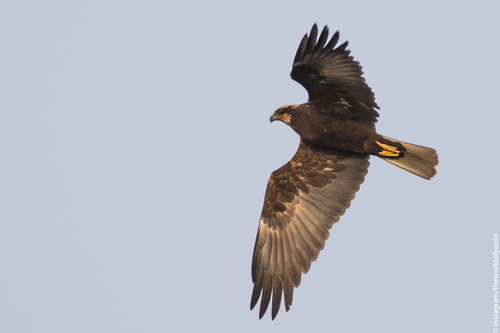 Falco di palude
In breve
Il segno distintivo più affidabile per separare l'Aquila anatraia minore dal Falco di palude in volo, specialmente nei giovani e negli immaturi, è la presenza di una chiara 'V' bianca sul sopracciglio e di macchie bianche prominenti sulle remiganti nell'aquila, rispetto all'assenza di tali segni sul sopracciglio e sulle ali del falco. L'Aquila anatraia minore è più robusta e pesante, con una testa e un becco più piccoli per un'aquila, mentre il Falco di palude è più snello, con ali più ampie e un distintivo schema di ali a tre tonalità nei maschi adulti. Le femmine e i giovani falchi sono di colore marrone cioccolato con una testa e spalle chiare, ma non mostrano mai la 'V' bianca o le macchie sulle ali dell'aquila. Entrambe le specie possono apparire marroni da lontano, ma il loro stile di volo, struttura e schemi delle ali sono abbastanza diversi quando osservati bene.
Consigli di identificazione
- 'V' bianca sul sopracciglio (Aquila anatraia minore, tutte le età): Cerca una chiara 'V' bianca sulla parte superiore della coda/sopracciglio in volo; questa è sempre presente nell'aquila e mai nel Falco di palude.
- Macchie bianche sulle remiganti (Aquila anatraia minore, giovani/immaturi): Gli aquilotti mostrano macchie bianche prominenti sulle piume da volo, senza alcuna macchia coprente; i giovani falchi non mostrano mai questo schema.
- Macchia chiara sul collo (Aquila anatraia minore, giovani): Una macchia chiara sul collo è visibile nei giovani aquilotti, ma non nei falchi.
- Assenza di macchie coprenti (Aquila anatraia minore, giovani): Gli aquilotti mancano di macchie coprenti sulle ali, mentre i falchi hanno ali di colore uniforme.
- Schema di ali a tre tonalità (maschio adulto Falco di palude): I maschi adulti mostrano una parte anteriore marrone, secondarie grigie e coda, e punte nere; le aquile non mostrano mai questa combinazione.
- Testa e spalle chiare (femmina/giovane Falco di palude): Le femmine e i giovani hanno una testa e spalle giallastre distintamente più chiare, nettamente distinte dal corpo scuro, ma mai una coda bianca o macchie sulle ali.
- Area oculare scura (femmina/giovane Falco di palude): La testa chiara è contrastata da un'area oculare scura, facendo risaltare l'iride chiara; la testa dell'aquila è chiara ma manca di questo contrasto facciale.
- Robustezza e struttura: Le aquile sono più pesanti, con un becco più corto e spesso e una testa più piccola per la loro dimensione; i falchi sono più snelli, con ali più lunghe e un aspetto più aggraziato.
- Stile di volo: Le aquile planano con ali piatte e battiti regolari; i falchi volano con le ali in una V poco profonda e spesso pendono le gambe mentre cacciano a bassa quota.
- Contesto dell'habitat: Le aquile sono raramente viste sopra paludi o canneti; i falchi sono tipici degli ambienti umidi.
- Dimorfismo sessuale (Falco di palude): Maschi e femmine differiscono fortemente nei falchi, ma entrambi i sessi mancano della coda bianca e delle macchie sulle ali dell'aquila.
- Forma ipermelanica (Falco di palude): Raramente, un falco può apparire quasi tutto nero, ma mancherà comunque della coda bianca e dei segni sulle ali dell'aquila.
- Dimensione del becco: Il becco dell'aquila è più piccolo e meno ricurvo di quanto ci si aspetterebbe per la sua dimensione; il becco del falco è proporzionalmente più lungo e snello.
- Voce: Il verso dell'aquila simile a un abbaiare è raramente udito; non fare affidamento sui richiami per la separazione.
- Attenzione agli ibridi (aquila): L'Aquila anatraia minore e l'Aquila anatraia maggiore ibridano e possono essere molto difficili da separare; il Falco di palude non ibrida con le aquile, quindi se l'uccello si adatta alla struttura e al comportamento del falco, non è un'aquila.
Taglia
L'Aquila anatraia minore è significativamente più pesante e più grande nel complesso (massa corporea ~1475 g, lunghezza ~60 cm, apertura alare ~150 cm) rispetto al Falco di palude (massa femminile fino a 800 g, lunghezza 48–56 cm, apertura alare 115–130 cm). L'aquila è più robusta, con una struttura più compatta e pesante, mentre il falco è più snello e con ali più lunghe rispetto alla sua dimensione corporea. La dimensione del falco varia in base al sesso, con le femmine che sono più grandi dei maschi, ma anche il falco più grande è visibilmente più leggero e più piccolo dell'aquila.
Piumaggio
- Giovane/immaturo Aquila anatraia minore: Mostra macchie bianche prominenti sulle remiganti (piume da volo) e una macchia chiara sul collo. Le copritrici superiori delle ali non hanno macchie, e una 'V' bianca sul sopracciglio è solitamente visibile, anche se meno definita rispetto agli adulti. Questi segni bianchi sono assenti nel Falco di palude di qualsiasi età.
- Giovane/immaturo Falco di palude: Uniformemente marrone cioccolato con una testa e spalle giallastre più chiare, ma senza bianco sul sopracciglio o sulle ali. Le aree chiare possono essere nettamente definite o sbiadite, ma l'area oculare è sempre più scura, facendo risaltare l'occhio chiaro. Rari esemplari ipermelanici possono apparire quasi completamente neri.
- Adulto Aquila anatraia minore: La testa e le copritrici delle ali di colore marrone chiaro contrastano con il corpo e le ali più scuri; la 'V' bianca sul sopracciglio è sempre presente e diagnostica. Nessuna testa chiara o macchie grigie sulle ali/coda.
- Maschio adulto Falco di palude: Mostra uno schema di ali a tre tonalità (parte anteriore marrone, secondarie grigie e coda, punte nere), testa e spalle chiare, e gambe gialle. Nessuna coda bianca o macchie sulle ali.
- Femmina adulta Falco di palude: Complessivamente marrone cioccolato, con una testa e spalle giallastre più chiare, ma mai con la coda bianca o le macchie dell'aquila.
Comportamento
L'Aquila anatraia minore plana con battiti regolari e profondi delle ali e spesso scivola con ali piatte, tipico delle aquile. È diffidente e tende a rimanere in aree aperte o leggermente boschive, cacciando da un posatoio o in volo. Il Falco di palude caccia scivolando a bassa quota sopra terreni aperti con le ali tenute in una V poco profonda e le gambe spesso penzoloni, un comportamento classico del falco. Il volo del falco è più leggero e più galleggiante, con frequenti passaggi su paludi e campi, mentre l'aquila appare più pesante e più determinata nel volo.
Habitat
L'Aquila anatraia minore preferisce aree aperte o leggermente boschive, spesso vicino a foreste o margini boschivi, ed è raramente vista sopra le zone umide. Il Falco di palude è fortemente associato a paludi, canneti e habitat umidi, dove caccia sopra acque aperte o campi umidi. Se vista sopra ampie zone paludose o canneti, è molto più probabile che si tratti di un Falco di palude; le aquile sono più spesso viste sopra paesaggi aperti e asciutti.
Voce
L'Aquila anatraia minore emette un verso simile a un abbaiare, ma entrambe le specie sono generalmente silenziose lontano dal nido. Le vocalizzazioni non sono un segno distintivo affidabile nella maggior parte delle situazioni di birdwatching.
Aquila anatraia minore · Falco di palude · I miei uccelli difficili