

Piovanello tridattilo vs Gambecchio comune
Calidris alba contro Calidris minuta
Fai un quiz con Piovanello tridattilo e Gambecchio comune
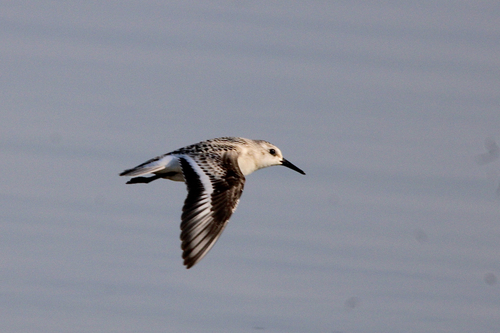 Piovanello tridattilo
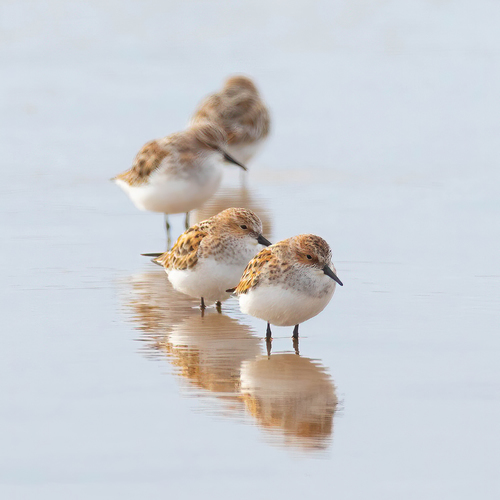 Gambecchio comune
In breve
Il segno distintivo più affidabile tra Piovanello tridattilo e Gambecchio comune è la forte banda alare bianca del Piovanello tridattilo in volo, visibile in tutte le età, contrastata dalla mancanza di una banda alare così prominente nel Gambecchio comune. Il Piovanello tridattilo è anche notevolmente più robusto, con un becco più spesso e una corsa distintiva sulle spiagge sabbiose aperte, mentre il Gambecchio comune è più piccolo, più delicato, con un becco fine, gambe scure e una proiezione primaria più lunga. I giovani Gambecchi comuni mostrano strisce chiare sulla corona e un petto rosato, che i Piovanelli tridattili non hanno. In inverno, entrambe le specie possono sembrare simili, ma le differenze strutturali e le preferenze di habitat aiutano: il Piovanello tridattilo preferisce le spiagge sabbiose aperte, mentre il Gambecchio comune si trova più spesso su margini fangosi o vegetati.
Consigli di identificazione
- Banda alare bianca in volo (tutte le età): Il Piovanello tridattilo mostra sempre una forte banda alare bianca quando vola, che il Gambecchio comune non ha. Usa questo come primo controllo per gli uccelli in volo.
- Dimensioni e struttura: Il Piovanello tridattilo è più robusto e massiccio, con un becco più spesso e smussato; il Gambecchio comune è più piccolo, con un becco più fine e più delicato nel complesso. Confronta direttamente se entrambi sono presenti.
- Proiezione primaria: Il Gambecchio comune ha una proiezione primaria notevolmente lunga (le punte delle ali si estendono oltre la coda), dando un aspetto di ali lunghe, specialmente a riposo. Le primarie del Piovanello tridattilo sono più corte rispetto alla coda.
- Forma del becco: Il becco del Piovanello tridattilo è spesso e dritto, mentre quello del Gambecchio comune è fine, sottile e appuntito. Questo è meglio visibile da vicino.
- Colore delle gambe: Entrambe le specie hanno gambe scure, quindi questo non è utile per la separazione.
- Piumaggio giovanile: Il giovane Gambecchio comune mostra strisce chiare sulla corona e un petto rosato, a volte con una 'V' bianca sulla schiena. I giovani Piovanelli tridattili non hanno queste caratteristiche e sono più semplici.
- Piumaggio da nidificazione: Gli adulti di Gambecchio comune in piumaggio da nidificazione hanno una sfumatura arancione sul petto e una gola bianca; il Piovanello tridattilo non ha questi colori ed è più uniforme.
- Piumaggio non da nidificazione (inverno): Entrambe le specie diventano chiare, ma il Piovanello tridattilo è spesso quasi bianco, specialmente nella parte inferiore, mentre il Gambecchio comune rimane leggermente più grigio e più piccolo.
- Struttura delle dita: Il Gambecchio comune ha dita non palmati; il Piovanello tridattilo non ha un dito posteriore, ma questo è raramente visibile sul campo.
- Comportamento: Il Piovanello tridattilo corre rapidamente lungo la linea delle onde delle spiagge sabbiose con una corsa unica 'in bicicletta', spesso in stormi. Il Gambecchio comune si muove più delicatamente ed è più probabile che venga visto mentre becchetta nel fango o ai margini delle pozzette.
- Habitat: Il Piovanello tridattilo è quasi sempre su spiagge sabbiose aperte; il Gambecchio comune preferisce le zone fangose, i margini delle pozzette e i bordi vegetati, anche se può sovrapporsi durante la migrazione.
- Voce: Se senti un richiamo acuto 'stit', è il Gambecchio comune. Il richiamo del Piovanello tridattilo non è descritto qui.
- Azione di alimentazione: Il Piovanello tridattilo si nutre correndo e fermandosi per beccare prede, spesso inseguendo onde in ritirata. Il Gambecchio comune becchetta in modo più metodico sul substrato.
- Composizione del gruppo: Negli stormi misti, il Piovanello tridattilo si distingue come l'uccello più grande, più chiaro e più massiccio; il Gambecchio comune si mescola con altri piccoli gambecchi.
- Trappole: In scarsa illuminazione o a distanza, la chiarezza del Piovanello tridattilo può essere confusa con quella del Gambecchio comune, specialmente in inverno. Controlla sempre la struttura, la banda alare in volo e il comportamento per conferma.
Taglia
Il Gambecchio comune è significativamente più piccolo e leggero del Piovanello tridattilo. La massa corporea media del Gambecchio comune è di circa 25,5 g [wikidata], mentre il Piovanello tridattilo è più massiccio e robusto (anche se la massa precisa non è fornita, è simile in dimensioni al Piovanello pancianera, che è più pesante del Gambecchio comune). La struttura complessiva del Piovanello tridattilo è più robusta, con un becco più spesso e un aspetto più massiccio, mentre il Gambecchio comune è più delicato, con un becco fine e appuntito e una costruzione più delicata.
Piumaggio
- Piumaggio giovanile/immaturo: Il giovane Gambecchio comune mostra strisce chiare sulla corona e un petto rosato, oltre a una forte 'V' bianca sulla schiena in piumaggio fresco. I giovani Piovanelli tridattili non hanno queste caratteristiche e sono generalmente più semplici sopra.
- Schema alare in volo (tutte le età): Il Piovanello tridattilo mostra una forte banda alare bianca, facendolo risaltare in volo. Il Gambecchio comune non ha questa banda alare prominente.
- Nidificazione adulta: Il Gambecchio comune ha una sfumatura arancione sul petto e una gola bianca; il Piovanello tridattilo in piumaggio da nidificazione è più uniforme e privo di toni arancioni.
- Non nidificazione adulta (inverno): Entrambe le specie diventano chiare, ma il Piovanello tridattilo è ancora più chiaro nel complesso, apparendo spesso quasi bianco, mentre il Gambecchio comune rimane leggermente più grigio e più piccolo, con un becco più fine.
- Colore delle gambe: Il Gambecchio comune ha sempre gambe scure; le gambe del Piovanello tridattilo sono anche scure, quindi questo non è un separatore affidabile.
- Becco: Il becco del Piovanello tridattilo è più spesso e smussato; quello del Gambecchio comune è fine e appuntito.
Comportamento
I Piovanelli tridattili sono altamente gregari in inverno, formando spesso grandi stormi che corrono rapidamente lungo la linea delle onde delle spiagge sabbiose con un'azione caratteristica delle gambe 'in bicicletta', fermandosi frequentemente per beccare cibo. I Gambecchi comuni sono anche gregari, ma i loro movimenti sono più rapidi e delicati, e sono più propensi a essere visti mentre becchettano nel fango o ai margini delle pozzette piuttosto che correre lungo la sabbia aperta. Il comportamento di corsa del Piovanello tridattilo è distintivo e diagnostico quando visto bene.
Habitat
Il Piovanello tridattilo è fortemente associato a spiagge sabbiose aperte e alla zona intertidale superiore, raramente avventurandosi su zone fangose o margini vegetati, tranne occasionalmente durante la migrazione. Il Gambecchio comune è più flessibile, spesso trovato su zone fangose costiere, ai margini delle pozzette interne e talvolta in aree sabbiose, ma è meno legato alle spiagge aperte rispetto al Piovanello tridattilo. Se l'uccello si trova su una spiaggia sabbiosa ampia e battuta dalle onde, è molto più probabile che sia un Piovanello tridattilo; su margini fangosi o vegetati, il Gambecchio comune è il candidato migliore.
Voce
Il Gambecchio comune emette un richiamo acuto 'stit', che è diagnostico se udito. Il richiamo del Piovanello tridattilo non è descritto nelle note fornite, quindi la voce è utile solo se si sente il 'stit' acuto, indicando il Gambecchio comune.
Piovanello tridattilo · Gambecchio comune · I miei uccelli difficili