
Short-billed Dowitcher vs Limnodromo pettorossiccio
Limnodromus griseus contro Limnodromus scolopaceus
Fai un quiz con Short-billed Dowitcher e Limnodromo pettorossiccio
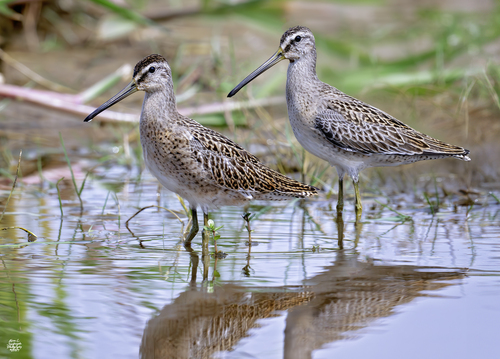 Short-billed Dowitcher
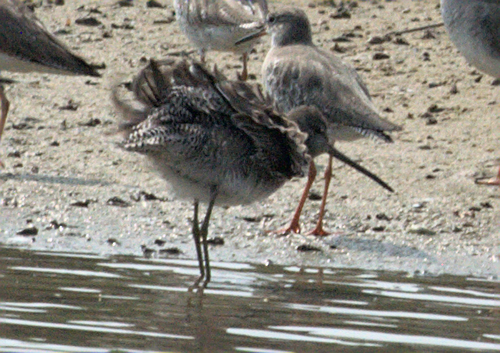 Limnodromo pettorossiccio
In breve
Il segno di campo più affidabile tra il Short-billed Dowitcher e il Limnodromo pettorossiccio è la loro vocalizzazione—il Short-billed emette un richiamo dolce, mentre il Limnodromo pettorossiccio emette un 'keek' più acuto e alto—ma questo non è sempre disponibile sul campo. Gli uccelli giovanili e invernali sono notoriamente difficili da separare visivamente, con differenze sottili nel motivo e nel colore delle terziarie e delle parti inferiori. In abito nuziale, il Limnodromo pettorossiccio mostra un ventre rufous solido con fianchi barrati, mentre il Short-billed varia per sottospecie ma non mostra mai sia un ventre rossastro che fianchi barrati insieme. La struttura e la lunghezza del becco si sovrappongono considerevolmente, quindi non sono affidabili da sole. La preferenza dell'habitat può aiutare: il Limnodromo pettorossiccio si trova più spesso in acque dolci, il Short-billed più spesso vicino alle coste, ma entrambi possono verificarsi insieme durante la migrazione.
Consigli di identificazione
- Listen for calls: Se senti un 'keek' o 'peet' acuto e alto, sospetta il Limnodromo pettorossiccio; un richiamo dolce e più morbido indica il Short-billed. Questo è il segno di campo più affidabile, specialmente in stormi misti o in piumaggi opachi.
- Check age and plumage: I giovanili del Limnodromo pettorossiccio hanno terziarie grigie scure e semplici con bordi buff stretti e poco motivo interno; i giovanili del Short-billed hanno terziarie con marcature interne più brillanti e frange marroni buff. Questo è sottile e meglio visibile da vicino o in foto.
- Breeding adult underparts: Il Limnodromo pettorossiccio mostra un ventre rufous solido con fianchi barrati e una corona scura. Il Short-billed non combina mai sia un ventre rossastro che fianchi barrati; 'hendersoni' ha un ventre rossastro ma fianchi macchiati (non barrati), mentre 'griseus' e 'caurinus' hanno ventri bianchi.
- Flank pattern: In abito nuziale, cerca barrature bianche sui fianchi (Limnodromo pettorossiccio) rispetto a macchie o barrature meno distinte (Short-billed, a seconda della sottospecie).
- Crown and head: Il Limnodromo pettorossiccio in abito nuziale ha una corona scura e una testa rufous; il Short-billed è meno contrastante.
- Tail pattern: Entrambi hanno code barrate in bianco e nero, ma le barre nere del Limnodromo pettorossiccio sono quasi il doppio più larghe di quelle bianche. Questo è sottile e raramente diagnostico sul campo.
- Rump in flight: Il Limnodromo pettorossiccio mostra un grande sopra-coda bianco che si estende lungo la schiena, ma questo non è unico e può essere difficile da vedere.
- Bill length: Nonostante i nomi, la lunghezza del becco si sovrappone notevolmente e non è affidabile per la separazione. Solo gli estremi sono utili, e anche allora, fai attenzione alla sovrapposizione.
- Leg color: Entrambe le specie hanno gambe giallastre; questo non è un segno utile.
- Habitat preference: Il Limnodromo pettorossiccio è più probabile in acque dolci, il Short-billed più probabile vicino all'acqua salata o alle paludi costiere, ma entrambi possono verificarsi insieme, specialmente in migrazione.
- Breast color in winter: Entrambe le specie hanno il petto grigio in piumaggio non nuziale; il petto grigio del Limnodromo pettorossiccio sfuma in un mento più chiaro, ma questo è sottile.
- Behavior: Entrambi si nutrono con un rapido movimento di 'macchina da cucire'. Il volo di esibizione è visibile solo nel Limnodromo pettorossiccio in riproduzione.
- Flock composition: Entrambe le specie si trovano spesso in stormi misti; non assumere che tutti gli uccelli presenti siano la stessa specie.
- Sex differences: Entrambi i sessi sono simili; le femmine sono mediamente leggermente più grandi e con becco più lungo, ma questo non è utile sul campo.
- When in doubt: Se non riesci a sentire un richiamo e l'uccello non è in piumaggio nuziale fresco o un giovanile classico, potrebbe non essere identificabile in modo sicuro a specie sul campo. Le fotografie delle terziarie e delle parti inferiori possono aiutare, ma molti individui rimangono ambigui.
Taglia
Entrambe le specie sono uccelli di riva di dimensioni medie e tozzi con misure sovrapposte. Il Short-billed Dowitcher è mediamente leggermente più pesante (113g contro 104g), ma questa differenza non è evidente sul campo. La lunghezza del becco è anche altamente sovrapposta e non può essere utilizzata in modo affidabile per l'identificazione, nonostante i nomi fuorvianti. Entrambi hanno becchi lunghi e dritti e gambe giallastre.
Piumaggio
- Juvenile/First-winter: I giovanili del Limnodromo pettorossiccio hanno terziarie grigie scure con bordi buff stretti e marcature interne molto opache o assenti, dando un aspetto più semplice alla parte superiore dell'ala. I giovanili del Short-billed hanno terziarie più decorate con marcature interne più brillanti e frange marroni buff. I giovanili del Limnodromo pettorossiccio mostrano anche un petto grigio più uniforme, mentre i Short-billed sono spesso più decorati sotto.
- Adult breeding: Gli adulti del Limnodromo pettorossiccio in abito nuziale hanno una corona scura, testa, collo, petto e ventre rufous, con barre nere sul petto e barrature bianche sui fianchi. Il ventre è solidamente rossastro. Gli adulti del Short-billed variano per sottospecie: 'griseus' e 'caurinus' hanno ventri bianchi, 'hendersoni' ha un ventre rossastro ma con fianchi macchiati (non barrati). Nessuno combina un ventre rossastro con fianchi barrati come fa il Limnodromo pettorossiccio.
- Non-breeding/winter: Entrambe le specie diventano grigie sopra e chiare sotto, rendendo la separazione visiva estremamente difficile. Il petto del Limnodromo pettorossiccio è grigio, schiarendosi gradualmente verso il mento, mentre il Short-billed è anch'esso grigio ma può mostrare tonalità e motivi leggermente diversi a seconda della sottospecie. Il motivo della coda è simile: entrambi mostrano barrature in bianco e nero, ma le barre nere del Limnodromo pettorossiccio sono quasi il doppio più larghe di quelle bianche.
- In flight: Il Limnodromo pettorossiccio mostra un grande sopra-coda bianco che si estende lungo la schiena, ma questo non è sempre visibile e non è unico.
Comportamento
Entrambe le specie si nutrono rapidamente setacciando il fango con un movimento di 'macchina da cucire'. I Limnodromi pettorossicci hanno una distintiva esibizione aerea durante la riproduzione, con i maschi che inseguono le femmine in volo. In migrazione e in inverno, entrambi sono solitamente visti in stormi, spesso misti. Il comportamento non è affidabile per la diagnosi.
Habitat
Il Short-billed Dowitcher è più probabile che venga trovato vicino alle coste oceaniche, alle paludi di marea e alle zone fangose, specialmente durante la migrazione e l'inverno. Il Limnodromo pettorossiccio preferisce habitat di acqua dolce come stagni e paludi, specialmente nei luoghi di riproduzione, ma entrambe le specie possono sovrapporsi in migrazione e in inverno. L'habitat è un indizio utile ma non definitivo.
Voce
La vocalizzazione è il segno di campo più affidabile. Il Short-billed Dowitcher emette un richiamo dolce e più morbido, mentre il Limnodromo pettorossiccio emette un richiamo acuto e alto 'keek' o 'peet'. Questa differenza è particolarmente utile in stormi o durante la migrazione, quando le differenze di piumaggio sono sottili o assenti. I richiami sono spesso l'unico modo per separare gli uccelli invernali o giovanili.
Short-billed Dowitcher · Limnodromo pettorossiccio · I miei uccelli difficili