

Upcher's Warbler vs Cannareccione
Hippolais languida contro Acrocephalus arundinaceus
Fai un quiz con Upcher's Warbler e Cannareccione
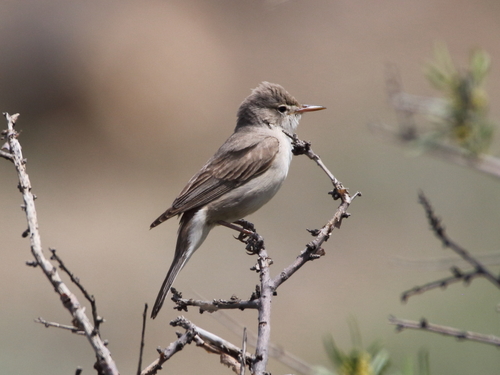 Upcher's Warbler
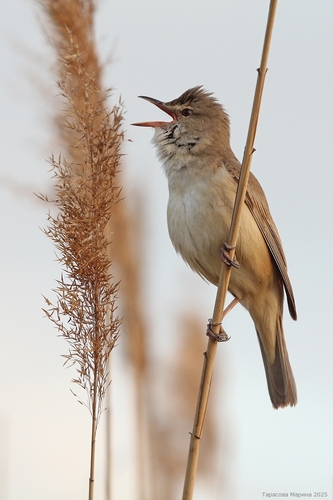 Cannareccione
In breve
Il segno distintivo più affidabile per separare Upcher's Warbler da Cannareccione è la dimensione e la struttura: Cannareccione è molto più grande, con una corporatura pesante, simile a quella di un tordo e un forte sopracciglio, mentre Upcher's è più snello, con una coda più lunga e frequenti movimenti della coda. Upcher's Warbler è complessivamente più grigio e più delicato, mostrando spesso movimenti irrequieti della coda, mentre Cannareccione è più massiccio, marrone sopra e privo di azione della coda. In volo o posato, la differenza di dimensione è sorprendente, e l'habitat può anche aiutare: Cannareccione si trova quasi sempre nei canneti, mentre Upcher's preferisce habitat cespugliosi e più secchi. Le vocalizzazioni sono molto diverse e diagnostiche se udite.
Consigli di identificazione
- Size is the first check: Cannareccione è molto più grande e pesante di Upcher's Warbler. Se l'uccello sembra delle dimensioni di un tordo, è Cannareccione; se è più delicato, pensa a Upcher's.
- Supercilium: Cannareccione mostra un forte sopracciglio chiaro sopra l'occhio, particolarmente evidente negli adulti. Upcher's Warbler manca di questa caratteristica o mostra solo una debole suggestione.
- Tail length and movement: Upcher's Warbler ha una coda notevolmente lunga, che flicka e apre frequentemente. Questa azione irrequieta della coda è diagnostica e non è mostrata da Cannareccione.
- Bill and head shape: Cannareccione ha un becco forte e appuntito e una fronte piatta, conferendogli un aspetto pesante. Upcher's ha un becco leggermente più lungo di Canapino maggiore, ma la sua testa non è così massiccia o piatta come quella di Cannareccione.
- Plumage color: Upcher's è complessivamente grigiastro, specialmente sopra, mentre Cannareccione è marrone ricco sopra e bianco-giallastro sotto. I giovani Cannareccioni sono più caldi sotto, ma comunque marroni sopra.
- Habitat: Se trovi l'uccello in un canneto, specialmente in Europa o nel Paleartico occidentale, è quasi certamente Cannareccione. Upcher's evita i canneti e preferisce habitat secchi e cespugliosi.
- Song: Il canto di Cannareccione è forte, aspro e ripetitivo, spesso udito da steli di canne esposti. Il canto di Upcher's è molto più morbido e più tipico di Hippolais, e non è probabile che venga confuso.
- Behavior: Upcher's è più attivo, con costanti movimenti della coda e movimenti agili nei cespugli. Cannareccione è più lento, più deliberato e spesso si arrampica tra le canne.
- Wing and tail proportions: Upcher's ha ali più corte e una coda più lunga rispetto al suo corpo, mentre Cannareccione ha ali più lunghe e una coda proporzionalmente più corta.
- Perched posture: Cannareccione appare spesso eretto e pesante, mentre Upcher's è più orizzontale e snello.
- Juvenile confusion: I giovani Cannareccioni sono più ricchi di giallo sotto, ma altrimenti simili agli adulti; non mostrano l'irrequietezza della coda di Upcher's.
- Flight style: Cannareccione è pesante e lento in volo, mentre Upcher's è più leggero e agile.
- Bill color and shape: Entrambi hanno becchi forti, ma quello di Cannareccione è più robusto e si adatta alla sua testa più grande.
- Geographic range: Upcher's si riproduce dalla Turchia al Pakistan; Cannareccione si riproduce in tutta Europa e nel Paleartico occidentale. L'overlap è limitato, quindi la posizione può aiutare.
- Pitfalls: Non fare affidamento solo su toni marroni/grigi generali, poiché la luce può ingannare. Concentrati su struttura, azione della coda e habitat per la migliore separazione.
Taglia
Cannareccione è il più grande dei warbler europei, misurando 16–21 cm di lunghezza e pesando 22–38 g, con un'apertura alare di 25–30 cm [wikipedia]. Upcher's Warbler è di dimensioni medie per un Hippolais, simile a Canapino maggiore ma con una coda più lunga e ali più corte; è notevolmente più piccolo e snello di Cannareccione [wikipedia]. La differenza è ovvia in un confronto diretto: Cannareccione è delle dimensioni di un tordo e robusto, mentre Upcher's è molto più delicato.
Piumaggio
Non ci sono segni distintivi specifici per età descritti per nessuna delle due specie che consentirebbero una facile separazione di giovani o immaturi in volo. Il Cannareccione adulto è marrone non striato sopra e bianco-giallastro opaco sotto, con un forte sopracciglio e una fronte piatta. I giovani sono più ricchi di giallo sotto, ma altrimenti simili. Upcher's Warbler è complessivamente grigiastro, con un becco leggermente più lungo, ali più corte e una coda più lunga rispetto a Canapino maggiore; manca del forte sopracciglio di Cannareccione ed è più uniformemente grigio. La coda di Upcher's è proporzionalmente più lunga e spesso in movimento, mentre la coda di Cannareccione è più corta rispetto al suo corpo. Il sopracciglio è un segno chiave: forte e ovvio in Cannareccione, debole o assente in Upcher's.
Comportamento
Upcher's Warbler è altamente attivo, con costanti movimenti della coda e movimenti che ricordano i warbler o i chat di Sylvia. Questa azione della coda è diagnostica e raramente eguagliata da Cannareccione. Cannareccione è più ponderoso e meno attivo nei suoi movimenti, spesso arrampicandosi tra le dense canne e cantando da steli di canne esposti. In volo, Cannareccione appare pesante e lento, mentre Upcher's è più leggero e agile.
Habitat
Cannareccione si trova quasi esclusivamente nei canneti durante la stagione di riproduzione, e nei canneti, cespugli, campi di riso e radure forestali in inverno [wikipedia]. Upcher's Warbler si riproduce in aree secche e cespugliose dalla Turchia al Pakistan e non è uno specialista dei canneti. Se l'uccello si trova in un fitto canneto, è molto più probabile che sia Cannareccione; se si trova in cespugli secchi o aperti, Upcher's è il candidato migliore.
Voce
I canti sono completamente diversi e diagnostici. Upcher's Warbler ha un canto distintivo di Hippolais, per nulla simile a quello di Cannareccione. Il canto di Cannareccione è molto forte, si propaga lontano e include chiacchiere, gracidii e frasi varie (carr-carr-cree-cree-cree-jet-jet), a volte con mimetismo. Se senti un canto forte, aspro e ripetitivo da un canneto, è Cannareccione. Il canto di Upcher's è più morbido, più tipico di Hippolais, e non è probabile che venga confuso all'orecchio.