Chiurlo piccolo vs Beccaccino
Numenius phaeopus contro Gallinago gallinago
Fai un quiz con Chiurlo piccolo e Beccaccino
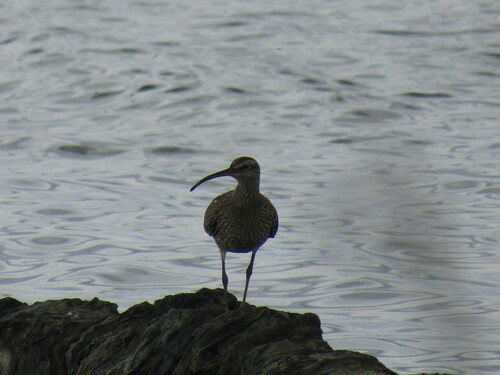 Chiurlo piccolo
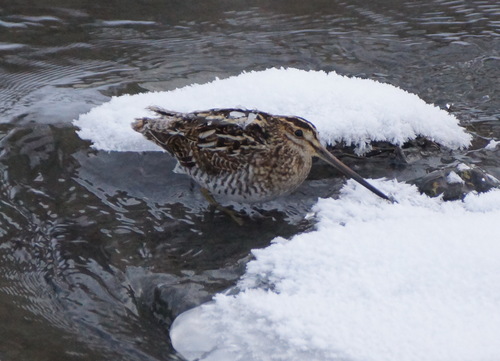 Beccaccino
In breve
The most reliable field mark to separate Whimbrel from Common Snipe is size and structure: Whimbrel is much larger, with a long, strongly downcurved bill and longer legs, while Common Snipe is small, stocky, and has a straight, needle-like bill. In flight, Whimbrel shows a striking white rump (in Eurasian birds), whereas Snipe has a camouflaged back and no white rump. Snipe flushes with a zig-zag, erratic flight and sharp call, while Whimbrel takes off more steadily. Both can be brownish and streaked, but their proportions and flight styles are dramatically different.
Consigli di identificazione
- White rump in flight (Eurasian Whimbrel only): If you see a bold white rump and lower back as the bird takes off, it's a Whimbrel. Snipe never shows a white rump—its back and rump are mottled brown and blend with the rest of the upperparts. This is the single best mark in flight for all ages.
- Size and structure: Whimbrel is nearly twice the length and several times the mass of a snipe, with long legs and a large, imposing build. Snipe is small, dumpy, and compact, with short legs. Even at a distance, the size difference is usually obvious if you have a sense of scale.
- Bill shape: Whimbrel's bill is long, strongly downcurved, and kinked, often as long as its head and neck combined. Snipe's bill is straight, slender, and needle-like, about as long as its body is deep. Bill shape is visible even at moderate range.
- Head pattern: Snipe shows a bold dark eye-stripe with pale lines above and below, and straw-yellow stripes on the back. Whimbrel has a pale supercilium and crown stripes, but these are less contrasting and the overall effect is plainer.
- Flight style: Snipe flushes suddenly, flying low and fast in a zig-zag pattern, often uttering a sharp 'scape' call. Whimbrel rises more steadily and flies with strong, direct wingbeats, often calling with a rippling whistle.
- Wing shape: Snipe's wings are sharply pointed, suited to rapid, twisting flight. Whimbrel's wings are longer and broader, matching its larger size and steadier flight.
- Leg length: Whimbrel's legs are visibly longer, extending well beyond the tail in flight and obvious when walking. Snipe's legs are short and do not project much in flight.
- Plumage above: Snipe is intricately patterned with straw-yellow stripes and bold contrasts; Whimbrel is more uniformly greyish-brown with subtle streaking.
- Habitat: If you flush a bird from dense, wet grass or bog, it's likely a snipe. If the bird is striding on open mudflats or shorelines, it's more likely a Whimbrel.
- Perched posture: Snipe often sits hunched, with its bill pointing slightly downward and head tucked in. Whimbrel stands upright, often alert and scanning.
- Display behavior: Only snipe performs the 'drumming' aerial display with its tail feathers during breeding season.
- Voice: Whimbrel's call is a rippling whistle; snipe's is a sharp 'scape' when flushed and a unique 'drumming' in display.
- Seasonal context: Both species migrate, but Whimbrel is more likely seen in open coastal habitats during migration, while snipe is tied to wet, vegetated ground year-round.
- Group size: Whimbrel may be seen in small flocks, especially on migration; snipe are usually solitary or in very small groups.
- Potential pitfalls: Juvenile Whimbrel and snipe can both look streaky and brown, but the white rump (Whimbrel) and size difference are always reliable. Bill shape and flight style are also consistent across ages.
Taglia
Whimbrel is a much larger wader, measuring 37–47 cm in length with a wingspan of 75–90 cm and weighing 270–493 g. In contrast, Common Snipe is small and compact, 25–27 cm long, with a 44–47 cm wingspan and a typical mass around 120 g. The size gap is obvious in direct comparison: Whimbrel is nearly twice the length and several times the mass of a snipe, with longer legs and a much more imposing presence.
Piumaggio
- Juvenile/immature/flight views: Whimbrel (Eurasian) shows a bold white rump and lower back in flight, highly visible against its brown upperparts; this is diagnostic and applies to all ages of Eurasian birds. Common Snipe never shows a white rump—instead, its back and rump are cryptically mottled brown and straw-yellow, blending with the rest of the upperparts.
- Adults/perched: Whimbrel is overall greyish-brown with a pale supercilium and crown stripes, but the pattern is subtle compared to the snipe's bold head stripes. Snipe is intricately patterned with straw-yellow stripes on a dark brown back, a strong dark eye-stripe, and contrasting pale lines above and below the eye. Underparts are paler in both, but snipe often looks more sharply streaked above and below.
- Bill: Whimbrel's bill is long, downcurved, and kinked; snipe's is straight, dark, and needle-like.
- Wing shape: Snipe has pointed wings, suited to rapid, zig-zag flight; Whimbrel's wings are longer and broader, matching its size.
Comportamento
Common Snipe is secretive, crouching low in vegetation and flushing only when closely approached, then flying off in a rapid, zig-zagging pattern to evade predators. Its flight is erratic and low to the ground. Whimbrel is more conspicuous, often seen walking in open areas or mudflats, and when flushed, rises steadily with strong, direct flight. Snipe's courtship display involves high circling and dramatic dives producing a 'drumming' sound with its tail feathers, a behavior not seen in Whimbrel.
Habitat
Whimbrel favors open coastal mudflats, estuaries, and tundra during migration and breeding, often in exposed areas. Common Snipe prefers marshes, bogs, wet meadows, and dense ground vegetation, where it can remain hidden. If you flush a bird from thick, wet grass or boggy ground, it's far more likely to be a snipe; if you see a large wader striding on open mud or shore, think Whimbrel.
Voce
Whimbrel gives a rippling, whistled call, sometimes prolonged into a trill. Common Snipe, when flushed, utters a sharp 'scape, scape' note. During display, snipe produces a unique 'drumming' or bleating sound with its tail feathers, unlike any Whimbrel vocalization. Whimbrel's call is more musical and less abrupt than the snipe's alarm.