

White-browed Sparrow-Weaver vs Cape Sparrow
Plocepasser mahali contro Passer melanurus
Fai un quiz con White-browed Sparrow-Weaver e Cape Sparrow
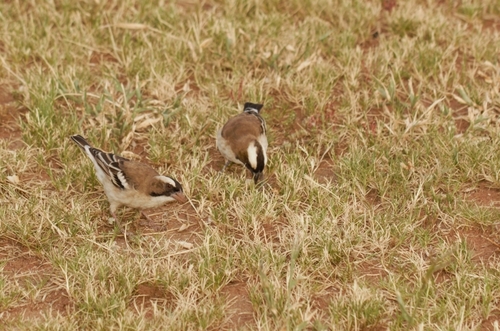 White-browed Sparrow-Weaver
 Cape Sparrow
In breve
Il segno distintivo più affidabile per separare il White-browed Sparrow-Weaver dal Cape Sparrow è la larga striscia bianca sopra l'occhio e il cuneo bianco in volo del Sparrow-Weaver, rispetto al bold head pattern del Cape Sparrow con una testa nera (maschio) e una larga striscia bianca sul viso. Il Sparrow-Weaver è anche notevolmente più grande e pesante, con un becco più robusto, spesso nero (maschio), rispetto alla dimensione più piccola e al becco rosa-marrone del Cape Sparrow. I giovani e le femmine di Cape Sparrow non hanno la testa nera del maschio ma mostrano comunque una striscia chiara sulla testa, mentre l'arcata sopracciliare del Sparrow-Weaver rimane prominente in tutte le età. Il colore del becco e il pattern della testa sono fondamentali in tutte le età e sessi, ma nota soprattutto il cuneo bianco del Sparrow-Weaver in volo e la sua dimensione maggiore quando gli uccelli si muovono o sono distanti.
Consigli di identificazione
- Larga striscia bianca sopra l'occhio (supercilium): Il White-browed Sparrow-Weaver di tutte le età e sessi mostra una striscia bianca brillante e audace sopra l'occhio, molto più larga e bianca rispetto a quella del Cape Sparrow.
- Cuneo bianco in volo: Il Sparrow-Weaver mostra un cuneo bianco quando vola, assente nel Cape Sparrow; controlla questo soprattutto negli uccelli spaventati o in volo.
- Colore del becco: Il maschio Sparrow-Weaver ha un becco nero, la femmina è color corno, il giovane è rosa-marrone. Il becco del Cape Sparrow è sempre rosa-marrone, mai nero.
- Pattern della testa (maschio Cape Sparrow): Il maschio Cape Sparrow ha una testa per lo più nera con una larga striscia bianca che si arriccia da dietro l'occhio fino alla gola, oltre a un pettorale nero. Il Sparrow-Weaver non mostra mai questo pattern.
- Pattern della testa (femmina/giovane Cape Sparrow): Le femmine e i giovani Cape Sparrow hanno una testa grigia più opaca con una striscia chiara, ma è più stretta e meno appariscente rispetto all'arcata sopracciliare del Sparrow-Weaver. I giovani maschi di Cape Sparrow possono mostrare un po' di nero sulla testa precocemente.
- Schiena e spalle color castagna: Solo il Cape Sparrow (soprattutto i maschi) mostra un brillante color castagna sulla schiena e sulle spalle; il Sparrow-Weaver è marrone uniforme sopra.
- Parte inferiore: Il Sparrow-Weaver ha parti inferiori bianche, a volte con leggere macchie marroni (soprattutto in Zimbabwe); quelle del Cape Sparrow sono grigie, più scure sui fianchi.
- Strisce alari: I maschi di Cape Sparrow hanno una striscia alare bianca e nera sotto la spalla, che il Sparrow-Weaver non ha. Tuttavia, questo è sottile e meno affidabile rispetto ai segni sulla testa e sul cuneo.
- Dimensione e robustezza: Il Sparrow-Weaver è molto più grande e pesante (49 g vs. 29 g), con un corpo più lungo e una costruzione più robusta. Usa questo quando entrambe le specie sono presenti o confrontate con altri passeri.
- Colore dei piedi: Il Sparrow-Weaver ha piedi neri; quelli del Cape Sparrow sono rosa (non sempre visibili ma possono aiutare a distanza ravvicinata).
- Dimensione del gruppo e comportamento: Il Sparrow-Weaver è solitamente in piccoli gruppi familiari compatti; il Cape Sparrow spesso in colonie più grandi e sparse.
- Habitat: Il Sparrow-Weaver preferisce savane secche e thornveld, evita boschi a foglia larga; il Cape Sparrow è più generalista e spesso si trova in città e giardini.
- Voce: I richiami del Cape Sparrow sono più musicali e distintivi; la voce del Sparrow-Weaver non è descritta qui, quindi usa il canto del Cape Sparrow se udito.
- Differenze sessuali: Solo il maschio Sparrow-Weaver ha un becco nero; entrambi i sessi del Cape Sparrow hanno un colore del becco simile ma differiscono nel pattern della testa.
- Trappole: Le femmine e i giovani Cape Sparrow possono sembrare superficialmente simili ai Sparrow-Weaver a causa delle strisce chiare sulla testa, ma l'arcata è sempre più stretta e meno bianca, e la dimensione complessiva è più piccola.
Taglia
Il White-browed Sparrow-Weaver è significativamente più grande e pesante (49 g vs. 29 g) rispetto al Cape Sparrow. Sul campo, questo si traduce in un uccello più robusto e massiccio con un corpo più lungo (17–19 cm vs. 14–16 cm). La dimensione del Sparrow-Weaver è particolarmente evidente quando entrambe le specie sono viste insieme o vicino ad altri passeri. Il Cape Sparrow è più compatto e leggero, con una costruzione più tipica dei passeri.
Piumaggio
-
Giovani e Femmine: Entrambe le specie hanno strisce chiare sulla testa, ma quella del White-browed Sparrow-Weaver è più larga e di un bianco più brillante, che corre dal becco sopra l'occhio, mentre quella del Cape Sparrow è più stretta e più color crema nelle femmine e nei giovani. I giovani Sparrow-Weaver hanno un becco rosa-marrone; i giovani Cape Sparrow assomigliano a femmine opache ma i giovani maschi iniziano a mostrare nero sulla testa precocemente.
-
Maschi Adulti: I maschi Sparrow-Weaver hanno un becco nero e una larga striscia bianca sopra l'occhio; i maschi Cape Sparrow hanno una testa nera sorprendente con una striscia bianca che si arriccia da dietro l'occhio fino alla gola, oltre a un pettorale nero e una schiena color castagna. Le parti inferiori del Sparrow-Weaver sono bianche con leggere macchie marroni (soprattutto in Zimbabwe), mentre quelle del Cape Sparrow sono grigie e più scure sui fianchi.
-
Volo/Parte superiore dell'ala: Il Sparrow-Weaver mostra un cuneo bianco in volo, che è assente nel Cape Sparrow. I maschi Cape Sparrow hanno una striscia alare bianca e nera, ma nessun cuneo bianco. Entrambe le specie hanno parti superiori marroni, ma il Sparrow-Weaver non ha le spalle e la schiena color castagna del Cape Sparrow.
-
Colore del becco: Il maschio Sparrow-Weaver ha un becco nero, la femmina è color corno, il giovane è rosa-marrone. Il becco del Cape Sparrow è rosa-marrone in tutte le età.
Comportamento
I White-browed Sparrow-Weaver sono tipicamente visti in piccoli gruppi familiari (2–11), spesso muovendosi insieme e cercando cibo a terra o in basso nei cespugli. È più probabile che vengano visti posati in modo eretto e appariscente, a volte mostrando la loro striscia bianca sopra l'occhio e il cuneo. Anche i Cape Sparrow sono sociali, ma spesso formano colonie più grandi e sparse (50–100 uccelli) e possono essere visti nutrirsi a terra o in vegetazione bassa, a volte in stormi misti. La struttura del gruppo del Sparrow-Weaver è più coesa, mentre i Cape Sparrow sono più gregari e coloniali.
Habitat
Il White-browed Sparrow-Weaver favorisce savane secche, thornveld e boschi aperti, soprattutto nell'Africa centrale e centro-settentrionale. Evita i boschi a foglia larga, dove può trovarsi il Cape Sparrow. Il Cape Sparrow è diffuso nell'Africa meridionale ed è più adattabile, trovato in una gamma di habitat aperti tra cui città, terreni agricoli e giardini. Se visto in boschi a foglia larga, è più probabile che si tratti di un Cape Sparrow; in thornveld secco o cespugli aperti, entrambe le specie sono possibili ma il Sparrow-Weaver è più tipico.
Voce
Il Cape Sparrow ha una serie di cinguettii musicali e morbidi e un richiamo pubblicitario distintivo e forte ("tweeng" o "twileeng"), a volte esteso in una canzone a scatti. Le vocalizzazioni del White-browed Sparrow-Weaver non sono descritte nelle note fornite, quindi la voce è meno affidabile per la separazione a meno che non vengano riconosciuti i richiami distintivi del Cape Sparrow.
White-browed Sparrow-Weaver · Cape Sparrow · I miei uccelli difficili