
Motmot

オオソリハシシギ 対 オグロシギ

Limosa lapponica 対 Limosa limosa

オオソリハシシギとオグロシギのクイズ
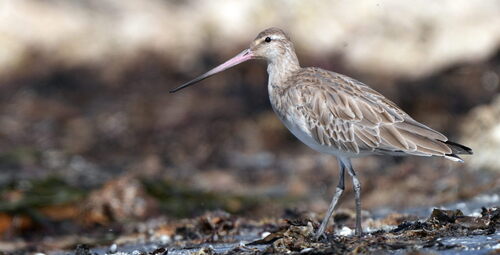
オオソリハシシギ (Limosa lapponica) オオソリハシシギ
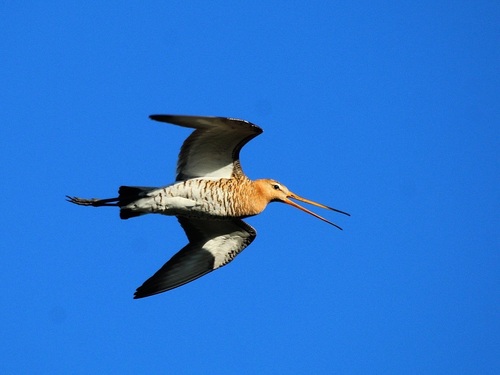
オグロシギ (Limosa limosa) オグロシギ

メディア

読み込み中…

要点

オオソリハシシギとオグロシギを区別する最も信頼できるフィールドマークは、オグロシギの太い白黒の翼帯と白い尾羽であり、すべての年齢で確認でき、特に飛行中に明らかです。オオソリハシシギはこのパターンがなく、よりシンプルな翼と縞模様の尾を示します。地上では、オグロシギはより高く立ち、長い脚と長くてまっすぐなくちばしを持ち、オオソリハシシギは脚が短く、わずかに上向きのくちばしを持っています。繁殖羽衣は異なり、オオソリハシシギは途切れのないレンガ色の腹部を示し、オグロシギは頭、首、胸に限られたよりオレンジ色の洗いを持っています。非繁殖期と幼鳥はより難しいですが、飛行中の翼と尾のパターンが最も良い手がかりとなります。

識別のコツ

  1. In flight, look for the wing pattern: オグロシギのどの年齢でも、太い白い翼帯と黒い尾帯のある白い尾羽を示します。オオソリハシシギはこれを欠き、よりシンプルな翼と縞模様の尾を示します。これは特に幼鳥や非繁殖の鳥にとって最も信頼できるマークです。
  2. Tail pattern: オオソリハシシギは茶色と白の縞模様の尾を持ち、オグロシギは固体の黒い端帯のある白い尾を持っています。これは飛行中や地上で羽繕いをしたり伸びをしたりする際に確認できます。
  3. Leg length and stance: オグロシギはより高く立ち、長い脚を持ち、飛行中に尾を超えて伸び、地上ではより直立して見えます。オオソリハシシギは脚が短く、よりコンパクトに見えます。
  4. Bill shape: オオソリハシシギのくちばしはわずかに上向きで、二色(基部がピンク、先端が黒)です。オグロシギのくちばしはより長く、まっすぐで、二色ですが、あまり明らかに上向きではありません。くちばしの長さは変動し重なりますが、上向きの形状は有用な手がかりです。
  5. Breeding plumage: オオソリハシシギ(特にオス)は途切れのないレンガ色の腹部と暗い上面を示します。オグロシギのオスは頭、首、胸により限られたオレンジ色の洗いを持ち、腹部までの色の広がりはオオソリハシシギほどではありません。両方の雌はより鈍い色合いですが、色の広がりと色合いの違いは有用です。
  6. Non-breeding plumage: オオソリハシシギは上面が無地の灰褐色で、背中に縞模様があり、下面は白っぽいです。オグロシギは上面と下面がより均一な茶色灰色で、縞模様の背中がありません。これは微妙で、他のマークと組み合わせて使用するのが最適です。
  7. Juvenile plumage: 幼鳥のオオソリハシシギは側面と胸により多くの縞模様があり、幼鳥のオグロシギは首と胸に淡いオレンジ色の洗いがありますが、その他は無地です。
  8. Feeding posture: オグロシギは長い脚のために深い水で餌を取ることが多く、時には腹まで浸かることがありますが、オオソリハシシギは浅い水や露出した泥の上で餌を取る傾向があります。
  9. Habitat context: 冬には、オオソリハシシギは特に開けた潮間帯でより厳密に沿岸に生息します。オグロシギは潮間帯と淡水湿地の両方で見られることがあり、時には内陸にも生息します。
  10. Display flight: 観察された場合、オオソリハシシギのディスプレイフライトは、オグロシギのものよりもより秩序立っており、より不規則ではありません。オグロシギは上昇後に転がるような飛行を示すことがあります。
  11. Size impression: オグロシギはわずかに長く、より高く立ちますが、両種は質量と全体的なサイズで重なります。サイズだけでなく、構造と姿勢を重視してください。
  12. Sexual dimorphism: 両種は繁殖羽衣でより明るいオスを示しますが、色の広がりの違い(レンガ色対オレンジ色の洗い)は、鳥を性別で分けるよりも有用です。
  13. Bill color in season: 繁殖期には、両種のくちばしの基部はピンクまたはオレンジ色ですが、オオソリハシシギの方がより明確にピンクです。冬には、両方のくちばしの基部はより淡い色になります。
  14. Leg color: オオソリハシシギの脚は青灰色で、オグロシギの脚は暗い灰色、茶色、または黒です。これは微妙で変動することがあるため、注意して使用してください。
  15. Pitfalls: 光が悪い場合や距離がある場合、構造やくちばしの形状が誤解を招くことがあります。特に幼鳥や非繁殖の鳥に対しては、確認のために飛行中の翼と尾のパターンを常に確認してください。

大きさ

両種は大型の水鳥でサイズが重なりますが、オオソリハシシギは平均して重いです(体重 ~333.5g 対 289.5g のオグロシギ [wikidata])。オグロシギはわずかに長く(くちばしから尾まで42 cm 対 37–41 cm のオオソリハシシギ)、翼幅は似ています(70–82 cm のオグロシギ、70–80 cm のオオソリハシシギ)。フィールドでは、オグロシギは長い脚と首のためにしばしばより高く、より細長く見えますが、オオソリハシシギはよりコンパクトで脚が短いです。

羽色

幼鳥と非繁殖のオグロシギは、飛行中に特徴的な白黒の翼帯と白い尾羽を示し、オオソリハシシギはすべての年齢でこれを欠きます。オオソリハシシギの尾は茶色と白の縞模様ですが、オグロシギの尾は白で太い黒い端帯があります。地上では、繁殖羽衣のオオソリハシシギは下面がレンガ色で上面が暗く、雌は鈍く、よりシナモン色です。繁殖期のオグロシギのオスは頭、首、胸がオレンジ色で、色はオオソリハシシギほど腹部まで広がりません。非繁殖のオオソリハシシギは上面が無地の灰褐色で、背中に縞模様があり、下面は白っぽいです。オグロシギは上面と下面がより均一な茶色灰色で、縞模様の背中がありません。幼鳥のオオソリハシシギは幼鳥のオグロシギよりもより茶色がかり、側面と胸により多くの縞模様があります。

行動

両種は強い渡り鳥で、しばしば似たような沿岸の生息地で見られますが、ディスプレイフライトは異なります。オオソリハシシギの儀式的な飛行は、オグロシギのものよりもより秩序立っており、より不規則ではありません。オオソリハシシギの領土防衛は主に地上で行われ、全体的にあまり攻撃的ではありません。混成群れでは、オグロシギは長い脚と首のためにより直立して活発に見えることがあります。

生息環境

両種は沿岸の干潟や河口を利用しますが、オオソリハシシギは特に冬により厳密に沿岸に生息し、北極のツンドラで繁殖します。オグロシギは湿った草地や湿地で繁殖し、より広範囲の湿地で冬を越し、時には内陸にも生息します。非繁殖期には、オオソリハシシギは開けた潮間帯で見られる可能性が高く、オグロシギは潮間帯と淡水の生息地の両方を利用することがあります。

より良い説明を送る

比較と同じ項目を使ってください。文章はすぐに公開されます。

The most reliable field mark to separate Bar-tailed and Black-tailed Godwits is the bold black-and-white wingbar and white rump of Black-tailed Godwit, visible in all ages and especially obvious in flight. Bar-tailed Godwit lacks this pattern, showing plainer wings and a barred tail instead. On the ground, Black-tailed Godwit stands taller with longer legs and a longer, straighter bill, while Bar-tailed Godwit is shorter-legged with a slightly upturned bill. Breeding plumage differs: Bar-tailed shows unbroken brick-red underparts, while Black-tailed has a more orange wash limited to the head, neck, and chest. Non-breeding and juvenile birds are trickier, but the wing and tail patterns in flight remain the best clues.

  1. In flight, look for the wing pattern: Black-tailed Godwit of any age shows a bold white wingbar and a white rump with a black tail band; Bar-tailed Godwit lacks these, showing plainer wings and a barred tail. This is the single most reliable mark, especially for immatures and non-breeding birds.
  2. Tail pattern: Bar-tailed Godwit has a brown-and-white barred tail; Black-tailed Godwit has a white tail with a solid black terminal band. This is visible in flight and sometimes when preening or stretching on the ground.
  3. Leg length and stance: Black-tailed Godwit stands taller and has longer legs, which extend well beyond the tail in flight and make the bird look more upright on the ground. Bar-tailed Godwit is shorter-legged and appears more compact.
  4. Bill shape: Bar-tailed Godwit’s bill is slightly upturned and two-toned (pink at base, black at tip); Black-tailed Godwit’s bill is longer, straighter, and also two-toned but less obviously upturned. Bill length is variable and overlaps, but the upturn is a helpful clue.
  5. Breeding plumage: Bar-tailed Godwit (especially males) shows unbroken brick-red underparts and dark upperparts; Black-tailed Godwit males have a more limited orange wash on the head, neck, and chest, not extending as far down the belly. Females of both are duller, but the difference in extent and shade of color remains useful.
  6. Non-breeding plumage: Bar-tailed Godwit is plain grey-brown above with streaked back and whitish below; Black-tailed Godwit is more uniform brown-grey above and below, lacking the streaked back. This is subtle and best used in combination with other marks.
  7. Juvenile plumage: Juvenile Bar-tailed Godwit is buffier and more streaked on the flanks and breast; juvenile Black-tailed Godwit has a pale orange wash to the neck and breast, but is otherwise plain.
  8. Feeding posture: Black-tailed Godwit often feeds in deeper water due to longer legs, sometimes wading belly-deep, while Bar-tailed Godwit tends to feed in shallower water or on exposed mud.
  9. Habitat context: In winter, Bar-tailed Godwit is more strictly coastal, especially on open tidal flats; Black-tailed Godwit may be found on both tidal and freshwater wetlands, sometimes inland.
  10. Display flight: If observed, Bar-tailed Godwit’s display flight is more ordered and less erratic than Black-tailed Godwit’s, which may show a tumbling phase.
  11. Size impression: Black-tailed Godwit is slightly longer and stands taller, but both species overlap in mass and overall size; use structure and posture more than size alone.
  12. Sexual dimorphism: Both species show brighter males in breeding plumage, but the difference in color extent (brick-red vs. orange wash) is more helpful than sexing the birds.
  13. Bill color in season: In breeding, both species have a pink or orange base to the bill, but Bar-tailed’s is more distinctly pink; in winter, both bills are paler at the base.
  14. Leg color: Bar-tailed Godwit’s legs are blue-grey; Black-tailed Godwit’s are dark grey, brown, or black. This can be subtle and variable, so use with caution.
  15. Pitfalls: In poor light or at distance, structure and bill shape can be misleading; always try to see the wing and tail pattern in flight for confirmation, especially with immatures or non-breeding birds.

Both species are large waders and overlap in size, but Bar-tailed Godwit averages heavier (body mass ~333.5g vs. 289.5g for Black-tailed [wikidata]). Black-tailed Godwit is slightly longer (bill-to-tail 42 cm vs. 37–41 cm for Bar-tailed) and has a similar wingspan (70–82 cm Black-tailed, 70–80 cm Bar-tailed). In the field, Black-tailed Godwit often appears taller and more elongated due to its longer legs and neck, while Bar-tailed is more compact and shorter-legged.

Juvenile and non-breeding Black-tailed Godwits show a distinctive black-and-white wingbar and a white rump in flight, which Bar-tailed Godwits lack at all ages. Bar-tailed Godwit’s tail is barred brown and white, while Black-tailed’s is white with a bold black terminal band. On the ground, Bar-tailed Godwit in breeding plumage is brick red below and dark above, with females duller and more cinnamon; Black-tailed Godwit breeding males are orange on the head, neck, and chest, with the color not extending as far down the belly as in Bar-tailed. Non-breeding Bar-tailed Godwit is plain grey-brown above with streaked back and whitish below; Black-tailed Godwit is more uniformly brown-grey above and below, lacking the streaked back. Juvenile Bar-tailed is buffier and more streaked than juvenile Black-tailed, which has a pale orange wash to the neck and breast.

Both species are strongly migratory and often found in similar coastal habitats, but their display flights differ: Bar-tailed Godwit’s ceremonial flight is more ordered and less erratic than Black-tailed’s, which may show a tumbling flight after ascending. Bar-tailed Godwit’s territorial defense is mostly on the ground and less aggressive overall. In mixed flocks, Black-tailed Godwit may appear more upright and active due to its longer legs and neck.

Both species use coastal mudflats and estuaries, but Bar-tailed Godwit is more strictly coastal, especially in winter, and breeds on Arctic tundra. Black-tailed Godwit breeds in wet grasslands and marshes and winters in a wider range of wetlands, sometimes inland. In the non-breeding season, Bar-tailed is more likely to be found on open tidal flats, while Black-tailed may use both tidal and freshwater habitats.

変更を破棄しますか?

保存していない編集があります。今離れると失われます。

オオソリハシシギ · オグロシギ · 苦手な鳥