
Motmot

シロガシラトビ 対 キガシラウミワシ

Haliastur indus 対 Haliaeetus leucoryphus

シロガシラトビとキガシラウミワシのクイズ
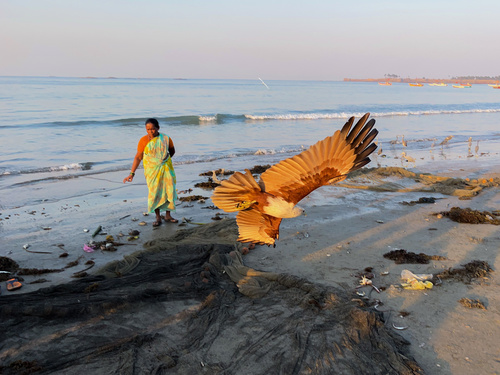
シロガシラトビ (Haliastur indus) シロガシラトビ
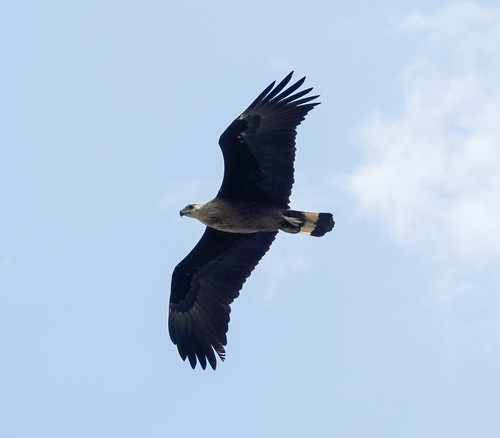
キガシラウミワシ (Haliaeetus leucoryphus) キガシラウミワシ

メディア

読み込み中…

要点

最も信頼できるフィールドマークは、シロガシラトビの大胆な白い頭部と胸部が、豊かな栗色の体と翼と対照的であるのに対し、キガシラウミワシの砂色のフード、白っぽい顔、そしてずっと大きく、暗い茶色の体に黒い尾帯と白い尾の基部があることです。未熟な鳥は混乱の一般的な原因です:幼鳥のシロガシラトビは全体的に淡い茶色で、尾は丸みを帯びており、翼の下の関節に四角い淡い斑点がありますが、幼鳥のキガシラウミワシはより暗く、冷たい茶色で、翼の下に白い帯があり、成鳥の尾帯がありません。サイズは大きな手がかりです:キガシラウミワシはほぼ3倍重く、翼がずっと長く、ずっと小さく、軽いシロガシラトビと比べて巨大でワシのように見えます。両者は水の近くで見ることができますが、トビは通常沿岸や湿地の上にいるのに対し、ウミワシは大きな内陸湖や川の希少で絶滅危惧種です。

識別のコツ

  1. サイズと体格: キガシラウミワシは本当にワシサイズで、シロガシラトビのほぼ3倍の重さです。もし鳥が巨大に見え、重いくちばしと爪を持っているなら、それはウミワシです。もし細くてトビのように見えるなら、それはトビです。これは経験があればどんな距離でも信頼できます。
  2. 尾の形: シロガシラトビは常に丸い尾を持っていますが、キガシラウミワシは成鳥の特徴的な黒い帯と白い基部を持つ直線的な尾を持っています。幼鳥のウミワシは尾帯がありませんが、トビよりも直線的な尾を持っています。
  3. 成鳥の頭部と体の対比: シロガシラトビの成鳥は、豊かな栗色の体と翼に対して際立った白い頭部と胸部を示します。キガシラウミワシの成鳥は砂色のフードと白っぽい顔を持っていますが、他の羽毛はずっと暗く、ずっしりとしています。
  4. 幼鳥の翼の下の模様: 幼鳥のシロガシラトビは、翼の下の関節に四角い淡い斑点を示し、翼の下の他の部分から分かれています。幼鳥のキガシラウミワシは、翼の下に白い帯(覆羽と内側の一次羽)を持っていますが、四角い斑点はありません。これは重要な飛行マークです。
  5. 飛行スタイル: シロガシラトビは、翼を傾けて尾を丸くして浮かび上がり、軽やかに滑空することがよくあります。キガシラウミワシは、長く広い翼と遅く力強いビートで飛び、真の海ワシのようです。
  6. くちばしと足: キガシラウミワシは、止まっている時や良好な飛行の視界で見える、相対的に大きなくちばしと足を持っています。
  7. 生息地の文脈: シロガシラトビは沿岸や湿地で一般的で、人々の近くにいることがよくあります。キガシラウミワシは希少で、大きな未開発の内陸湖や川でのみ見られます。
  8. 止まり方: ウミワシは直立して巨大に止まり、しばしば露出した木の枝の上にいます;トビはより軽やかに止まり、時には群れでいます。
  9. 飛行中の尾の模様: 成鳥のウミワシは黒い尾帯と白い基部を示します;トビはこの模様を決して示しません。
  10. 体の色: シロガシラトビは豊かな栗色で白い頭/胸を持ち;ウミワシは暗い茶色で砂色のフードと赤褐色の背中を持ちます。
  11. 幼鳥の混乱: もし鳥が全体的に淡い茶色で、丸い尾と四角い翼の下の斑点を持っているなら、それは若いシロガシラトビです。もしより暗く、冷たい茶色で、白い翼の下の帯があり、尾帯がないなら、それは幼鳥のウミワシです。
  12. 相対的な豊富さ: もし人口の多い地域や沿岸地域で見られた場合、シロガシラトビの方がはるかに可能性が高いです。キガシラウミワシは非常に希少で局所的です。
  13. 翼の形: ウミワシの翼は長く広く、特に飛行中に;トビの翼は短く、より角度があります。
  14. 羽毛の移行: ウミワシは成鳥の羽毛に達するのに最大4年かかるため、中間の鳥は茶色と砂色のトーンの混合を示すことがありますが、トビの白い頭は決して示しません。
  15. 声に頼らないこと: 声は診断的であると記述されていないため、羽毛、構造、文脈に基づいて分離する必要があります。

大きさ

キガシラウミワシは劇的に大きく、平均的な成鳥で約2900gで、シロガシラトビの320–673gと比較されます [wikipedia][wikidata]。長さでは、ウミワシは72–85 cmで、翼幅は180–215 cmですが、トビは45–51 cmの長さで、翼幅は109–124 cmです。フィールドでは、ウミワシは本当にワシサイズに見え、長く広い翼と重い体格を持ち、シロガシラトビはずっと細くトビのように見えます。この違いは、直接比較や他の猛禽類や大型水鳥の近くで見られると特に明らかです。

羽色

幼鳥と未熟な鳥は主な落とし穴です。幼鳥のシロガシラトビは全体的に淡い茶色で、尾は丸みを帯びており、翼の下の関節に四角い淡い斑点があります — この淡い斑点は翼の下の他の部分から分かれており、すべての年齢のシロガシラトビに対して診断的ですが、特に若い鳥においてです。幼鳥のキガシラウミワシは、翼の下にいくつかの淡い部分(覆羽と内側の一次羽)を持つより暗く、冷たい茶色で、翼の下に白い帯を作りますが、成鳥の黒い尾帯はありません。成鳥のシロガシラトビは、白い頭部と胸部、栗色の体と翼、さらに黒い翼先と丸い尾を持っているため、間違いなく識別できます。成鳥のキガシラウミワシは、砂色のフード、白っぽい顔、暗い茶色の翼、赤褐色の背中、そして広い白い基部のある黒い尾を持っています — この尾の模様は地域の大型ワシの中でユニークです。両種は暗いくちばしと爪を持っていますが、ウミワシのものは相対的に大きいです。

行動

シロガシラトビは通常、翼を傾けて尾を丸くして浮かび上がり、軽やかで敏捷なトビのような印象を与えます。彼らはしばしば水の上を滑空したり、円を描いたりするのが見られ、時には死肉を漁ります。キガシラウミワシは飛行中はずっと重く、海ワシとしては長く広い、やや細い翼を持ち、より遅く、力強い飛行スタイルを持っています。彼らはしばしば大きな湖や川の近くで直立して目立つように止まり、狩りはより直接的で、水面から大型の魚や水鳥を捕らえます。トビの飛行はウミワシのそれよりも浮遊感があり、直接的ではありません。

生息環境

シロガシラトビはインド亜大陸、東南アジア、オーストラリア全体の沿岸、河口、大きな内陸湿地で一般的で広範囲に分布しています。彼らはしばしば人間の居住地の近くで見られ、乱れた地域にも耐性があります。キガシラウミワシは希少で局所的で、主に中央アジアと南アジアの大きな内陸湖や川の周りに見られ、特に広範な淡水域から離れた場所では出会う可能性がはるかに低いです。ウミワシの存在は通常、大きな未開発の水域を示し、一方でトビはずっと適応性があります。

より良い説明を送る

比較と同じ項目を使ってください。文章はすぐに公開されます。

The most reliable field mark is the Brahminy Kite's bold white head and breast contrasting with rich chestnut body and wings, versus the Pallas's Fish-Eagle's sandy-brown hood, whitish face, and much bulkier, darker brown body with a black tail band and white tail base. Immature birds are a common source of confusion: juvenile Brahminy Kites are paler brown overall with a rounded tail and a squarish pale patch at the underwing carpal, while juvenile Pallas's Fish-Eagles are darker, cooler brown, with a white band on the underwing and lack the adult's tail band. Size is a major clue: Pallas's Fish-Eagle is nearly three times heavier and much longer-winged, appearing massive and eagle-like compared to the much smaller, lighter Brahminy Kite. Both can be seen near water, but the kite is typically coastal or over wetlands, while the fish-eagle is a rare, endangered species of large inland lakes and rivers.

  1. Size and bulk: Pallas's Fish-Eagle is truly eagle-sized, almost three times heavier than Brahminy Kite. If the bird looks massive, with a heavy bill and talons, it's the fish-eagle. If it seems slender and kite-like, it's the kite. This is reliable at any distance with experience.
  2. Tail shape: Brahminy Kite always has a rounded tail, while Pallas's Fish-Eagle has a straight-cut tail with a distinctive black band and white base in adults. Juvenile fish-eagles lack the tail band but still have a straighter tail than the kite.
  3. Adult head and body contrast: Brahminy Kite adults show a striking white head and breast against rich chestnut body and wings. Pallas's Fish-Eagle adults have a sandy-brown hood and whitish face, but the rest of the plumage is much darker and bulkier.
  4. Juvenile underwing pattern: Juvenile Brahminy Kites show a squarish pale patch at the underwing carpal, separated from the rest of the underwing. Juvenile Pallas's Fish-Eagles have a white band across the underwing (coverts and inner primaries), but not a squarish patch. This is a key flight mark.
  5. Flight style: Brahminy Kite soars with wings angled and tail rounded, often gliding lightly. Pallas's Fish-Eagle flies with long, broad wings and a slow, powerful beat, more like a true sea-eagle.
  6. Bill and feet: Pallas's Fish-Eagle has a proportionally larger bill and feet, visible when perched or in good flight views.
  7. Habitat context: Brahminy Kite is common along coasts and wetlands, often near people. Pallas's Fish-Eagle is rare, found only at large, undisturbed inland lakes and rivers.
  8. Perched posture: Fish-eagle perches upright and massive, often on exposed snags; kite perches more lightly, sometimes in groups.
  9. Tail pattern in flight: Adult fish-eagle shows a black tail band with white base; kite never shows this pattern.
  10. Body color: Brahminy Kite is rich chestnut with white head/breast; fish-eagle is dark brown with sandy-brown hood and rufous back.
  11. Juvenile confusion: If the bird is overall pale brown with a rounded tail and squarish underwing patch, it's a young Brahminy Kite. If darker, cooler brown with a white underwing band and no tail band, it's a juvenile fish-eagle.
  12. Relative abundance: If seen in a populated or coastal area, Brahminy Kite is far more likely. Pallas's Fish-Eagle is very rare and local.
  13. Wing shape: Fish-eagle's wings are long and broad, especially in flight; kite's are shorter and more angled.
  14. Plumage transitions: Fish-eagle takes up to four years to reach adult plumage, so intermediate birds may show a mix of brown and sandy tones but never the kite's white head.
  15. Never rely on voice: Vocalizations are not described as diagnostic in the sources; separation should be made on plumage, structure, and context.

Pallas's Fish-Eagle is dramatically larger, weighing around 2900 g (average adult) compared to the Brahminy Kite's 320–673 g [wikipedia][wikidata]. In length, the fish-eagle is 72–85 cm with a 180–215 cm wingspan, while the kite is 45–51 cm long with a 109–124 cm wingspan. In the field, this means the fish-eagle appears truly eagle-sized, with long, broad wings and a heavy build, while the Brahminy Kite is much more slender and kite-like. The difference is especially obvious in direct comparison or when seen near other raptors or large waterbirds.

Juvenile and immature birds are the main pitfall. Juvenile Brahminy Kites are paler brown overall, with a rounded tail and a squarish pale patch at the underwing carpal — this pale patch is separated from the rest of the underwing and is diagnostic for Brahminy Kite of all ages, but especially in young birds. Juvenile Pallas's Fish-Eagles are darker, cooler brown with several pale areas on the underwing (coverts and inner primaries), creating a white band across the underwing, but they lack the adult's black tail band. Adult Brahminy Kites are unmistakable with their white head and breast and chestnut body and wings, plus black wingtips and rounded tail. Adult Pallas's Fish-Eagles have a sandy-brown hood, whitish face, dark brown wings, rufous back, and a black tail with a wide white base band — this tail pattern is unique among large eagles in the region. Both species have dark bills and talons, but the fish-eagle's are proportionally larger.

Brahminy Kites typically soar with wings angled and tail rounded, giving a light, agile, kite-like impression. They are often seen gliding or circling over water, sometimes scavenging. Pallas's Fish-Eagle is much heavier in flight, with long, broad, and rather slender wings for a sea-eagle, and a slower, more powerful flight style. They often perch upright and conspicuous near large lakes or rivers, and their hunting is more direct, taking large fish or waterbirds from the surface. The kite's flight is more buoyant and less direct than the fish-eagle's.

Brahminy Kite is common and widespread along coasts, estuaries, and large inland wetlands throughout the Indian subcontinent, Southeast Asia, and Australia. It is often seen near human habitation and is tolerant of disturbed areas. Pallas's Fish-Eagle is rare and local, found mainly around large inland lakes and rivers in Central and South Asia, and is much less likely to be encountered, especially away from extensive freshwater bodies. The fish-eagle's presence usually indicates a large, undisturbed water body, while the kite is much more adaptable.

変更を破棄しますか?

保存していない編集があります。今離れると失われます。

シロガシラトビ · キガシラウミワシ · 苦手な鳥