

Motmot

ヨーロッパヨシキリ 対 マキノセンニュウ

Acrocephalus scirpaceus 対 Locustella lanceolata

ヨーロッパヨシキリとマキノセンニュウのクイズ
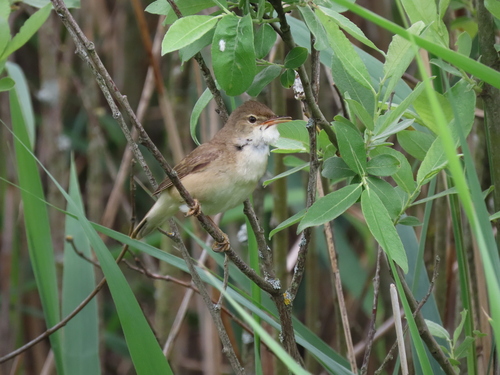
ヨーロッパヨシキリ (Acrocephalus scirpaceus) ヨーロッパヨシキリ
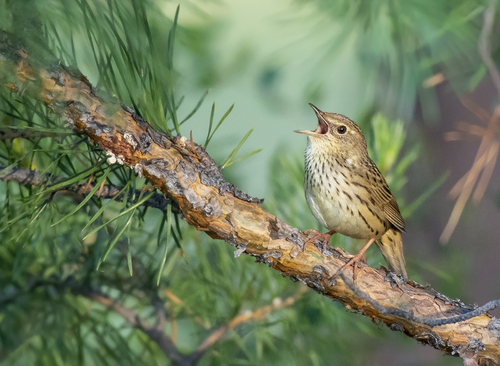
マキノセンニュウ (Locustella lanceolata) マキノセンニュウ

メディア

読み込み中…

要点

The most reliable way to separate Common Reed Warbler from Lanceolated Warbler is the presence or absence of strong streaking: Lanceolated Warbler shows bold, dark streaks on both its back and underparts (including the undertail), while Common Reed Warbler is plain brown above and unstreaked below. Juvenile Reed Warblers can appear warmer or buffier below, but never show the lanceolate streaking of Lanceolated. Both are small, slim warblers, but Reed Warbler is slightly larger and has a more flattened forehead and pointed bill. In flight or perched, always look for the Lanceolated's streaked appearance versus the Reed Warbler's plainness.

識別のコツ

  1. Streaking on underparts: Lanceolated Warbler always shows bold, narrow, dark streaks on whitish or yellowish underparts, including the undertail coverts. Reed Warbler is always unstreaked below (adults buff, juveniles richer buff).
  2. Streaking on upperparts: Lanceolated Warbler has a streaked brown back; Reed Warbler is plain brown above with no streaks at any age.
  3. Undertail coverts: Check for streaks—Lanceolated shows them, Reed Warbler does not.
  4. Face pattern: Both lack a strong supercilium (eyebrow), but Reed Warbler can show a slightly flatter forehead and stronger bill. Neither has a prominent facial stripe to use as a primary mark.
  5. Bill shape: Reed Warbler's bill is strong and pointed, often looking longer and more robust than the finer-billed Lanceolated, but this is subtle.
  6. Head shape: Reed Warbler has a flatter forehead, which can give it a more angular, Acrocephalus look; Lanceolated's head is more rounded.
  7. Juvenile confusion: Juvenile Reed Warblers are warmer buff below but never develop streaks; juvenile Lanceolateds are yellower but always streaked.
  8. Flight and wing pattern: No distinctive upperwing or flight marks are described for either; do not rely on wing panels or trailing edges.
  9. Tail: Both have plain tails; tail shape is not a strong separator here.
  10. Habitat: Reed Warbler is almost always in reedbeds or tall emergent vegetation; Lanceolated prefers damp grass, sedge, or shrubby areas, rarely classic reedbeds.
  11. Behavior: Lanceolated is more skulking and mouse-like, rarely perching up; Reed Warbler is more likely to climb reeds and sing from exposed stems.
  12. Song: Reed Warbler gives a chattering, variable song with whistles and mimicry; Lanceolated (not described here, but typical Locustella) gives a reeling, insect-like trill.
  13. Size: Reed Warbler is slightly larger and heavier, but this is rarely obvious in the field.
  14. Season: Both are migratory in the Palearctic; check local abundance and timing, as Lanceolated is a scarce migrant or vagrant in most of Europe.
  15. Pitfall: Never claim Lanceolated if the bird is completely unstreaked below—this is always Reed Warbler. If you see any streaking on the underparts or undertail, check carefully for Lanceolated.

大きさ

Common Reed Warbler is a medium-sized Acrocephalus warbler, about 13 cm in length with a body mass of 12 g [wikidata]. Lanceolated Warbler is a small Locustella warbler, but precise mass is not given. In the field, size difference is subtle; Reed Warbler may appear a bit longer and more robust, but this is often hard to judge unless seen side by side. Both are small, slim warblers, so rely more on plumage and structure than size.

羽色

Juvenile and adult Common Reed Warblers are unstreaked above and below: adults are plain brown above with buff underparts, while juveniles are richer buff below but still lack streaking [wikipedia]. In contrast, Lanceolated Warbler of all ages has a streaked brown back and boldly streaked whitish-grey underparts, with the streaks forming lance-head shapes; these streaks also extend onto the undertail coverts [wikipedia]. Juvenile Lanceolateds are yellower below but retain the diagnostic streaking. No distinctive upperwing or flight pattern marks are described for either species, so focus on the presence or absence of streaks on the body and undertail. Both species have similar plain wings and lack strong wingbars or panels.

行動

Both species are secretive and skulk in dense vegetation, but Reed Warbler is more often seen climbing reed stems in reedbeds, sometimes singing from exposed perches. Lanceolated Warbler is a classic Locustella, creeping mouse-like through grass or low shrubs and rarely perching in the open. Flight is typically weak and low for both, but Lanceolated may seem even more reluctant to fly and more likely to vanish into cover.

生息環境

Common Reed Warbler is closely tied to reedbeds and wetland edges, often seen in stands of Phragmites or similar tall reeds [wikipedia]. Lanceolated Warbler prefers damp grasslands, sedge beds, and shrubby areas, especially in northern and eastern Eurasia [wikipedia]. If you find a streaked warbler in a classic reedbed, double-check for vagrancy or misidentification, as Lanceolated is rare in typical Reed Warbler habitat.

声

Common Reed Warbler sings a slow, chattering 'jit-jit-jit' with acrocephaline whistles and some mimicry [wikipedia]. Lanceolated Warbler's song is not described in the notes, but Locustella warblers typically have insect-like, reeling songs quite different from the Reed Warbler's chattering. If you hear a classic Acrocephalus song, it's likely Reed Warbler; a mechanical, reeling trill would point to Lanceolated.

より良い説明を送る

比較と同じ項目を使ってください。文章はすぐに公開されます。

The most reliable way to separate Common Reed Warbler from Lanceolated Warbler is the presence or absence of strong streaking: Lanceolated Warbler shows bold, dark streaks on both its back and underparts (including the undertail), while Common Reed Warbler is plain brown above and unstreaked below. Juvenile Reed Warblers can appear warmer or buffier below, but never show the lanceolate streaking of Lanceolated. Both are small, slim warblers, but Reed Warbler is slightly larger and has a more flattened forehead and pointed bill. In flight or perched, always look for the Lanceolated's streaked appearance versus the Reed Warbler's plainness.

  1. Streaking on underparts: Lanceolated Warbler always shows bold, narrow, dark streaks on whitish or yellowish underparts, including the undertail coverts. Reed Warbler is always unstreaked below (adults buff, juveniles richer buff).
  2. Streaking on upperparts: Lanceolated Warbler has a streaked brown back; Reed Warbler is plain brown above with no streaks at any age.
  3. Undertail coverts: Check for streaks—Lanceolated shows them, Reed Warbler does not.
  4. Face pattern: Both lack a strong supercilium (eyebrow), but Reed Warbler can show a slightly flatter forehead and stronger bill. Neither has a prominent facial stripe to use as a primary mark.
  5. Bill shape: Reed Warbler's bill is strong and pointed, often looking longer and more robust than the finer-billed Lanceolated, but this is subtle.
  6. Head shape: Reed Warbler has a flatter forehead, which can give it a more angular, Acrocephalus look; Lanceolated's head is more rounded.
  7. Juvenile confusion: Juvenile Reed Warblers are warmer buff below but never develop streaks; juvenile Lanceolateds are yellower but always streaked.
  8. Flight and wing pattern: No distinctive upperwing or flight marks are described for either; do not rely on wing panels or trailing edges.
  9. Tail: Both have plain tails; tail shape is not a strong separator here.
  10. Habitat: Reed Warbler is almost always in reedbeds or tall emergent vegetation; Lanceolated prefers damp grass, sedge, or shrubby areas, rarely classic reedbeds.
  11. Behavior: Lanceolated is more skulking and mouse-like, rarely perching up; Reed Warbler is more likely to climb reeds and sing from exposed stems.
  12. Song: Reed Warbler gives a chattering, variable song with whistles and mimicry; Lanceolated (not described here, but typical Locustella) gives a reeling, insect-like trill.
  13. Size: Reed Warbler is slightly larger and heavier, but this is rarely obvious in the field.
  14. Season: Both are migratory in the Palearctic; check local abundance and timing, as Lanceolated is a scarce migrant or vagrant in most of Europe.
  15. Pitfall: Never claim Lanceolated if the bird is completely unstreaked below—this is always Reed Warbler. If you see any streaking on the underparts or undertail, check carefully for Lanceolated.

Common Reed Warbler is a medium-sized Acrocephalus warbler, about 13 cm in length with a body mass of 12 g [wikidata]. Lanceolated Warbler is a small Locustella warbler, but precise mass is not given. In the field, size difference is subtle; Reed Warbler may appear a bit longer and more robust, but this is often hard to judge unless seen side by side. Both are small, slim warblers, so rely more on plumage and structure than size.

Juvenile and adult Common Reed Warblers are unstreaked above and below: adults are plain brown above with buff underparts, while juveniles are richer buff below but still lack streaking [wikipedia]. In contrast, Lanceolated Warbler of all ages has a streaked brown back and boldly streaked whitish-grey underparts, with the streaks forming lance-head shapes; these streaks also extend onto the undertail coverts [wikipedia]. Juvenile Lanceolateds are yellower below but retain the diagnostic streaking. No distinctive upperwing or flight pattern marks are described for either species, so focus on the presence or absence of streaks on the body and undertail. Both species have similar plain wings and lack strong wingbars or panels.

Both species are secretive and skulk in dense vegetation, but Reed Warbler is more often seen climbing reed stems in reedbeds, sometimes singing from exposed perches. Lanceolated Warbler is a classic Locustella, creeping mouse-like through grass or low shrubs and rarely perching in the open. Flight is typically weak and low for both, but Lanceolated may seem even more reluctant to fly and more likely to vanish into cover.

Common Reed Warbler is closely tied to reedbeds and wetland edges, often seen in stands of Phragmites or similar tall reeds [wikipedia]. Lanceolated Warbler prefers damp grasslands, sedge beds, and shrubby areas, especially in northern and eastern Eurasia [wikipedia]. If you find a streaked warbler in a classic reedbed, double-check for vagrancy or misidentification, as Lanceolated is rare in typical Reed Warbler habitat.

Common Reed Warbler sings a slow, chattering 'jit-jit-jit' with acrocephaline whistles and some mimicry [wikipedia]. Lanceolated Warbler's song is not described in the notes, but Locustella warblers typically have insect-like, reeling songs quite different from the Reed Warbler's chattering. If you hear a classic Acrocephalus song, it's likely Reed Warbler; a mechanical, reeling trill would point to Lanceolated.

変更を破棄しますか?

保存していない編集があります。今離れると失われます。

ヨーロッパヨシキリ · マキノセンニュウ · 苦手な鳥