
Motmot

ヨーロッパアマツバメ 対 ウスアマツバメ

Apus apus 対 Apus pallidus

ヨーロッパアマツバメとウスアマツバメのクイズ
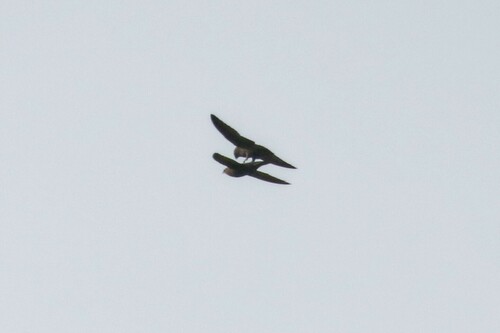
ヨーロッパアマツバメ (Apus apus) ヨーロッパアマツバメ
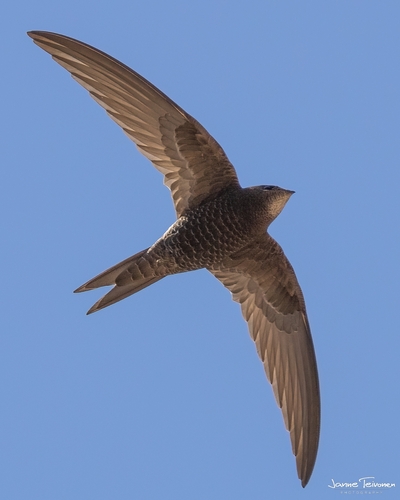
ウスアマツバメ (Apus pallidus) ウスアマツバメ

メディア

読み込み中…

要点

ヨーロッパアマツバメとウスアマツバメを区別することは、サイズ、形、飛行スタイルが非常に似ているため、古典的なフィールドチャレンジです。良い光の中で最も信頼できる特徴は、全体のトーンとコントラストです:ウスアマツバメは、より淡い茶色の外観を示し、大きく明らかな白い喉の斑点と、よりコントラストのある腹部、尾、飛行羽毛を持っています。一方、ヨーロッパアマツバメは、より均一な黒褐色で、わずかに目立たない淡い顎しかありません。ウスアマツバメの鱗状またはまだらな腹部と淡い飛行羽毛を探してください、特に下から見たときに。両種は同じ鎌形の翼と分叉した尾を持っているため、構造だけでは診断が難しいことが多いです。鳴き声は似ていますが、乾燥感やパターンに微妙な違いがあるかもしれません。羽毛のコントラストを注意深く観察すること、特に強い日光の中で、通常は同定を確実にします。

識別のコツ

  1. Throat Patch: ウスアマツバメは、遠くからでも見える大きく明らかな白い喉の斑点を持っていますが、ヨーロッパアマツバメの淡い顎ははるかに小さく、近距離または良い光の中でしか見えないことが多いです。
  2. Overall Tone: ウスアマツバメは、特に日光の中で見たときに、より淡く茶色がかっていますが、ヨーロッパアマツバメは均一な黒褐色です。これは、比較のために複数のアマツバメが存在する場合に最も明らかです。
  3. Plumage Contrast: ウスアマツバメのよりコントラストのある外観を探してください:淡い腹部、尾、飛行羽毛が暗い体に対して際立っています。ヨーロッパアマツバメはこのコントラストが欠けており、より均一に見えます。
  4. Belly Texture: ウスアマツバメは、特に良い光の中で鱗状またはまだらな腹部を示すことが多いです。ヨーロッパアマツバメの腹部は平坦で無地です。
  5. Flight Feathers: ウスアマツバメの淡い飛行羽毛は、下翼に微妙なパネル効果を生み出し、コントラストを増します。ヨーロッパアマツバメの翼は均一に暗いです。
  6. Rump: ウスアマツバメの尾は淡く、良い光の中で目立つことがあります;ヨーロッパアマツバメの尾は体の他の部分とコントラストがありません。
  7. Tail and Wing Shape: 両種は短い分叉した尾と長い三日月形の翼を持っています。構造だけでは信頼できる区別にはなりません。
  8. Size and Bulk: 両者はサイズと形が似ていますが、ウスアマツバメはわずかにずんぐりして見えることがあります。これは微妙な印象であり、単独では診断にはなりません。
  9. Flight Style: 飛行動作の違いは非常に微妙であり、両種に広範な経験がない限り、頼るべきではありません。
  10. Voice: 鳴き声は似ています;ウスアマツバメの声はより乾燥しているか、より二音節的かもしれませんが、これはほとんどの観察者にとって安全なフィールドマークではありません。
  11. Lighting Conditions: 光が悪い場合や明るい空の背景では、両種は均一に暗く見えることがあり、区別が非常に難しくなります。常に良い光の中で、下からアマツバメを見るようにしてください。
  12. Plumage Wear and Age: どちらの種にも特定の幼鳥または未成熟の翼のパターンは記載されていないため、すべてのフィールドマークはすべての年齢に適用されます。
  13. Season and Range: ここでは診断にはなりません;両種は範囲と季節で重なることがあります。
  14. Pitfalls: 光が悪い場合や距離がある場合に単一の特徴に頼ることに注意してください。特に喉の斑点のサイズと腹部のコントラストを含む複数のフィールドマークの組み合わせが、同定の最も安全な方法です。
  15. Comparison Flocks: 両種が存在する場合、直接比較することでトーンとコントラストの違いがより明らかになります。もし一方の種しか存在しない場合は、特に同定に注意してください。

大きさ

両種は本質的に同じ長さ(16–17 cm)と翼幅を持ち、構造は非常に似ており、長い後方に傾いた翼と短い分叉した尾を持っています。ウスアマツバメの記録された平均体重は41.3 gですが、ヨーロッパアマツバメの比較体重は示されていません;フィールドでは、サイズや体重によって信頼できる区別はできません。ウスアマツバメのずんぐりした印象は微妙であり、羽毛のマークと組み合わせて使用するのが最適です。

羽色

どちらの種にも年齢特有の幼鳥または未成熟の上翼パターンは記載されていないため、以下のすべてのコントラストは成鳥と未成熟の両方に適用されます。ウスアマツバメは、遠くから見える大きく明らかな白い喉の斑点を持つ淡い茶色のアマツバメとして、良い光の中で際立っています。腹部と尾はより淡く、体の他の部分とのコントラストが強く、腹部はしばしば鱗状またはまだらに見えます。飛行羽毛と下翼の覆い羽はわずかに淡く、全体的によりコントラストのある外観を与えます。ヨーロッパアマツバメは均一な黒褐色で、遠くからは見えない小さな白または淡い灰色の顎の斑点しか持っておらず、ウスアマツバメの強いコントラストが欠けています。両者は似たような翼と尾の形を持ち、両者とも光が悪い場合や明るい空の背景では非常に暗く見えることがあり、これらの微妙な違いを隠すことがあります。

行動

両種はほぼ全生涯を飛行中に過ごし、繁殖以外ではめったに止まらず、同じ迅速で敏捷な刈り取り飛行スタイルを共有しています。ウスアマツバメはわずかにずんぐりして見え、微妙に異なる飛行動作を持っている可能性がありますが、これは一貫して信頼できるフィールドマークではなく、注意して使用する必要があります。両種は空中の昆虫を食べ、飛行中に水を飲みます。行動の違いはフィールドでの診断にはなりません。

生息環境

提供されたノートには生息地の違いは記載されていません。両種は空中の昆虫食であり、通常は空高くに見られ、都市部、水域、または開けた国の上空でよく見られます。

声

両種は飛行中に大きく鋭い叫び声を上げます。ウスアマツバメの鳴き声は大きく乾いた叫び声として説明され、ヨーロッパアマツバメのものよりも二音節的である可能性がありますが、両者は非常に似ており、耳だけで区別するのは難しいです。ヨーロッパアマツバメの鳴き声には二つの音程があり、高い音は雌によって出されますが、これは分離のための実用的なフィールドマークではありません。

より良い説明を送る

比較と同じ項目を使ってください。文章はすぐに公開されます。

Separating Common Swift from Pallid Swift is a classic field challenge, as both are very similar in size, shape, and flight style. The most reliable mark in good light is the overall tone and contrast: Pallid Swift shows a paler, browner appearance with a large, obvious white throat patch and more contrasty underparts, rump, and flight feathers, while Common Swift is a more uniform blackish-brown with only a small, less visible pale chin. Look for the scaly or mottled belly and paler flight feathers on Pallid, especially when seen from below. Both species share the same sickle-shaped wings and forked tail, so structure alone is rarely diagnostic. Calls are similar but may differ subtly in dryness and pattern. Only careful scrutiny of plumage contrast, especially in strong sunlight, usually clinches the ID.

  1. Throat Patch: Pallid Swift has a large, obvious white throat patch visible from a distance, while Common Swift's pale chin is much smaller and often invisible except at close range or in good light.
  2. Overall Tone: Pallid Swift is paler and browner, especially when seen in sunlight, whereas Common Swift is a uniform blackish-brown. This is most apparent when several swifts are present for comparison.
  3. Plumage Contrast: Look for the more contrasty appearance of Pallid Swift: paler underparts, rump, and flight feathers stand out against the darker body. Common Swift lacks this contrast and appears more uniform.
  4. Belly Texture: Pallid Swift often shows a scaly or mottled belly, especially in good light. Common Swift's belly is plain and unmarked.
  5. Flight Feathers: The paler flight feathers of Pallid Swift can create a subtle panel effect on the underwing, adding to the contrast. Common Swift's wings are uniformly dark.
  6. Rump: Pallid Swift's rump is paler and can be noticeable in good light; Common Swift's rump does not contrast with the rest of the body.
  7. Tail and Wing Shape: Both species have a short, forked tail and long, crescent-shaped wings. Structure alone is not a reliable separator.
  8. Size and Bulk: Both are similar in size and shape, but Pallid Swift may appear slightly chunkier. This is a subtle impression and not diagnostic on its own.
  9. Flight Style: Any difference in flight action is very subtle and should not be relied on unless you have extensive experience with both species.
  10. Voice: Calls are similar; Pallid Swift's may be drier or more disyllabic, but this is not a safe field mark for most observers.
  11. Lighting Conditions: In poor light or against a bright sky, both species can appear uniformly dark, making separation very difficult. Always try to view swifts in good light and from below.
  12. Plumage Wear and Age: No distinctive juvenile or immature wing patterns are described for either species, so all field marks apply to all ages.
  13. Season and Range: Not diagnostic here; both species can overlap in range and season.
  14. Pitfalls: Beware of relying on single features in poor light or at a distance. Multiple field marks in combination, especially throat patch size and underpart contrast, are the safest route to identification.
  15. Comparison Flocks: If both species are present, direct comparison can make the differences in tone and contrast more obvious. If only one species is present, be especially cautious with identification.

Both species are essentially the same length (16–17 cm) and wingspan, and structure is very similar with long, swept-back wings and a short, forked tail. Pallid Swift has a recorded average body mass of 41.3 g, but no comparative mass is given for Common Swift; in the field, they are not reliably separable by size or bulk. Any impression of chunkiness in Pallid Swift is subtle and best used in combination with plumage marks.

No age-specific juvenile or immature upperwing patterns are described for either species, so all contrasts below apply to adults and immatures alike. Pallid Swift stands out in good light by being a paler, browner swift with a large, obvious white throat patch that is visible from a distance. Its underparts and rump are paler and show more contrast with the rest of the body, and the belly often appears scaly or mottled. The flight feathers and underwing coverts are slightly paler, giving a more contrasty look overall. Common Swift is a uniform blackish-brown, with only a small white or pale grey chin patch that is not visible at a distance, and lacks the strong contrast of Pallid. Both have similar wing and tail shapes, and both can appear very dark in poor light or against a bright sky, which can obscure these subtle differences.

Both species spend almost their entire lives on the wing, rarely perching except to breed, and share the same rapid, agile, scything flight style. There is a suggestion that Pallid Swift may appear slightly chunkier and have a subtly different flight action, but this is not a consistently reliable field mark and should be used with caution. Both species feed on aerial insects and drink on the wing. Behavioral differences are not diagnostic in the field.

No habitat differences are described in the provided notes. Both species are aerial insectivores and are typically seen high in the sky, often over urban areas, water, or open country.

Both species give loud, piercing screams in flight. The Pallid Swift's call is described as a loud, dry scream, possibly more disyllabic than the Common Swift's, but both are very similar and difficult to separate by ear alone. The Common Swift's call has two pitch levels, with the higher given by females, but this is not a practical field mark for separation.

変更を破棄しますか?

保存していない編集があります。今離れると失われます。

ヨーロッパアマツバメ · ウスアマツバメ · 苦手な鳥