
Motmot

ササフサケイ 対 クロビタイサケイ

Pterocles coronatus 対 Pterocles lichtensteinii

ササフサケイとクロビタイサケイのクイズ
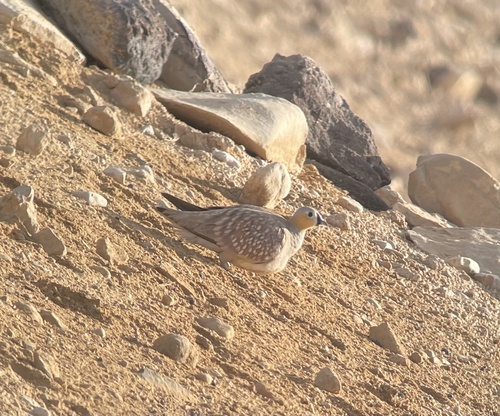
ササフサケイ (Pterocles coronatus) ササフサケイ
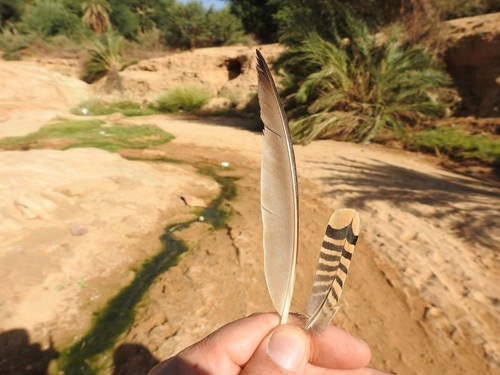
クロビタイサケイ (Pterocles lichtensteinii) クロビタイサケイ

メディア

読み込み中…

要点

ササフサケイとクロビタイサケイの最も信頼できるフィールドマークは、飛行中の翼のパターンです:ササフサケイは砂色の上翼覆羽と対照的な完全に暗い飛行羽を示し、クロビタイサケイは上部と下部で密接に均等に縞模様があり、強い翼の対比がありません。ササフサケイのオスは特徴的な黒いマスクを持ち、首と胸に灰色がありませんが、クロビタイサケイの両性はより均一に縞模様があり、マスクがありません。ササフサケイの雌と幼鳥は、胸だけでなく全体の腹部に暗い渦巻き模様を示し、より均等に縞模様のあるクロビタイサケイとは異なります。構造は似ていますが、ササフサケイはわずかに大きく、重いです。両種は乾燥した石の多い生息地を好みますが、ササフサケイは植生の多い地域を避ける傾向があります。

識別のコツ

  1. In flight, look for wholly dark flight feathers: ササフサケイのすべての年齢は、砂色の上翼覆羽とクリーミーな下翼覆羽と鋭く対照的な完全に暗い一次羽と二次羽を示します。クロビタイサケイはこの対比を示さず、翼は細かく均等に縞模様があり、覆羽と飛行羽が混ざり合っています。
  2. Check for a black facial mask: 成熟したオスのササフサケイは特徴的な黒いマスクを持ち、首や胸に灰色がありません。クロビタイサケイのオスはマスクが全くなく、均等に縞模様があります。
  3. Underpart pattern in females and immatures: 雌と幼鳥のササフサケイは、胸と腹全体に暗い渦巻き模様(波状の線)を示します。クロビタイサケイでは、両性およびすべての年齢が上部と下部で密接に均等に縞模様があり、渦巻き模様はなく、縞模様はより細かく均一です。
  4. Absence of grey tones: ササフサケイのオスは首と胸に灰色がなく、クロビタイサケイはより均一にバフ色で縞模様があり、灰色の記載はありませんが、マスクもありません。
  5. General coloration: 遠くから見ると、ササフサケイは暗い翼を除いてより均一な色に見え、クロビタイサケイは全体に微細な縞模様があり、微妙にパターン化されています。
  6. Tail shape: 両種は長い中央尾羽を欠いているため、ここでは有用なマークではありません。
  7. Size and structure: ササフサケイはクロビタイサケイよりもわずかに大きく重い(27–29 cm、~300 g)ですが、これは微妙で直接比較するのが最適です。
  8. Habitat context: ササフサケイは、特に北アフリカの暗赤色砂岩の中で、石の多い、まばらに植生のある砂漠にいる可能性が高いです。クロビタイサケイは石の多い砂漠の鳥ですが、特定の基盤色にあまり依存していません。
  9. Plumage uniformity: クロビタイサケイは常に細かく縞模様があり、強い色の対比がありません。ササフサケイは暗い翼とオスの黒いマスクを除いて、より均一です。
  10. Sexing pitfalls: 雌と幼鳥のササフサケイはマスクがないためにクロビタイサケイと混同される可能性がありますが、腹部の渦巻き模様(ササフサケイ)と細かい縞模様(クロビタイサケイの違いを探してください。
  11. No elongated tail streamers: どちらの種も他のサケイのいくつかに見られる長い中央尾羽を持っていないため、このマークを使用しないでください。
  12. No strong vocal differences noted: 現在の情報源に基づいて、声は信頼できるフィールドマークではありません。
  13. Flight jizz: 両者はコンパクトで速く飛びますが、ササフサケイの暗い翼は、特に良い光の中で飛行中により対照的に見えるかもしれません。
  14. When in doubt, prioritize wing pattern: もし完全に暗い飛行羽が砂色の覆羽と対照的に見えるなら、あなたはササフサケイを見ています。もし翼が均等に縞模様であれば、それはクロビタイサケイです。
  15. Seasonal variation: どちらの種についても、これらのマークに影響を与える強い季節的な羽毛の違いは記載されていません。

大きさ

ササフサケイはわずかに大きく重く、長さは27–29 cm、体重は約300 gです。クロビタイサケイは約25 cmの長さで、175–250 gの重さです。フィールドでは、このサイズの違いは微妙かもしれませんが、ササフサケイは少しずんぐりしていて、翼が長く見えることがあります。両者はコンパクトでずんぐりしたサケイで、長い尾羽はありません。

羽色

行動

両種は乾燥した地域に生息する地上性の鳥であり、夜明けや夕暮れに水を求めて小さな群れで飛ぶのがよく見られます。彼らの行動は広く似ており、フィールドでの区別に役立つ強い行動の違いは情報源には記載されていません。

生息環境

両種は石の多い砂漠や乾燥した丘に生息していますが、ササフサケイは植生がほとんどないか全くない地域、特に北アフリカの暗赤色砂岩の中で見られる可能性が高いです。クロビタイサケイも石の多い砂漠を好みますが、そのような特定の基盤の好みは記載されていません。両者は豊かな植生のある地域を避けます。

より良い説明を送る

比較と同じ項目を使ってください。文章はすぐに公開されます。

The most reliable field mark between Crowned Sandgrouse and Lichtenstein's Sandgrouse is the wing pattern in flight: Crowned Sandgrouse shows wholly dark flight feathers contrasting with sandy upperwing coverts, while Lichtenstein's is closely and evenly barred above and below, lacking strong wing contrast. Crowned Sandgrouse males have a distinctive black mask and lack any grey on the neck and breast, while Lichtenstein's of both sexes are more uniformly barred and lack a mask. Females and immatures of Crowned Sandgrouse show dark vermiculations across the entire underparts, not just the breast, unlike the more evenly barred Lichtenstein's. Structure is similar, but Crowned is slightly larger and heavier. Both species prefer arid, stony habitats, but Crowned Sandgrouse tends to avoid areas with much vegetation.

  1. In flight, look for wholly dark flight feathers: Crowned Sandgrouse of all ages shows solidly dark primaries and secondaries, sharply contrasting with sandy upperwing coverts and creamy underwing coverts. Lichtenstein's never shows this contrast—its wings are finely and evenly barred, blending coverts and flight feathers.
  2. Check for a black facial mask: Adult male Crowned Sandgrouse has a distinctive black mask, lacking any grey on the neck or breast. Lichtenstein's males lack a mask entirely and are evenly barred.
  3. Underpart pattern in females and immatures: Female and immature Crowned Sandgrouse show dark vermiculations (wavy lines) across the entire breast and belly. In Lichtenstein's, both sexes and all ages are closely and evenly barred above and below, not vermiculated, and the barring is finer and more uniform.
  4. Absence of grey tones: Crowned Sandgrouse males lack any grey on the neck and breast, while Lichtenstein's is more uniformly buff and barred, with no mention of grey but also no mask.
  5. General coloration: From a distance, Crowned Sandgrouse appears more uniformly colored except for the dark wings, while Lichtenstein's is subtly patterned all over with fine barring.
  6. Tail shape: Both species lack elongated central tail feathers, so this is not a useful mark here.
  7. Size and structure: Crowned Sandgrouse is slightly larger and heavier (27–29 cm, ~300 g) than Lichtenstein's (25 cm, 175–250 g), but this is subtle and best used in direct comparison.
  8. Habitat context: Crowned Sandgrouse is more likely in stony, sparsely vegetated deserts, especially among dark red sandstone in North Africa. Lichtenstein's is also a bird of stony deserts but is less tied to specific substrate color.
  9. Plumage uniformity: Lichtenstein's always looks finely barred and lacks strong color contrasts; Crowned Sandgrouse is more uniform except for the dark wings and, in males, the black mask.
  10. Sexing pitfalls: Female and immature Crowned Sandgrouse can be confused with Lichtenstein's due to lack of a mask, but look for the difference between vermiculations (Crowned) and fine barring (Lichtenstein's) across the underparts.
  11. No elongated tail streamers: Neither species has the long central tail feathers seen in some other sandgrouse, so do not use this mark.
  12. No strong vocal differences noted: Voice is not a reliable field mark based on current sources.
  13. Flight jizz: Both are compact and fast-flying, but Crowned Sandgrouse's dark wings may make it appear more contrasting in flight, especially in good light.
  14. When in doubt, prioritize wing pattern: If you see wholly dark flight feathers contrasting with sandy coverts, you are looking at Crowned Sandgrouse; if the wing is evenly barred throughout, it's Lichtenstein's.
  15. Seasonal variation: No strong seasonal plumage differences are noted for either species that would affect these marks.

Crowned Sandgrouse is slightly larger and heavier, measuring 27–29 cm in length with a body mass around 300 g. Lichtenstein's Sandgrouse is about 25 cm long and weighs 175–250 g. In the field, this size difference may be subtle, but Crowned Sandgrouse can appear a bit bulkier and longer-winged. Both are compact, stocky sandgrouse without elongated tail feathers.

  • In flight (all ages): Crowned Sandgrouse shows wholly dark flight feathers that contrast strongly with sandy upperwing coverts and creamy underwing coverts. This contrast is absent in Lichtenstein's, which is closely barred blackish on buff both above and below, giving a more uniform, finely patterned look without strong contrast between coverts and flight feathers.
  • Adult males: Crowned Sandgrouse males have a black facial mask and lack any grey tones on the neck and breast. Lichtenstein's males lack a mask and are instead evenly barred.
  • Females and immatures: Female and immature Crowned Sandgrouse have dark vermiculations (fine wavy lines) across the entire breast and belly, while in Lichtenstein's both sexes are closely barred above and below, not vermiculated, and the barring is more even and fine.
  • Underparts: Crowned Sandgrouse's vermiculations cover all of the underparts, not just the breast, while Lichtenstein's is evenly barred throughout.

Both species are ground-dwelling birds of arid regions, often seen in small flocks flying to water at dawn or dusk. Their behavior is broadly similar, with no strong behavioral differences noted in the sources that are useful for field separation.

Both species inhabit stony deserts and arid hills, but Crowned Sandgrouse is more likely to be found in areas with little or no vegetation and often among dark red sandstone in North Africa, which matches its plumage. Lichtenstein's Sandgrouse also prefers stony deserts but is not noted for such specific substrate preferences. Both avoid lush or vegetated areas.

変更を破棄しますか?

保存していない編集があります。今離れると失われます。

ササフサケイ · クロビタイサケイ · 苦手な鳥