
Motmot

ミドリコムシクイ 対 ムナオビイロムシクイ

Camaroptera brachyura 対 Apalis thoracica

ミドリコムシクイとムナオビイロムシクイのクイズ
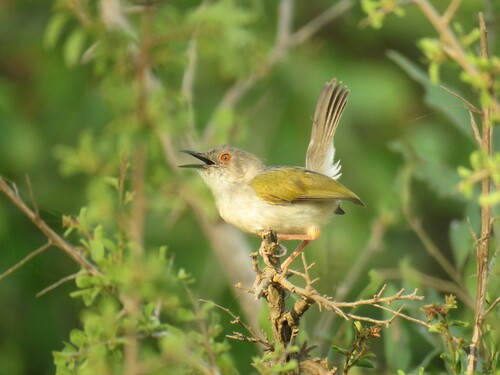
ミドリコムシクイ (Camaroptera brachyura) ミドリコムシクイ
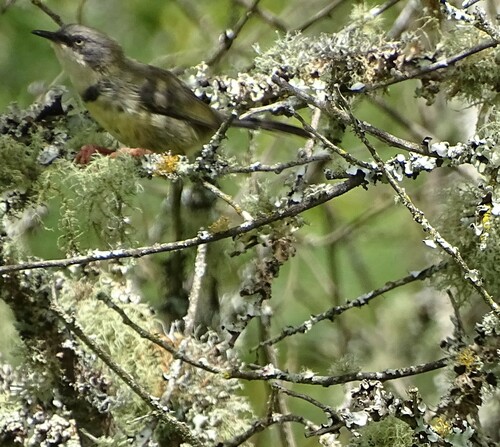
ムナオビイロムシクイ (Apalis thoracica) ムナオビイロムシクイ

メディア

読み込み中…

要点

グリーンバックカマロプテラとムナオビイロムシクイを区別する最も信頼できるフィールドマークは、ムナオビイロムシクイのすべての形態に存在する狭い黒い胸帯であり、グリーンバックカマロプテラには完全に欠如しています。幼鳥のムナオビイロムシクイは不完全な帯を示すことがありますが、それでもカマロプテラはどの年齢でも暗い胸帯を示すことはありません。構造も役立ちます:カマロプテラはコンパクトで短い尾を持つオリーブグリーンの鳥で、通常は深いカバーの中にいますが、ムナオビイロムシクイは細長く、目立って長い尾を持ち、しばしば白い外尾羽を示します。両者は緑の上面を示すことがありますが、ムナオビイロムシクイは亜種によっては灰色の上面を持つこともあります。下部の色と尾のパターンは、あいまいな視界での鍵となります。

識別のコツ

  1. 胸帯(すべての年齢):ムナオビイロムシクイは常に狭い黒い胸帯を示します(幼鳥では不完全で、雌では狭くなります)が、グリーンバックカマロプテラは胸帯を示しません。これはすべての羽色において最も信頼できるマークです。
  2. 尾の長さとパターン:ムナオビイロムシクイは白い外羽を持つ明らかに長い尾を持ち、しばしば振ったり扇いだりし、飛行中や止まっているときに見えます。カマロプテラの尾は短く、丸みを帯びており、白が欠けており、めったに振られません。
  3. 上面の色:両者は上面が緑に見えることがありますが、ムナオビイロムシクイは亜種によっては灰色の上面を持つこともあります。カマロプテラは常に緑の背中を持っています。
  4. 下面の色:カマロプテラは白っぽい灰色の下面を持ち、ムナオビイロムシクイは白または淡い黄色の下面を持ち、幼鳥では時々バフィーになります。
  5. くちばしの形:ムナオビイロムシクイは長く、細長い、わずかに下向きの黒いくちばしを持ち、カマロプテラのくちばしは短くて太めです。
  6. 目の色:ムナオビイロムシクイは淡い目を持ち、良い光の中で目立つことがありますが、カマロプテラの目の色は特に目立ちません。
  7. 姿勢と体型:カマロプテラはコンパクトで短い尾を持ち、しばしばカバーの中で低くかがんでいます。ムナオビイロムシクイはより細長く、伸びており、しばしばオープンな場所に止まります。
  8. 行動:カマロプテラは秘密主義で、密なカバーからあまり出てこないことが多いですが、ムナオビイロムシクイはオープンな場所で見られる可能性が高く、活発に動き、尾を振ります。
  9. 飛行中の視点:飛行中はムナオビイロムシクイの白い外尾羽を探してください。カマロプテラの尾は無地で短いです。
  10. 幼鳥の混乱:幼鳥のムナオビイロムシクイは完全な胸帯が欠けていることがありますが、しばしば胸に暗い部分を示します。幼鳥のカマロプテラは胸がより淡い黄色ですが、暗い帯は決して示しません。
  11. 性差:ムナオビイロムシクイの両性は胸帯を持っていますが、雌では狭くなります。カマロプテラの性は似ています。
  12. 生息地の文脈:密で絡み合った茂みはカマロプテラを好み、オープンな茂みや森林の端はムナオビイロムシクイを好みます。
  13. サイズの印象:両者は質量が似ていますが、ムナオビイロムシクイは尾のために長く見え、細長く見えます。
  14. 落とし穴:緑の上面だけでは診断的ではありません—下面、尾、胸帯に焦点を当ててください。
  15. マークが失敗したとき:光が悪い場合や部分的な視界では、尾の長さ/パターンと胸帯のヒントを優先してください。

大きさ

両種は質量が非常に似ています(カマロプテラ約10.0g、ムナオビイロムシクイ約10.5g [wikidata])が、ムナオビイロムシクイはわずかに長いです(11–13 cm対カマロプテラの11.5 cm [wikipedia])。長さの違いは主にムナオビイロムシクイの長い尾によるもので、これは有用なフィールドの手がかりです。手の中や非常に近い距離では微妙ですが、フィールドではムナオビイロムシクイはしばしばより伸びて細長く見え、カマロプテラはよりコンパクトで短い尾に見えます。

羽色

行動

グリーンバックカマロプテラは隠れた種で、通常は密なカバーの中で低く留まり、長い間自分をさらけ出すことはほとんどありません。しばしば絡み合った茂みや下草の中を移動し、見られるよりも聞かれることが多いです。ムナオビイロムシクイはより活発で敏捷で、オープンな茂みや森林の端でしばしば飛び回っているのが見られ、長い尾を扇いだり振ったりし、白い外尾羽を示します。ムナオビイロムシクイは特に採餌中や止まり木の間を移動しているときにオープンな場所で見られる可能性が高いです。

生息環境

両種はアフロトロピクスに生息し、範囲が重なることがありますが、カマロプテラは密で低いカバーや茂み、しばしば地面近くに厳密に結びついています。ムナオビイロムシクイは森林の端、オープンな森林、茂みの多い地域を好み、より高い位置やカバーの端で見られる可能性が高いです。もし絡み合った中に小さな緑色の鳥を見たら、カマロプテラの可能性が高いです。もしそれがよりオープンな茂みや端の生息地にいるなら、ムナオビイロムシクイを考えてください。

より良い説明を送る

比較と同じ項目を使ってください。文章はすぐに公開されます。

The most reliable field mark to separate Green-backed Camaroptera from Bar-throated Apalis is the presence of a narrow black breast band in all forms of Bar-throated Apalis, which is completely absent in Green-backed Camaroptera. Juvenile Apalis may show an incomplete band, but even then, Camaroptera never shows any dark breast band at any age. Structure also helps: Camaroptera is a compact, short-tailed, olive-green bird usually deep in cover, while Apalis is slender, with a noticeably long tail, and often shows white outer tail feathers. Both can show green upperparts, but Apalis may also be grey above depending on subspecies. Underparts color and tail pattern are key in ambiguous views.

  1. Breast band (all ages): Bar-throated Apalis always shows a narrow black breast band (though incomplete in juveniles and narrower in females), while Green-backed Camaroptera never shows any breast band. This is the single most reliable mark in all plumages.
  2. Tail length and pattern: Apalis has a distinctly long tail with white outer feathers, often flicked or fanned, visible both in flight and when perched. Camaroptera’s tail is short, rounded, and lacks white; it is rarely flicked.
  3. Upperparts color: Both can appear green above, but Apalis may also be grey above depending on subspecies. Camaroptera is always green-backed.
  4. Underparts color: Camaroptera has whitish-grey underparts; Apalis has white or pale yellow underparts, sometimes buffy in juveniles.
  5. Bill shape: Apalis has a longer, slender, slightly downcurved black bill; Camaroptera’s bill is shorter and stubbier.
  6. Eye color: Apalis has a pale eye, which can stand out in good light; Camaroptera’s eye color is not distinctive.
  7. Jizz and posture: Camaroptera appears compact, short-tailed, and often hunched low in cover. Apalis is more slender, elongated, and perches more upright, often in the open.
  8. Behavior: Camaroptera is secretive and rarely leaves dense cover; Apalis is more likely to be seen in the open, moving actively and flicking its tail.
  9. Flight views: In flight, look for the white outer tail feathers of Apalis; Camaroptera’s tail is plain and short.
  10. Juvenile confusion: Juvenile Apalis may lack a full breast band but often shows some dark across the chest; juvenile Camaroptera is paler yellow on the breast but never shows any dark band.
  11. Sex differences: Both sexes of Apalis have the breast band, but it is narrower in females; Camaroptera sexes are similar.
  12. Habitat context: Dense, tangled thickets favor Camaroptera; open bush and forest edge favor Apalis.
  13. Size impression: Both are similar in mass, but Apalis looks longer and more attenuated due to its tail.
  14. Pitfall: Green upperparts alone are not diagnostic—focus on underparts, tail, and breast band.
  15. When marks fail: In poor light or partial views, prioritize tail length/pattern and any hint of a breast band.

Both species are very similar in mass (Camaroptera ~10.0g, Apalis ~10.5g [wikidata]), but Bar-throated Apalis is slightly longer (11–13 cm vs. Camaroptera’s 11.5 cm [wikipedia]). The difference in length is largely due to the Apalis’s longer tail, which is a useful field clue. In the hand or at very close range, this is subtle, but in the field, Apalis often looks more elongated and attenuated, while Camaroptera appears more compact and short-tailed.

  • Juveniles: Juvenile Bar-throated Apalis has buffer underparts and may show an incomplete black breast band, while juvenile Green-backed Camaroptera is paler yellow on the breast but never shows any dark band. Both have pale underparts, but only Apalis can show any dark across the chest at this age.
  • Adults: Adult Camaroptera has green upperparts, olive wings, and whitish-grey underparts without any breast band. Bar-throated Apalis (adult) can have grey or green upperparts (depending on subspecies), but always has a narrow black breast band, white or pale yellow underparts, and white outer tail feathers. Both sexes of Apalis show the breast band, though it is narrower in females. Camaroptera never shows a breast band or white outer tail feathers.
  • Tail: Apalis always has white outer tail feathers, visible in flight and often when perched; Camaroptera’s tail is uniformly colored and noticeably shorter.
  • Bill and Eye: Apalis has a longer, slender, slightly curved black bill and a pale eye; Camaroptera’s bill is shorter and less distinctive, and eye color is not noted as a field mark.

Green-backed Camaroptera is a skulking species, typically staying low in dense cover and rarely exposing itself for long. It often moves through tangles and undergrowth, and is more likely to be heard than seen. Bar-throated Apalis is more active and agile, often seen flitting about in more open bushes and forest edges, frequently fanning or flicking its long tail and showing its white outer tail feathers. Apalis is more likely to be seen in the open, especially when foraging or moving between perches.

Both species occur in the Afrotropics and can overlap in range, but Camaroptera is more strictly tied to dense, low cover and thickets, often close to the ground. Bar-throated Apalis prefers forest edges, open woodland, and bushy areas, and is more likely to be seen higher up or at the edge of cover. If you see a small greenish bird deep in a tangle, Camaroptera is more likely; if it’s in a more open bush or edge habitat, consider Apalis.

変更を破棄しますか?

保存していない編集があります。今離れると失われます。

ミドリコムシクイ · ムナオビイロムシクイ · 苦手な鳥