

ホトトギス 対 セグロカッコウ
Cuculus poliocephalus 対 Cuculus micropterus
ホトトギスとセグロカッコウのクイズ
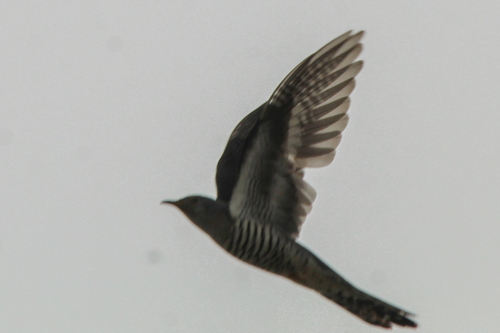 ホトトギス
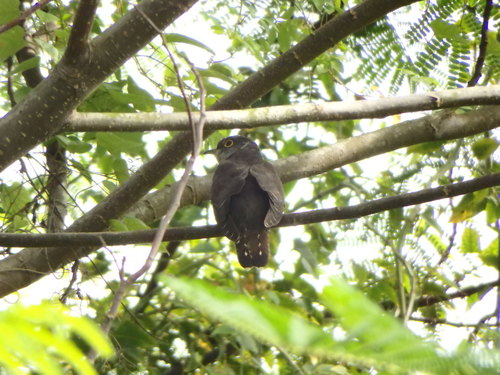 セグロカッコウ
要点
The most reliable field mark between Lesser Cuckoo and Indian Cuckoo is the underpart barring: Indian Cuckoo shows bold, broad black bars across the belly and flanks, while Lesser Cuckoo's barring is much finer and less striking. Juvenile Indian Cuckoos are especially distinctive, with white markings on the crown and chin, and broad white tips to the wing feathers—features not seen in Lesser Cuckoo. Both species are medium-sized, greyish cuckoos, but Indian Cuckoo is generally bulkier and has a more robust jizz. In overlapping range, careful attention to underpart pattern and juvenile plumage is key, as both can occur in similar woodland habitats.
識別のコツ
- Underpart barring: Indian Cuckoo shows bold, broad black bars across the belly and flanks, while Lesser Cuckoo has much finer, narrower barring. This is the most reliable field mark for adults.
- Juvenile plumage: Juvenile Indian Cuckoos are browner with broad white tips to the head and wing feathers, and have white markings on the crown and chin contrasting with a darker face. Lesser Cuckoo juveniles lack these strong white markings and are overall plainer.
- Tail pattern: Indian Cuckoo has a tail with a broad subterminal dark band and a clean white tip, which can be obvious when the tail is spread. Lesser Cuckoo's tail is less distinctly patterned.
- Overall structure: Indian Cuckoo appears bulkier and more robust, with a slightly heavier jizz, while Lesser Cuckoo is more slender and compact. This is subtle and best used in combination with plumage marks.
- Facial features: Indian Cuckoo juveniles have a contrasting white chin and throat with a darker face; Lesser Cuckoo lacks this contrast.
- Sex differences: Female Indian Cuckoos are paler on the throat and more brownish on the breast and tail, but this is not a strong separation from Lesser Cuckoo, as both sexes are similar in both species.
- Habitat: Both species can occur in similar wooded habitats, especially in overlapping range, so do not rely on habitat alone.
- Behavior: Indian Cuckoo is solitary and shy, often keeping to dense cover; Lesser Cuckoo is also unobtrusive, so behavior is not a strong separator.
- Eye-ring and iris: Indian Cuckoo can show a gray to yellow eye-ring and a light brown to reddish iris, but these are subtle and not always visible in the field; Lesser Cuckoo's eye details are not described as distinctive.
- Perched vs. in flight: Underpart barring and tail pattern are visible both perched and in flight; in juveniles, look for white-tipped wing feathers in flight for Indian Cuckoo.
- Season and location: In areas like Sri Lanka or the Himalayas, both species may occur together, so careful attention to plumage is needed.
- Pitfalls: Both species are greyish cuckoos with similar structure and can be confused at a distance or in poor light. Focus on underpart barring and juvenile head/wing markings for best separation.
- Voice: Not described in the sources, so do not rely on vocalizations for separation in this context.
- When in doubt: If the underpart barring is bold and broad, favor Indian Cuckoo; if it is fine and delicate, favor Lesser Cuckoo. For juveniles, look for white crown and chin markings for Indian Cuckoo.
大きさ
Both are medium-sized cuckoos, but Indian Cuckoo is typically a bit larger and bulkier in appearance, with a more robust structure. Lesser Cuckoo is slightly more slender and compact, though this can be subtle in the field and is not always diagnostic unless seen side by side. No precise measurements are provided in the sources, but the difference is mainly in impression rather than a clear size gap.
羽色
- Juvenile/immature birds: Indian Cuckoo juveniles are browner overall, with broad white tips to the head and wing feathers, and distinctive white markings on the crown and chin that contrast with a darker face. Lesser Cuckoo juveniles lack these bold white markings and are generally plainer.
- Adults: Indian Cuckoo adults have grey upperparts and boldly barred black-and-white underparts, with the barring broad and conspicuous across the belly and flanks. Lesser Cuckoo adults also have grey upperparts, but the underpart barring is much finer and less striking, giving a cleaner, paler look below. The tail of Indian Cuckoo is barred with a broad subterminal dark band and a white tip, while Lesser Cuckoo's tail pattern is less strongly marked.
- Sex differences: Indian Cuckoo females are slightly paler on the throat and show more brown on the breast and tail, but both sexes are similar overall; this is not a strong field mark for separation from Lesser Cuckoo.
行動
Indian Cuckoo is described as solitary and shy, often keeping to dense forest or woodland and remaining inconspicuous. Lesser Cuckoo's behavior is less well described in the sources, but both species are typical Cuculus cuckoos, tending to be unobtrusive and more often heard than seen. There is no strong behavioral distinction for field separation.
生息環境
Both species can be found in forests and open woodland, with Indian Cuckoo ranging from lowlands up to 3,600 m in the Himalayas and across much of South and Southeast Asia. Lesser Cuckoo is more tied to East Asia and the Himalayas, wintering to East Africa and Sri Lanka. In areas of overlap (e.g., the Himalayas, Sri Lanka), both may occur in similar wooded habitats, so habitat alone is not diagnostic.