
Motmot

レバントハイタカ 対 ハイタカ

Tachyspiza brevipes 対 Accipiter nisus

レバントハイタカとハイタカのクイズ
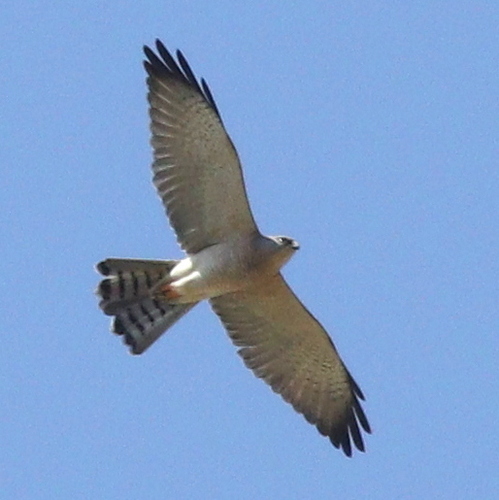
レバントハイタカ (Tachyspiza brevipes) レバントハイタカ
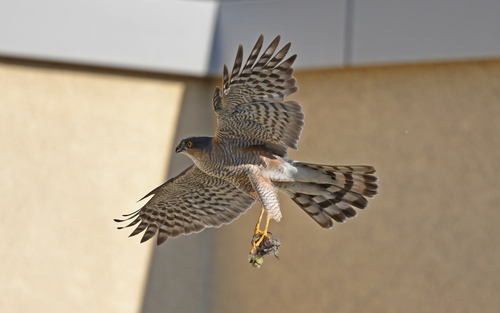
ハイタカ (Accipiter nisus) ハイタカ

メディア

読み込み中…

要点

レバントハイタカとハイタカの間で最も信頼できるフィールドマークは、飛行中の全体的な構造です:レバントハイタカは、より短く、尖った翼と短い尾を持ち、よりハヤブサのような外観を与えます。一方、ハイタカは、より広く、丸みを帯びた翼と、より長く、四角い尾を示します。幼鳥の羽毛は似ていますが、レバントハイタカの幼鳥は暗い喉のラインを示し、ハイタカの幼鳥は中央の喉のストライプがありません。両種の成鳥のオスは上面が青灰色で、下面に縞模様がありますが、レバントはより小さく、よりコンパクトです。性別や年齢の違いは識別を複雑にすることがあるため、構造と飛行の印象は羽毛だけよりも信頼できることが多いです。

識別のコツ

  1. 飛行中の翼と尾の形状: レバントハイタカは、より短く、尖った翼と短い尾を示し、コンパクトでハヤブサのようなプロファイルを与えます。ハイタカは、より広く、丸みを帯びた翼と、より長く、四角い尾を持っています。これは、直接比較または経験がある場合に最も信頼できます。
  2. サイズと性差: ハイタカ、特に雌は、明らかに大きく、がっしりとしています。レバントハイタカは全体的に小さく、性別間のサイズ差はあまり顕著ではありません。
  3. 幼鳥の喉のパターン: 幼鳥のレバントハイタカは暗い喉のライン(時には淡い)を持ち、ハイタカの幼鳥はストライプのある喉を持っていますが、中央のストライプがありません。これは、若い鳥の止まり木や近くの視点での重要なマークです。
  4. 成鳥のオスの下面: レバントハイタカのオスは、下面に細かい赤褐色と白の縞模様があります。ハイタカのオスは、遠くから見ると平坦なオレンジに見えるオレンジの縞模様のある下面を持っています。
  5. 成鳥の雌の上面: レバントハイタカの雌は、上面がスレートグレーで、暗い翼先端を持っています。ハイタカの雌は、上面が暗い茶色または灰褐色です。
  6. 成鳥の雌の下面: レバントハイタカの雌は、下面が赤褐色の縞模様があり、暗い喉のラインを示すことがあります。ハイタカの雌は、中央の喉のストライプがない茶色の縞模様があります。
  7. 虹彩の色: ハイタカの成鳥はオレンジ黄色からオレンジ赤の虹彩を持ち(オスは明るい)、レバントハイタカは黄色の目を持っています(メモではあまり強調されていませんが、良い光の中では役立つことがあります)。
  8. 脚と嘴の色: 両種はオレンジがかった黄色の脚と黄色の嘴を持っているため、これは診断的ではありません。
  9. 飛行スタイル: レバントハイタカは、よりハヤブサのように見え、より速く、尖った翼のビートと時折のホバリングを持つことがあります。ハイタカは、波打つ飛行パターンでフラップ・フラップ・グライドのパターンを使用します。
  10. 止まり木の印象: レバントハイタカは、止まっているときによりコンパクトで短い尾に見え、ハイタカは特に雌において、より長い尾でがっしりとしています。
  11. 生息地と範囲の文脈: 移動中に南東ヨーロッパや中東にいる場合、レバントハイタカの方が可能性が高く、特に移動のホットスポットで見られます。ハイタカはユーラシア全体に広く一般的です。
  12. 性別の混乱: 雌のレバントハイタカは、雄のハイタカのサイズに近づくことがあるため、構造と羽毛の詳細は、これらのケースではサイズだけよりも信頼できます。
  13. 羽毛の重複: 両種は、悪い光や遠くから見ると似て見えることがあり、特に幼鳥においてそうです。最良の結果を得るためには、構造、喉のパターン、飛行スタイルの組み合わせを使用してください。
  14. 強い声の違いは確認されていない: 提供されたメモでは、呼び声は診断的とは記述されていないため、視覚的なマークに頼ってください。
  15. 他のアカシタの重複に注意: 一部の地域では、他の小型のアカシタ(例:タカサゴダカ、ミナミツミ)が存在する可能性があるため、常に複数のフィールドマークで確認してください。

大きさ

ハイタカは一般的に大きく、特に雌は重いです。成鳥の雌のハイタカは、長さ35〜41 cm、翼幅67〜80 cm、体重185〜342 gに達することができますが、レバントハイタカは長さ32〜38 cm、翼幅65〜75 cmと小さく(体重は指定されていませんが、ハイタカよりも少ないです)。性別間のサイズ差は、ハイタカでははるかに顕著で、雌は雄よりも最大25%大きくなります。レバントハイタカは、性差のサイズの二形性があまり顕著ではありません。

羽色

行動

両種は、短く広い翼と長い尾を使用して木々の間を移動するために適応しています。レバントハイタカは、移動中にしばしば浮遊飛行を使用し、時にはホバリングを行い、繁殖中に高く旋回する空中ディスプレイで知られています。ハイタカは、波打つパターンでフラップ・フラップ・グライドの飛行を持っています。両種は秘密主義であり、移動中やディスプレイ飛行中を除いては見つけるのが難しいことがあります。

生息環境

両種は、通常水の近くの森林または森林の端の生息地で繁殖します。レバントハイタカは、開けた森林、森林の端、または孤立した木の塊を好み、通常は地上5〜10 mの高さに巣を作ります。ハイタカは、より広く適応性があり、その範囲全体でさまざまな森林生息地を利用します。両種は類似の文脈で見られることがありますが、レバントハイタカは南東ヨーロッパと南西アジアにより局所的であり、ハイタカはユーラシア全体に広く分布しています。

より良い説明を送る

比較と同じ項目を使ってください。文章はすぐに公開されます。

The most reliable field mark between Levant Sparrowhawk and Eurasian Sparrowhawk is the overall structure in flight: Levant Sparrowhawk has shorter, more pointed wings and a shorter tail, giving it a more falcon-like appearance, while Eurasian Sparrowhawk shows broader, more rounded wings and a longer, squarer tail. Juvenile plumage is similar, but Levant Sparrowhawk juveniles show a dark throat line, while Eurasian Sparrowhawk juveniles lack a midline throat stripe. Adult males of both species are blue-grey above and barred below, but Levant is smaller and more compact. Sex and age differences can complicate identification, so structure and flight jizz are often more reliable than plumage alone.

  1. Wing and tail shape in flight: Levant Sparrowhawk shows shorter, more pointed wings and a shorter tail, giving a compact, falcon-like profile. Eurasian Sparrowhawk has broader, more rounded wings and a longer, squarer tail. This is most reliable in direct comparison or with experience.
  2. Size and sexual dimorphism: Eurasian Sparrowhawk, especially females, is noticeably larger and bulkier. Levant Sparrowhawk is smaller overall, and the size difference between sexes is less pronounced.
  3. Juvenile throat pattern: Juvenile Levant Sparrowhawks have a dark throat line (sometimes faint), while Eurasian Sparrowhawk juveniles have a streaked throat but lack a midline stripe. This is a key mark in perched or close views of young birds.
  4. Adult male underparts: Levant Sparrowhawk males have fine rufous and white barring below; Eurasian Sparrowhawk males have orange-barred underparts that can look plain orange at a distance.
  5. Adult female upperparts: Levant Sparrowhawk females are slate-grey above with darkish wingtips; Eurasian Sparrowhawk females are dark brown or greyish-brown above.
  6. Adult female underparts: Levant Sparrowhawk females are barred reddish brown below and may show a dark throat line; Eurasian Sparrowhawk females are brown-barred below without a midline throat stripe.
  7. Iris color: Eurasian Sparrowhawk adults have orange-yellow to orange-red irides (males brighter), while Levant Sparrowhawk has yellow eyes (less emphasized in the notes, but can be helpful in good light).
  8. Leg and cere color: Both species have orangish-yellow legs and yellow cere, so this is not diagnostic.
  9. Flight style: Levant Sparrowhawk may appear more falcon-like, with faster, more pointed wingbeats and occasional hovering. Eurasian Sparrowhawk uses a flap-flap-glide pattern with undulating flight.
  10. Perched jizz: Levant Sparrowhawk appears more compact and short-tailed when perched, while Eurasian Sparrowhawk is longer-tailed and bulkier, especially in females.
  11. Habitat and range context: If in southeastern Europe or the Middle East during migration, Levant Sparrowhawk is more likely, especially in migration hotspots. Eurasian Sparrowhawk is widespread and common across Eurasia.
  12. Sex confusion: Female Levant Sparrowhawk can approach the size of male Eurasian Sparrowhawk, so structure and plumage details are more reliable than size alone in these cases.
  13. Plumage overlap: Both species can look similar in poor light or at a distance, especially juveniles. Use a combination of structure, throat pattern, and flight style for best results.
  14. No strong vocal differences noted: Calls are not described as diagnostic in the provided notes, so rely on visual marks.
  15. Beware overlap with other Accipiters: In some regions, other small Accipiters (e.g., Shikra, Besra) may be present; always confirm with multiple field marks.

Eurasian Sparrowhawk is generally larger and heavier, especially in females. Adult female Eurasian Sparrowhawk can reach 35–41 cm in length with a wingspan of 67–80 cm and a mass of 185–342 g, while Levant Sparrowhawk is smaller at 32–38 cm in length and 65–75 cm wingspan (mass not specified, but less than Eurasian). The size difference between sexes is much more pronounced in Eurasian Sparrowhawk, with females up to 25% larger than males. Levant Sparrowhawk shows a less marked sexual size dimorphism.

  • Juveniles: Both species are brown above and barred or streaked below, but Levant Sparrowhawk juveniles have a distinctive dark throat line, sometimes faint, while Eurasian Sparrowhawk juveniles have a streaked throat but lack a midline stripe. Eurasian juveniles are warm brown above with rusty fringes, and their underparts are coarsely barred or spotted brown.
  • Adult males: Both are blue-grey above and barred below, but Levant Sparrowhawk males have finer rufous and white barring and a white throat with a dark central stripe (sometimes faint). Eurasian Sparrowhawk males have orange-barred underparts, which can look plain orange at a distance, and their irides are orange-yellow or orange-red.
  • Adult females: Levant Sparrowhawk females are slate-grey above with darkish wingtips and reddish brown barring below, often showing a dark throat line. Eurasian Sparrowhawk females are dark brown or greyish-brown above, with brown-barred underparts and bright yellow to orange irides.
  • In flight: Levant Sparrowhawk appears more pointed-winged and compact, while Eurasian Sparrowhawk is broader-winged and longer-tailed.

Both species are adapted for maneuvering through trees, using short, broad wings and long tails. Levant Sparrowhawk often uses soaring-and-gliding flight on migration, sometimes hovering, and is known for high-circling aerial displays during breeding. Eurasian Sparrowhawk has a characteristic flap-flap-glide flight with undulating pattern. Both are secretive and can be difficult to spot except during migration or display flights.

Both species breed in woodland or forest edge habitats, often near water. Levant Sparrowhawk prefers open woodland, forest edges, or isolated tree clumps, usually nesting 5–10 m above ground. Eurasian Sparrowhawk is more widespread and adaptable, using a variety of wooded habitats across its range. Both can be found in similar contexts, but Levant Sparrowhawk is more localized in southeastern Europe and southwestern Asia, while Eurasian Sparrowhawk is widespread across Eurasia.

変更を破棄しますか?

保存していない編集があります。今離れると失われます。

レバントハイタカ · ハイタカ · 苦手な鳥