
Motmot

キタアフリカワシミミズク 対 コキンメフクロウ

Bubo ascalaphus 対 Athene noctua

キタアフリカワシミミズクとコキンメフクロウのクイズ
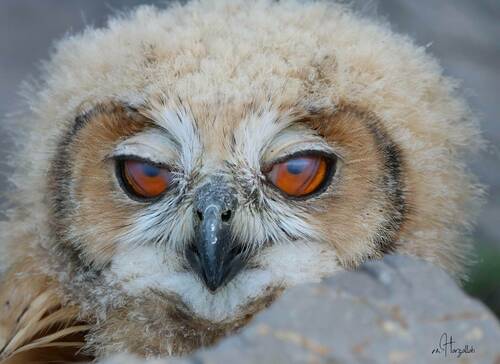
キタアフリカワシミミズク (Bubo ascalaphus) キタアフリカワシミミズク
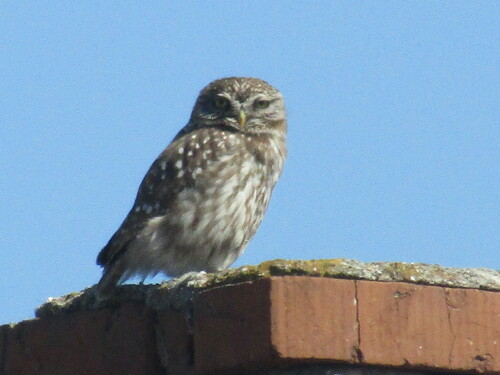
コキンメフクロウ (Athene noctua) コキンメフクロウ

メディア

読み込み中…

要点

ファラオワシミミズクとコキンメフクロウを区別する最も信頼できるフィールドマークはサイズです:ファラオワシミミズクはコキンメフクロウの2倍以上の長さで、体重も何倍もあり、非常に頑丈な体つきをしています。飛んでいるところや止まっているところを見た場合、ファラオワシミミズクの大きなオレンジ色の目、目立つ耳の房、濃い暗い筋模様のある淡いクリーム色の腹部を探してください。一方、コキンメフクロウは黄色い目、平らな頭、コンパクトで斑点のある茶色と白の体を持っています。幼鳥のコキンメフクロウは成鳥の白い冠の斑点が欠けていますが、若い鳥でもファラオワシミミズクよりもはるかに小さく、形が異なります。両種は北アフリカに生息することがありますが、ファラオワシミミズクは開けた砂漠や岩の露頭に生息し、コキンメフクロウは農地、果樹園、村を好みます。

識別のコツ

  1. サイズは最も即座の手がかりです:ファラオワシミミズクはコキンメフクロウの2倍以上の長さで、はるかにがっしりとしています。小さくてコンパクトに見える鳥を見た場合、それはファラオワシミミズクではありません。
  2. 構造と姿勢:ファラオワシミミズクは頑丈で直立した姿勢、大きな頭、長い翼を持っています。コキンメフクロウはずんぐりしていて、平らな頭と短い尾を持ち、しばしば背を丸めているように見えます。
  3. 顔の特徴:ファラオワシミミズクは暗い縁のある強い顔の円盤、大きなオレンジ色の目、小さくても目立つ耳の房を持っています。コキンメフクロウはあまり定義されていない顔の円盤、黄色い目、耳の房がありません。白い「眉毛」が厳しいまたはしかめっ面の印象を与えます。
  4. 上面の羽毛:ファラオワシミミズクは濃い黒とクリーム色の筋模様や斑点のある黄褐色の上面を持っています。コキンメフクロウは灰色がかった茶色で、白い斑点や筋模様が多く、黄褐色のトーンが欠けています。
  5. 下面の羽毛:ファラオワシミミズクの腹部は淡いクリーム色で、上胸部には黒い筋模様があり、下部には細かい赤褐色の模様があります。コキンメフクロウは白の茶色の筋模様があり、より均一な筋模様でコントラストが少ないです。
  6. 幼鳥の混乱:幼鳥のコキンメフクロウは鈍い色合いで白い冠の斑点が欠けていますが、依然としてコンパクトで斑点のある外見と小さなサイズを示します。サイズや構造からファラオワシミミズクと幼鳥のコキンメフクロウを混同するリスクはありません。
  7. 耳の房:ファラオワシミミズクだけが耳の房を示しますが、それは小さいです。コキンメフクロウは常に耳の房がありません。
  8. くちばしの色:ファラオワシミミズクは黒くて鉤状のくちばしを持っています。コキンメフクロウのくちばしは目立たず、黒とは記述されていません。
  9. 飛行スタイル:コキンメフクロウは跳ねるような、キツツキのような飛行をし、急速な羽ばたきと短い滑空を行います。ファラオワシミミズクの飛行は強く、より直接的で、大型の猛禽にふさわしいです。
  10. 生息地の文脈:ファラオワシミミズクは人から離れた開けた砂漠や岩の丘に生息しています。コキンメフクロウは農地、果樹園、村、開けた田舎に多く見られ、しばしば人間の居住地の近くにいます。
  11. 止まり方:ファラオワシミミズクは岩や崖に直立して止まり、しばしば目立つ場所にいます。コキンメフクロウはポスト、建物、または低い枝に止まり、しばしば開けた視界にありますが、低い高さにいます。
  12. 鳴き声:コキンメフクロウは繰り返しの「キュー、キュー」とさまざまなトリルやおしゃべりの鳴き声を出し、特に巣の近くで聞かれます。ファラオワシミミズクの声は深く、似ているとは記述されていません。
  13. 目の色:ファラオワシミミズクは大きなオレンジ色の目を持っています。コキンメフクロウは黄色い目を持っていますが、サイズや構造に比べてその違いは微妙です。
  14. 顔の円盤:ファラオワシミミズクの顔の円盤はより目立ち、縁があります。コキンメフクロウの顔の円盤は平らで、あまり定義されていません。
  15. 落とし穴:暗い場所や遠くから見ると、サイズと構造が最も良い手がかりです。スケールがない場合は、ファラオワシミミズクの耳の房と顔の円盤を探し、コキンメフクロウのコンパクトで平らな頭と白い「眉毛」を探してください。

大きさ

ファラオワシミミズクは大型のフクロウで、長さは46〜50 cm(18〜20インチ)であり、より小型のワシミミズクの一種ですが、コキンメフクロウよりもはるかに大きいです。コキンメフクロウは約22 cm(8.7インチ)しかありません。この違いは明白です:ファラオワシミミズクはコキンメフクロウの2倍以上の長さで、体重も何倍もあります。フィールドでは、ファラオワシミミズクはがっしりとしていて、長い翼を持ち、力強い体つきをしていますが、コキンメフクロウはコンパクトで、短い尾を持ち、小さな頭をしています。距離があったり、光が悪い場合でも、サイズの差は通常明らかです。

羽色

どちらの種についても年齢特有の上翼のパターンは記述されていないため、全体的な色合いと模様に焦点を当ててください。ファラオワシミミズクは濃い黒とクリーム色の筋模様や斑点のある黄褐色の上面を持ち、上胸部には黒い筋模様があり、下部には淡いクリーム色の腹部と細かい赤褐色の模様があります。顔の円盤は明確に定義されており、暗い縁があり、くちばしは黒です。耳の房は存在しますが小さいです。対照的に、コキンメフクロウは灰色がかった茶色で、白い斑点や筋模様が多く、下面は茶色の筋模様のある白です。顔の円盤はあまり目立たず、頭は平らで、黄色い目の上に明らかな白い「眉毛」があり、厳しいまたはしかめっ面の印象を与えます。幼鳥のコキンメフクロウは鈍い色合いで、成鳥の白い冠の斑点が欠けていますが、依然としてコンパクトで斑点のある外見を示します。ファラオワシミミズクのオレンジ色の目と強い顔の円盤は、コキンメフクロウには決して匹敵しません。

行動

ファラオワシミミズクは通常、岩や崖に直立して止まり、しばしば開けた砂漠や乾燥した丘に生息し、通常は単独またはペアで見られます。その飛行は強く、直接的で、そのサイズにふさわしいです。コキンメフクロウはポスト、建物、または低い枝に止まり、しばしば農地や人間の居住地の近くに生息し、昼間によく見られます。その飛行は跳ねるようなキツツキのようなもので、急速な羽ばたきと短い滑空を行い、小さくコンパクトな体つきを反映しています。コキンメフクロウは昼間により近づきやすく、活発に見えることが多いですが、ファラオワシミミズクはより薄明かりや夜行性で警戒心が強いです。

生息環境

ファラオワシミミズクは北アフリカと中東の開けた砂漠、岩の露頭、乾燥した丘に生息しています。密な植生や人間の居住地の近くを避けます。コキンメフクロウは農地、果樹園、村、散在する木や建物のある開けた田舎を好み、人間の近くに見られることが多いです。北アフリカでは両種が生息することがありますが、文脈が役立ちます:遠くの岩の丘にいる大型のフクロウはファラオワシミミズクの可能性が高く、農場の壁や果樹園のポストにいる小型のフクロウはほぼ確実にコキンメフクロウです。

声

コキンメフクロウは不満げな「キュー、キュー」とさまざまな口笛、トリル、吠え声、またはおしゃべりの鳴き声を出し、特に巣の近くで聞かれます。その鳴き声は大型のワシミミズクのものよりも高音で多様です。ファラオワシミミズクの声は提供されたメモには記述されていませんが、ワシミミズクとして、より深く、共鳴するホーや吠え声を持つと予想されます。いずれにせよ、コキンメフクロウの特徴的で繰り返される「キュー」はファラオワシミミズクには匹敵しません。

より良い説明を送る

比較と同じ項目を使ってください。文章はすぐに公開されます。

The most reliable field mark to separate Pharaoh Eagle Owl from Little Owl is size: Pharaoh Eagle Owl is more than twice as long and many times heavier than Little Owl, with a much more robust build. If seen in flight or perched, look for the Pharaoh Eagle Owl’s large orange-yellow eyes, prominent ear tufts, and pale creamy underparts with bold dark streaks, versus the Little Owl’s yellow eyes, flat-topped head, and compact, spotted brown-and-white body. Juvenile Little Owls lack the adult’s white crown spots, but even young birds are much smaller and differently shaped than any eagle-owl. Both species can occur in North Africa, but Pharaoh Eagle Owl is a bird of open desert and rocky outcrops, while Little Owl prefers farmland, orchards, and villages.

  1. Size is the most immediate clue: Pharaoh Eagle Owl is more than twice as long as Little Owl and much bulkier. If you see a bird that looks small and compact, it is not Pharaoh Eagle Owl.
  2. Structure and posture: Pharaoh Eagle Owl has a robust, upright stance, large head, and long wings. Little Owl is squat, with a flat-topped head and short tail, often appearing hunched.
  3. Facial features: Pharaoh Eagle Owl has a strong facial disc with a dark rim, large orange-yellow eyes, and small but visible ear tufts. Little Owl has a less defined facial disc, yellow eyes, and no ear tufts. Its white 'eyebrows' give a stern or frowning look.
  4. Plumage above: Pharaoh Eagle Owl is tawny with dense black and creamy-white streaks and blotches. Little Owl is greyish-brown, heavily spotted and streaked with white, and lacks the tawny tones.
  5. Plumage below: Pharaoh Eagle Owl’s underparts are pale creamy-white with black streaks on the upper breast and fine reddish-brown vermiculations below. Little Owl is brown-streaked white below, with more uniform streaking and less contrast.
  6. Juvenile confusion: Juvenile Little Owls are duller and lack white crown spots, but still have the compact, spotted look and small size. There is no risk of confusing a juvenile Little Owl for a Pharaoh Eagle Owl on size or structure.
  7. Ear tufts: Only Pharaoh Eagle Owl shows ear tufts, though they are small. Little Owl always lacks ear tufts.
  8. Bill color: Pharaoh Eagle Owl has a black, hooked bill; Little Owl’s bill is less prominent and not described as black.
  9. Flight style: Little Owl has a bounding, woodpecker-like flight with rapid wingbeats and short glides. Pharaoh Eagle Owl’s flight is stronger, more direct, and befitting a large raptor.
  10. Habitat context: Pharaoh Eagle Owl is found in open desert and rocky hills, away from people. Little Owl is common in farmland, orchards, villages, and open countryside, often near human habitation.
  11. Perching behavior: Pharaoh Eagle Owl perches on rocks or cliffs, often upright and exposed. Little Owl perches on posts, buildings, or low branches, often in open view but at lower heights.
  12. Vocalizations: Little Owl gives a repeated 'kiew, kiew' and various trilling or chattering calls, especially near nests. Pharaoh Eagle Owl’s voice is deeper and not described as similar.
  13. Eye color: Pharaoh Eagle Owl has large orange-yellow eyes; Little Owl has yellow eyes, but the difference is subtle compared to size and structure.
  14. Facial disc: Pharaoh Eagle Owl’s facial disc is more pronounced and rimmed; Little Owl’s is flatter and less defined.
  15. Pitfalls: In poor light or at great distance, size and structure remain the best clues. If you lack scale, look for ear tufts and facial disc for Pharaoh Eagle Owl, and compact, flat-topped head with white 'eyebrows' for Little Owl.

Pharaoh Eagle Owl is a large owl, 46–50 cm (18–20 in) in length, making it one of the smaller eagle-owls but still much larger than Little Owl, which is only about 22 cm (8.7 in) long. The difference is stark: Pharaoh Eagle Owl is over twice the length and many times the mass of Little Owl. In the field, Pharaoh Eagle Owl appears bulky, long-winged, and powerfully built, while Little Owl is compact, short-tailed, and small-headed. Even at a distance or in poor light, the size gap is usually obvious unless the observer lacks scale.

No age-specific upperwing patterns are described for either species, so focus on overall coloration and markings. Pharaoh Eagle Owl has tawny upperparts with dense black and creamy-white streaks and blotches, pale creamy-white underparts with black streaks on the upper breast and fine reddish-brown vermiculations below. The facial disc is well-defined with a dark rim, and the bill is black. Ear tufts are present but small. Little Owl, in contrast, is greyish-brown above, heavily spotted and streaked with white, and brown-streaked white below. Its facial disc is less pronounced, the head is flat-topped, and it has obvious white 'eyebrows' above yellow eyes, giving a stern or frowning look. Juvenile Little Owls are duller, lacking the adult’s white crown spots, but still show the compact, spotted look. Pharaoh Eagle Owl’s orange-yellow eyes and strong facial disc are never matched by Little Owl.

Pharaoh Eagle Owl typically perches upright on rocks or cliffs, often in open desert or arid hills, and is usually seen singly or in pairs. Its flight is strong and direct, befitting its size. Little Owl perches on posts, buildings, or low branches, often in farmland or near human habitation, and is frequently seen during the day. Its flight is bounding and woodpecker-like, with rapid wingbeats and short glides, reflecting its small, compact build. Little Owl often appears more approachable and active in daylight, while Pharaoh Eagle Owl is more crepuscular or nocturnal and wary.

Pharaoh Eagle Owl is found in open desert, rocky outcrops, and arid hills of North Africa and the Middle East. It avoids areas with dense vegetation or close human habitation. Little Owl prefers farmland, orchards, villages, and open countryside with scattered trees or buildings, and is much more likely to be found near people. In North Africa, both can occur, but context is helpful: a large owl on a remote rocky hillside is likely Pharaoh Eagle Owl, while a small owl on a farm wall or orchard post is almost certainly Little Owl.

Little Owl gives a querulous 'kiew, kiew' and a variety of whistling, trilling, yelping, or chattering calls, especially near the nest. Its calls are higher-pitched and more varied than those of large eagle-owls. Pharaoh Eagle Owl’s voice is not described in the provided notes, but as an eagle-owl, it is expected to have deeper, more resonant hoots or barks. In any case, the Little Owl’s distinctive, repeated 'kiew' is not matched by Pharaoh Eagle Owl.

変更を破棄しますか?

保存していない編集があります。今離れると失われます。

キタアフリカワシミミズク · コキンメフクロウ · 苦手な鳥