
Motmot

オオハシウミガラス 対 ウミガラス

Alca torda 対 Uria aalge

オオハシウミガラスとウミガラスのクイズ

オオハシウミガラス (Alca torda) オオハシウミガラス
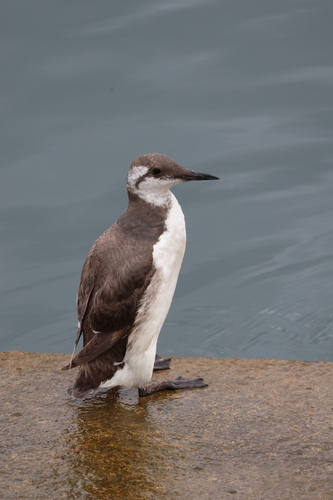
ウミガラス (Uria aalge) ウミガラス

メディア

読み込み中…

要点

オオハシウミガラスとウミガラスの間で最も信頼できるフィールドマークはくちばしです:オオハシウミガラスは明らかな溝と繁殖羽衣の白いラインを持つ厚く、深く、鈍い先端のくちばしを持つ一方で、ウミガラスのくちばしは長く、細く、尖っています。飛行中、オオハシウミガラスは明らかに長いくさび形の尾と、よりコンパクトで厚みのあるプロファイルを示しますが、ウミガラスは短く、丸い尾とスリムなシルエットを持っています。成鳥の羽衣は表面的には似ています(上が黒、下が白)が、オオハシウミガラスの顔は繁殖期に暗く、目からくちばしまでの白いラインを示します。幼鳥と初冬の鳥は情報源で強く区別されていないため、構造とくちばしの形はすべての年齢で重要です。両種はコロニーで崖に巣を作りますが、オオハシウミガラスはやや小さく、ずんぐりしています。

識別のコツ

  1. くちばしの形はすべての年齢と季節で最も信頼できるフィールドマークです: オオハシウミガラスは鈍い先端を持つ厚く、深く、横に圧縮されたくちばしを持ち(繁殖期には)白い垂直ラインがあり、ウミガラスのくちばしは長く、細く、鋭く尖っています。これは双眼鏡で遠くからでも見えます。
  2. 尾の形と長さ: オオハシウミガラスは中央の羽が突出した明らかに長いくさび形の尾を持ち、止まっているときや飛んでいるときに尖った見た目を与えます。ウミガラスの尾は短く、丸いです。
  3. 繁殖羽衣における頭と顔の模様: オオハシウミガラスの頭はジェットブラックで、目からくちばしまでの薄い白いラインがあります;ウミガラスの頭は黒または暗褐色(亜種によって異なる)で、そのようなラインはありません。ブライドルウミガラスは白い目のリングと後方に伸びるラインを持ち、くちばしに向かっては伸びません。
  4. 非繁殖(冬)顔: 両種は冬に顔に白を発達させますが、オオハシウミガラスの白は目と喉の後ろにあり、くちばしのラインは薄れます;ウミガラスの白い顔には目の後ろに暗いスパーがあり、くちばしは細く暗いままです。
  5. 体の構造: オオハシウミガラスは厚みがあり、ずんぐりしていてコンパクトで、首が短く、胸が深いです;ウミガラスは長く、スリムで、止まっているときにより直立しています。
  6. 飛行プロファイル: オオハシウミガラスは長い尾と短い首でコンパクトに見えます;ウミガラスは長く見え、短い尾とより流線型の体を持っています。
  7. くちばしの色と溝: オオハシウミガラスのくちばしは繁殖期に垂直の溝と白いラインを示します;ウミガラスのくちばしは単色の暗色で、溝や白いラインは決して示しません。
  8. 羽衣の色: オオハシウミガラスの黒は繁殖期に頭と背中でより深く、光沢があります;ウミガラスは特に南部のコロニーでは暗褐色に見えることがあります。
  9. 幼鳥/初冬の羽衣: 強い違いは記述されていません;くちばしと構造に頼ります。
  10. 脚の色: 両種は暗い脚を持っています;稀なウミガラスは黄灰色を示すことがありますが、これは例外的で分離には役立ちません。
  11. 採餌行動: オオハシウミガラスは複数の小魚を持ってくることがありますが、ウミガラスは通常、くちばしに横向きで1匹の魚を運びます。これはコロニーで最もよく見られます。
  12. 巣の場所: 巣で見られた場合、オオハシウミガラスは隙間や岩の下を好みます;ウミガラスは開放的な ledge に巣を作ります。
  13. コロニーの密度: ウミガラスのコロニーははるかに密で騒がしいです;オオハシウミガラスはより散在し、数が少ないです。
  14. 直接比較におけるサイズ: ウミガラスは大きく、重いですが、サイズの重複はかなりあります;注意して使用してください。
  15. 声: 提供された情報に基づいてフィールドで信頼できる分離はできません。

大きさ

オオハシウミガラスはウミガラスよりもやや小さく、軽いです。オオハシウミガラスは長さ37–39 cm、平均体重は505–890 g [wikipedia]で、ウミガラスは長さ38–46 cm、体重は775–1,250 g [wikipedia]です。ウミガラスは特に北部の個体群で明らかに重いです。翼幅もウミガラスの方が大きく(61–73 cm)、オオハシウミガラスは(指定されていませんが、翼の長さは短いです)。フィールドでは、ウミガラスはしばしば長く、スリムに見え、オオハシウミガラスはよりコンパクトで厚みのあるように見えます。

羽色

両種については特徴的な幼鳥や未成熟の上翼パターンは記述されていないため、分離は構造と成鳥の羽衣に依存します。繁殖羽衣では、オオハシウミガラスは黒い頭、首、背中に白い腹を持ち、目からくちばしの先までの診断的な薄い白いラインがあります。頭はウミガラスよりも暗いです。非繁殖羽衣では、オオハシウミガラスの喉と目の後ろの顔が白くなり、顔とくちばしの白いラインは薄れます。繁殖羽衣のウミガラスは上が黒(または南部の一部の鳥では暗褐色)で、下が白、薄く、暗い、尖ったくちばしと小さく、丸い黒い尾を持っています。冬になると、ウミガラスの顔は白くなり、目の後ろに暗いスパーがあり、時には暗い側面のストリークがあります。一部のウミガラス(「ブライドル」形態)は白い目のリングとラインを示しますが、これは後方に伸びる薄い完全なリングであり、くちばしに向かうラインではありません。初冬のウミガラスは冬羽衣の成鳥のように見えますが、喉の周りにより多くの白を保持することがあります。オオハシウミガラスのくちばしの溝と白いラインは非繁殖羽衣ではあまり目立たなくなりますが、くちばしは深く鈍いままです。ウミガラスのくちばしは常に細く尖っています。

行動

両種はコロニーで崖に巣を作り、ほとんどの生活を海で過ごし、繁殖のためにのみ陸に上がります。オオハシウミガラスは隙間や岩の下に巣を作る傾向がありますが、ウミガラスは開放的な崖の ledge を好みます。オオハシウミガラスは生涯にわたってペアを形成し、ペアや小グループで見られることが多いですが、ウミガラスは密で騒がしいコロニーを形成します。飛行中、オオハシウミガラスはよりコンパクトに見え、急速な翼の打撃と長い尾を持ち、ウミガラスはよりスリムに見え、より直線的なプロファイルで飛びます。両種は魚を捕るために潜りますが、オオハシウミガラスはより深く(最大120 m)潜ることができ、しばしば広がって餌を探しますが、ウミガラスも深く潜りますが、通常はくちばしに1匹の魚しか運びません。両種は雛に1匹の魚を与えますが、オオハシウミガラスはより頻繁に、より小さな量を運ぶことがあります。

生息環境

両種は北大西洋の岩の崖や島で繁殖します。オオハシウミガラスは隙間や岩の下により隠れた巣の場所を選ぶことが多いですが、ウミガラスは開放的な崖の ledge に密集して巣を作ります。海では、両種は繁殖シーズン外では外洋性で、混合した群れで一緒に見られることがありますが、オオハシウミガラスは一般的に数が少なく、一部の地域ではより沿岸性です。生息地にはかなりの重複があるため、文脈だけでは診断的ではありません。

声

フィールドでの分離のための診断的な違いは情報源で記述されていません。ウミガラスはコロニーで大きく、うなり声のような「ムルル」という鳴き声が知られていますが、オオハシウミガラスの鳴き声はここでは記述されていません。これらのメモに基づいて声は信頼できる分離要因ではありません。

より良い説明を送る

比較と同じ項目を使ってください。文章はすぐに公開されます。

The most reliable field mark between Razorbill and Common Guillemot is the bill: Razorbill has a thick, deep, blunt-ended bill with obvious grooves and a white line in breeding plumage, while Common Guillemot's bill is long, thin, and pointed. In flight, Razorbill shows a distinctly longer, wedge-shaped tail and a more compact, thick-set profile, whereas Common Guillemot has a short, rounded tail and a sleeker silhouette. Adult plumage is superficially similar (black above, white below), but Razorbill's face is darker in breeding season and shows a white line from the eye to the bill. Juvenile and first-winter birds are not strongly differentiated in the sources, so structure and bill shape remain key at all ages. Both species are colonial cliff-nesters, but Razorbill is slightly smaller and chunkier.

  1. Bill shape is the single most reliable field mark at all ages and seasons: Razorbill has a thick, deep, laterally compressed bill with a blunt end and (in breeding) a white vertical line; Guillemot's bill is long, thin, and sharply pointed. This is visible even at a distance with binoculars.
  2. Tail shape and length: Razorbill has a distinctly longer, wedge-shaped tail with central feathers projecting, giving a pointed look when perched or in flight. Guillemot's tail is short and rounded.
  3. Head and face pattern in breeding plumage: Razorbill's head is jet black with a thin white line from the eye to the bill; Guillemot's head is black or dark brown (depending on subspecies) with no such line. Bridled Guillemots have a white eye ring and line extending back, not forward to the bill.
  4. Non-breeding (winter) face: Both species develop white on the face in winter, but Razorbill's white is behind the eye and throat, and the bill line fades; Guillemot's white face has a dark spur behind the eye, and the bill remains thin and dark.
  5. Body structure: Razorbill is thick-set, chunky, and compact, with a shorter neck and deeper chest; Guillemot is longer, slimmer, and more upright when perched.
  6. Flight profile: Razorbill appears compact with a long tail and short neck; Guillemot looks longer, with a short tail and more streamlined body.
  7. Bill color and grooves: Razorbill's bill shows vertical grooves and a white line in breeding; Guillemot's bill is plain dark and never shows grooves or white lines.
  8. Plumage color: Razorbill's black is deeper and glossier on the head and back in breeding; Guillemot may appear dark brown, especially in southern colonies.
  9. Juvenile/first-winter plumage: No strong differences are described; rely on bill and structure.
  10. Leg color: Both species have dark legs; rare Guillemots may show yellow-grey, but this is exceptional and not useful for separation.
  11. Feeding behavior: Razorbill may bring multiple small fish, Guillemot typically carries one fish at a time crosswise in its bill. This is most visible at colonies.
  12. Nesting location: If seen at a nest, Razorbill prefers crevices or under rocks; Guillemot nests on open ledges.
  13. Colony density: Guillemot colonies are much denser and noisier; Razorbill is more scattered and less numerous.
  14. Size in direct comparison: Guillemot is larger and heavier, but size overlap is considerable; use only with caution.
  15. Voice: Not reliably separable in the field with the information provided.

Razorbill is slightly smaller and lighter than Common Guillemot. Razorbill measures 37–39 cm in length with a mean weight of 505–890 g [wikipedia], while Common Guillemot is 38–46 cm long and weighs 775–1,250 g [wikipedia]. Guillemot is noticeably heavier, especially in northern populations. Wingspan is also greater in Guillemot (61–73 cm) compared to Razorbill (not specified, but wing length is shorter). In the field, Guillemot often appears longer and slimmer, while Razorbill looks more compact and thick-set.

There are no distinctive juvenile or immature upperwing patterns described for either species, so separation relies on structure and adult plumage. In breeding plumage, Razorbill has a black head, neck, and back with a white belly, and a diagnostic thin white line running from the eye to the end of the bill. Its head is darker than Guillemot's. In non-breeding plumage, Razorbill's throat and face behind the eye turn white, and the white line on the face and bill fades. Common Guillemot in breeding plumage is black (or dark brown in some southern birds) above and white below, with a thin, dark, pointed bill and a small, rounded black tail. In winter, Guillemot's face becomes white with a dark spur behind the eye, sometimes with dark flank streaks. Some Guillemots ("bridled" morph) show a white eye ring and line, but this is a thin, complete ring extending back, not a line to the bill. First-winter Guillemots look like adults in winter plumage, but may retain more white around the throat. Razorbill's bill grooves and white line are less marked in non-breeding plumage, but the bill remains deep and blunt. Guillemot's bill is always thin and pointed.

Both species are colonial cliff-nesters and spend most of their lives at sea, only coming to land to breed. Razorbill tends to nest in crevices or under boulders, while Guillemot prefers open cliff ledges. Razorbill pairs for life and is more likely to be seen in pairs or small groups, whereas Guillemot forms dense, noisy colonies. In flight, Razorbill appears more compact with rapid wingbeats and a longer tail, while Guillemot looks sleeker and flies with a straighter profile. Both dive for fish, but Razorbill can dive deeper (up to 120 m) and often spreads out to feed, while Guillemot is also a deep diver but typically carries only one fish at a time in its bill. Both species feed chicks with single fish, but Razorbill may deliver more frequent, smaller loads.

Both species breed on rocky cliffs and islands in the North Atlantic. Razorbill often chooses more concealed nest sites in crevices or under rocks, while Guillemot nests in dense aggregations on open cliff ledges. At sea, both are pelagic outside the breeding season and may be seen together in mixed flocks, but Razorbill is generally less numerous and more coastal in some areas. There is considerable overlap in habitat, so context alone is not diagnostic.

No diagnostic differences are described in the sources for field separation. Guillemot is noted for a loud, growling "murrrr" call at colonies, while Razorbill's calls are not described here. Voice is not a reliable separator based on these notes.

変更を破棄しますか?

保存していない編集があります。今離れると失われます。

オオハシウミガラス · ウミガラス · 苦手な鳥