
Motmot

アカハラクマタカ 対 ヒメクマタカ

Lophotriorchis kienerii 対 Hieraaetus pennatus

アカハラクマタカとヒメクマタカのクイズ
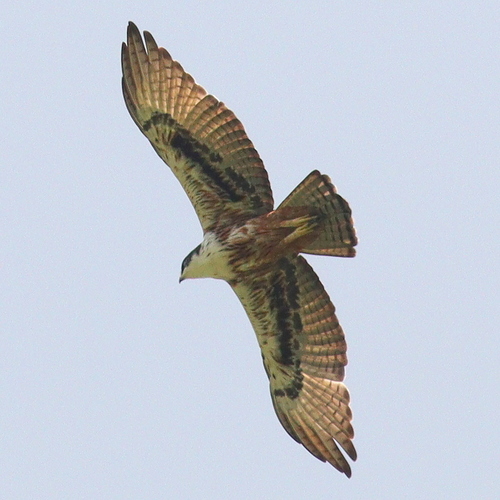
アカハラクマタカ (Lophotriorchis kienerii) アカハラクマタカ
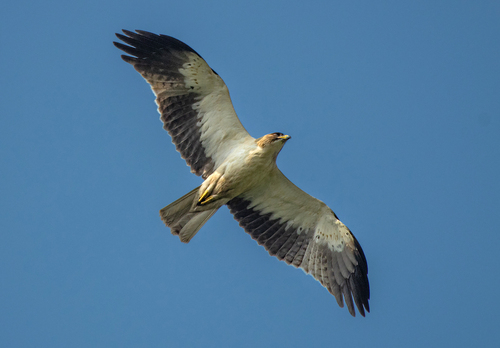
ヒメクマタカ (Hieraaetus pennatus) ヒメクマタカ

メディア

読み込み中…

要点

アカハラクマタカとヒメクマタカの最も信頼できる区別は、特に幼鳥において、飛行中の腹部と翼の下のパターンです。幼鳥のアカハラクマタカは、暗い頭と翼の下の縁を持つ非常に白い腹部を示しますが、ヒメクマタカ(特に淡色型)はコントラストが少なく、黒いフードの外観がありません。成鳥もまた特徴的です:アカハラクマタカは大胆な黒いフード、栗色の腹部、白い喉を持ち、ヒメクマタカのどの型とも異なります。構造と行動は追加の手がかりを提供します:アカハラクマタカは尾にほぼ届く長い翼で直立して止まり、森林の専門家ですが、ヒメクマタカはより開けた国に生息し、色が変化します。サイズは似ていますが、ヒメクマタカは平均してやや重いです。

識別のコツ

  1. Juvenile underwing pattern: 飛行中、幼鳥のアカハラクマタカは、暗い頭のマスク、側面の暗いマーキング、翼の下の覆いの黒い縁を持つ非常に白い腹部を示します。ヒメクマタカの幼鳥(特に淡色型)はこの強いコントラストがなく、黒いフードやマスクを持ちません。
  2. Adult head pattern: 成鳥のアカハラクマタカは大胆な黒いフードと短い冠羽を持ち、白い喉と胸があります。ヒメクマタカは型に関係なく黒いフードや冠羽を示しません。
  3. Underpart color: アカハラクマタカの成鳥は、白い喉からはっきりと区別される豊かな栗色の腹部と翼の覆いを持っています。ヒメクマタカ(淡色型)は腹部がはるかに淡く、暗い型は均一に茶色で、決して栗色ではありません。
  4. Perching posture: アカハラクマタカは非常に直立して止まり、翼は尾にほぼ届きます。ヒメクマタカはあまり直立して止まらず、よりコンパクトに見えます。
  5. Tarsi: アカハラクマタカは完全に羽毛で覆われた足を持っています;ヒメクマタカも羽毛で覆われた足を持っていますが、これはフィールドでの強い区別要因ではありません。
  6. Tail pattern: 両種は縞模様の尾を持っていますが、アカハラクマタカの尾はより暗く、特に幼鳥ではより明確に縞模様があります。
  7. Wing shape in flight: 両種は広い翼を持っていますが、アカハラクマタカはコントラストのあるパターンと尾に対して長い翼のため、よりハヤブサのように見えることがあります。
  8. Color morphs: ヒメクマタカは淡色型と暗色型がありますが、どちらも成鳥のアカハラクマタカの赤褐色と黒のコントラストには一致しません。暗色型のヒメクマタカは他の猛禽類と混同されることがありますが、アカハラクマタカの独特なパターンとは混同されません。
  9. Habitat: アカハラクマタカはほぼ常に閉じた森林に生息しています;ヒメクマタカはより開けた地域やエッジの生息地にいる可能性が高いです。
  10. Flight behavior: アカハラクマタカは森林の上を高く舞い上がり、しばしば急降下して獲物を捕らえます;ヒメクマタカは低く飛び、開けた地面で狩りをしているのが見られることがあります。
  11. Vocalization: 聞こえた場合、アカハラクマタカは高音の「フウィック」という音を出します;ヒメクマタカは鋭い「クリクリクリ」という音を出します。
  12. Sex differences: 両種は羽毛において性別が似ています;雌のアカハラクマタカは顔にやや多くの黒があるかもしれませんが、これは微妙です。
  13. Size: ヒメクマタカはやや重いですが、これはフィールドでは明らかではありません。
  14. Confusion risk: 幼鳥のアカハラクマタカはヒメクマタカと混同されることがありますが、大胆な白い腹部と暗い頭/翼の下の縁はアカハラクマタカの診断要因です。
  15. Season/context: 熱帯アジアでは、ヒメクマタカはしばしば渡り鳥または冬の訪問者ですが、アカハラクマタカは森林地域に常駐しています。識別する際は季節と生息地を考慮してください。

大きさ

両種は小型のタカですが、ヒメクマタカはやや重く、雌は平均840–1,025 g、雄は510–770 gです [wikidata]。アカハラクマタカの直接的な質量データは利用できませんが、タカとしては比較的小さいと説明されています。フィールドでは、サイズだけでは信頼できる区別要因ではありません;羽毛と構造に焦点を当ててください。

羽色

行動

アカハラクマタカは通常、森林の樹冠の上を高く舞い上がり、しばしば樹冠や森林の床で獲物を捕らえるために急降下します。彼らは非常に直立して止まり、翼は尾にほぼ届きます。ヒメクマタカは通常、低い高さで飛んでいるのが見られ、しばしばペアまたは単独で、開けた地域やエッジの生息地にいる可能性が高いです。ヒメクマタカも翼で狩りをし、翼を折りたたんで足を伸ばして急降下します。両種はディスプレイ飛行を行うのが見られますが、アカハラクマタカのディスプレイには急降下と翼の震えが含まれます。

生息環境

アカハラクマタカは森林の専門家で、熱帯アジアの森林地域に生息しています。密集した成熟した森林から離れているのはめったに見られません。対照的に、ヒメクマタカははるかに広い生息地の許容範囲を持ち、ユーラシア大陸と南アジアで繁殖し、アフリカとアジアで越冬し、しばしば開けた国、森林のエッジ、さらには半乾燥地域で見られます。重複する地域では、アカハラクマタカは閉じた森林により強く結びついています。

声

アカハラクマタカは高音の「フウィック、フウィック...」という音を出し、その後に細い「スウィーク!」が続きます。ヒメクマタカの鳴き声は鋭い「クリクリクリ」です。鳴き声は通常、フィールドでの区別の最初の手がかりではありませんが、よく聞こえれば、トーンとパターンの違いは顕著です。

より良い説明を送る

比較と同じ項目を使ってください。文章はすぐに公開されます。

The most reliable separation between Rufous-bellied Eagle and Booted Eagle—especially for immatures—is the underpart and underwing pattern in flight. Juvenile Rufous-bellied Eagles show strikingly white underparts with dark head and underwing edges, while Booted Eagles (especially pale morphs) have much less contrast and lack the black hooded look. Adults are also distinctive: Rufous-bellied Eagles have a bold black hood, chestnut underparts, and a white throat, unlike any Booted Eagle morph. Structure and behavior offer additional clues: Rufous-bellied perches upright with long wings nearly reaching the tail, and is a forest specialist, while Booted is more open-country and variable in color. Size is similar, but Booted Eagle is slightly heavier on average.

  1. Juvenile underwing pattern: In flight, juvenile Rufous-bellied Eagles show very white underparts with a dark head mask, dark markings on the sides, and a black edge to the underwing coverts. Booted Eagle juveniles (especially pale morphs) lack this strong contrast and do not have a black hood or mask.
  2. Adult head pattern: Adult Rufous-bellied Eagles have a bold black hood and short crest, with a white throat and breast. Booted Eagles never show a black hood or crest, regardless of morph.
  3. Underpart color: Rufous-bellied Eagle adults have rich chestnut underparts and wing coverts, sharply set off from the white throat. Booted Eagles (pale morph) are much paler below, and dark morphs are uniformly brownish, never chestnut.
  4. Perching posture: Rufous-bellied Eagle perches very upright, with wings almost reaching the tail. Booted Eagle perches less upright and appears more compact.
  5. Tarsi: Rufous-bellied Eagle has fully feathered tarsi; Booted Eagle also has feathered tarsi, but this is not a strong separator in the field.
  6. Tail pattern: Both species have barred tails, but Rufous-bellied's is darker and more distinctly barred, especially in juveniles.
  7. Wing shape in flight: Both are broad-winged, but Rufous-bellied may look more falcon-like due to its contrasting pattern and longer wings relative to tail.
  8. Color morphs: Booted Eagle comes in pale and dark morphs, but neither matches the rufous and black contrast of adult Rufous-bellied. Dark morph Booted can be confused with other raptors but not with Rufous-bellied's unique pattern.
  9. Habitat: Rufous-bellied is almost always in closed forest; Booted is more likely in open or edge habitats.
  10. Flight behavior: Rufous-bellied soars high over forest, often diving steeply; Booted Eagle flies lower and may be seen hunting over open ground.
  11. Vocalization: If heard, Rufous-bellied gives high-pitched 'fwick' notes; Booted Eagle gives a shrill 'kli-kli-kli'.
  12. Sex differences: Both species are sexually similar in plumage; female Rufous-bellied may have slightly more black on the face, but this is subtle.
  13. Size: Booted Eagle is slightly heavier, but this is not obvious in the field.
  14. Confusion risk: Juvenile Rufous-bellied Eagle can be confused with Booted Eagle, but the bold white underparts and dark head/underwing edges are diagnostic for Rufous-bellied.
  15. Season/context: In tropical Asia, Booted Eagle is often a migrant or winter visitor, while Rufous-bellied is resident in forested areas. Consider season and habitat when identifying.

Both species are small eagles, but Booted Eagle is slightly heavier, with females averaging 840–1,025 g and males 510–770 g [wikidata]. No direct mass data is available for Rufous-bellied Eagle, but it is described as relatively small for an eagle. In the field, size alone is not a reliable separator; focus on plumage and structure instead.

  • Juveniles/immatures: Rufous-bellied Eagle juveniles are very white below, with dark markings on the sides, a dark head mask, and a dark edge to the underwing coverts. The underwing lining is dark, with black greater coverts and thinly barred flight feathers edged in black. The tail is dark and barred. Booted Eagle juveniles (especially pale morphs) are much less contrasting, with pale underparts and less defined dark markings; dark morph Booted Eagles are browner overall and lack the black hood and white throat.

  • Adults: Rufous-bellied Eagle adults have a striking black hood and short crest, chestnut underparts and wing coverts, white throat and breast, and fully feathered tarsi. Booted Eagles come in pale and dark morphs: pale morphs are light grey with darker head and flight feathers, while dark morphs are mid-brown with dark grey flight feathers. Neither morph shows the bold black hood or chestnut belly of Rufous-bellied. Sexes are similar in both species, though female Rufous-bellied Eagles may have slightly more black on the face.

Rufous-bellied Eagles are typically seen soaring high over forest canopies, often diving to catch prey in the canopy or on the forest floor. They perch very upright, with wings nearly reaching the tail. Booted Eagles are usually seen flying at lower heights, often in pairs or alone, and are more likely to be found in open or edge habitats. Booted Eagles also hunt on the wing, stooping quickly with folded wings and extended feet. Both species can be seen performing display flights, but Rufous-bellied's display includes stooping and wing-quivering.

Rufous-bellied Eagle is a forest specialist, found in forested regions of tropical Asia. It is rarely seen away from dense or mature woodland. Booted Eagle, by contrast, has a much wider habitat tolerance, breeding in the Palearctic and southern Asia, wintering in Africa and Asia, and often found in open country, woodland edges, and even semi-arid regions. In areas of overlap, Rufous-bellied is much more tied to closed forest.

Rufous-bellied Eagle gives a series of high-pitched 'fwick, fwick...' notes followed by a thin 'sweek!'. Booted Eagle's call is a shrill 'kli-kli-kli'. Vocalizations are not usually the first clue in field separation, but if heard well, the difference in tone and pattern is notable.

変更を破棄しますか?

保存していない編集があります。今離れると失われます。

アカハラクマタカ · ヒメクマタカ · 苦手な鳥