
Motmot

オオフルマカモメ 対 キタオオフルマカモメ

Macronectes giganteus 対 Macronectes halli

オオフルマカモメとキタオオフルマカモメのクイズ
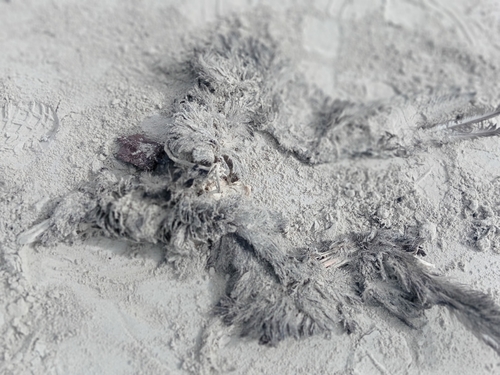
オオフルマカモメ (Macronectes giganteus) オオフルマカモメ
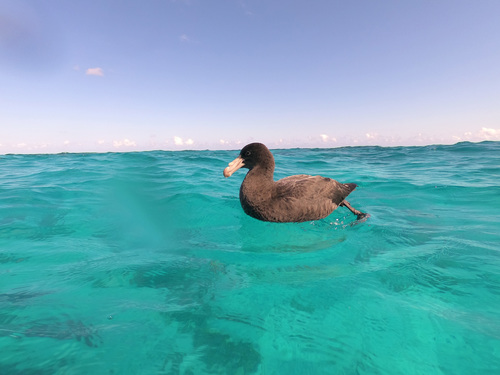
キタオオフルマカモメ (Macronectes halli) キタオオフルマカモメ

メディア

読み込み中…

要点

南オオフルマカモメとキタオオフルマカモメを区別する最も信頼性の高いフィールドマークは、くちばしの先端の色です:南オオフルマカモメは緑がかったくちばしの先端を示し、キタオオフルマカモメは赤褐色の先端を持っています。両種はサイズ、構造、全体的な暗色型の羽毛において非常に似ていますが、頭部と顔の色合いの微妙な違いや、南に見られる珍しい白色型の存在が役立つことがあります。幼鳥は特に難しく、両種とも最初は暗色で年齢とともに徐々に色が薄くなるため、くちばしの色はすべての年齢で最も良い手がかりとなります。飛行中や地上では、これらの詳細を除けばほぼ同一に見えることがあります。

識別のコツ

  1. くちばしの先端の色は最も信頼性の高いフィールドマークです: 南オオフルマカモメは常に緑がかったくちばしの先端を示し、キタオオフルマカモメは赤褐色です。これは成鳥と幼鳥の両方に当てはまりますが、遠くからや悪い光の中では見えにくいことがあります。
  2. 白色型は南にのみ存在します: ほぼ全体が白でまばらな黒い斑点があるオオフルマカモメを見た場合、それは南オオフルマカモメ(明るい型)です。キタオオフルマカモメには白色型はありません。
  3. 成鳥の頭部と首のコントラスト: 成鳥の南オオフルマカモメ(暗色型)は、体の他の部分に比べて頭部、首、上胸がより明るい傾向がありますが、キタオオフルマカモメの頭部と顔は体よりもわずかに明るいだけで、主に額、顔の側面、あごに見られます。
  4. 幼鳥の混乱: 両種の幼鳥は完全に暗褐色で、年齢とともに明るくなります。この年齢では、くちばしの先端の色が唯一の信頼できるマークであり、羽毛は診断的ではありません。
  5. 飛行中の翼のパターン: 両者の間に強い年齢特有の上翼または下翼のパターンの違いは記載されていません;両者は似たようなまだらの茶色の翼を示しますが、南オオフルマカモメは特に成鳥において、下側の内側の初級羽の先端と基部がわずかに明るいことがあります。
  6. サイズは信頼できません: 両種はサイズと質量が重なり合い、コロニーや性別の変動により、フィールドでのサイズに基づく区別は不可能です。
  7. くちばしの構造: キタオオフルマカモメのくちばしは平均してわずかに長いですが、直接比較なしでは信頼できるフィールドマークではありません。
  8. 脚の色: 南オオフルマカモメは灰褐色の脚を持つと説明されていますが、これはキタオオフルマカモメには対比されず、主要なフィールドマークではありません。
  9. 生息地の重複: 両種は南の海洋の大部分で一緒に生息しており、範囲の極端な端(南オオフルマカモメは南端、キタオオフルマカモメは北端)でのみ位置が役立ちます。
  10. 行動の重複: 両者は攻撃的なスカベンジャーであり、しばしば陸上を歩き、船を追いかけて食べ物を探します;行動では区別できません。
  11. 性別/季節的な違い: 両種のオスは大きいですが、これは種の同定には役立ちません。区別を助ける明確な季節的羽毛の違いは記載されていません。
  12. 悪い光や遠くからの場合: くちばしの先端の色が見えない場合は非常に注意が必要です—ほとんどのフィールドマークは微妙で、近くからの視界なしでは信頼できません。
  13. 疑わしい場合: くちばしの先端の色を確認できない場合や白色型を見ない場合、特に幼鳥や未成熟な個体については、種を特定せずにそのままにしておくのが最も安全です。

大きさ

両種は最大のフルマカモメの中にあり、サイズと質量にかなりの重複があります。南オオフルマカモメは平均してキタオオフルマカモメよりわずかに重い(平均成鳥質量約4395g)ですが、この違いは性別やコロニーによる広範な変動のため、フィールドでは信頼できません。長さと翼幅の範囲も広く重なり、南オオフルマカモメは平均してわずかに長い翼を持ち、キタオオフルマカモメはわずかに長いくちばしと足を持っています。実際には、サイズは区別のための安全なフィールドマークではありません。

羽色

両種の幼鳥と未成熟な個体は最初は暗褐色で、年齢とともに徐々に色が薄くなり、羽毛だけで区別するのが非常に難しくなります。成鳥の場合、南オオフルマカモメ(暗色型)は体の他の部分に比べて頭部、首、上胸がより明るいことを示し、翼の先端と内側の初級羽の基部(下側)はより明るいです。珍しい明るい型の南オオフルマカモメはほぼ完全に白でまばらな黒い斑点があり、これはキタオオフルマカモメには見られません。キタオオフルマカモメの成鳥は灰褐色の体を持ち、額、顔の側面、あごがより明るいですが、南オオフルマカモメの明確に明るい上胸と首は欠けています。すべての年齢で最も一貫した違いは、くちばしの先端の色です:南は緑がかり、キタは赤褐色です。

行動

両種は強力で攻撃的なスカベンジャーであり、しばしば陸上を歩き、死肉を食べ、両者とも食べ物を求めて船を追いかけます。飛行中、両者はオオフルマカモメに典型的な背中が丸い重い外観を持っています。フィールドでの区別のための信頼できる行動の違いはありませんが、キタオオフルマカモメはわずかに攻撃的であり、他の海鳥を殺すことがあるとされています。

生息環境

範囲は広く重なりますが、南オオフルマカモメは一般的に南に位置し、キタオオフルマカモメはわずかに北に位置します。両者は亜南極の島々や南の海洋の周りで一緒に生息しているため、位置だけでは診断できません。範囲の極端な端にいる場合を除きます。

より良い説明を送る

比較と同じ項目を使ってください。文章はすぐに公開されます。

The most reliable field mark to separate Southern and Northern Giant-Petrels is the color of the bill tip: Southern Giant-Petrel shows a greenish bill tip, while Northern Giant-Petrel has a reddish-brown tip. Both species are very similar in size, structure, and overall dark morph plumage, but subtle differences in head and face coloration, as well as the presence of a rare white morph in Southern, can help. Juvenile birds are particularly tricky, as both start out dark and gradually pale with age, so bill color remains the best clue at all ages. In flight and on the ground, both can look nearly identical except for these details.

  1. Bill tip color is the single most reliable field mark: Southern Giant-Petrel always shows a greenish bill tip, while Northern Giant-Petrel's is reddish-brown. This works for adults and immatures, but can be hard to see at distance or in poor light.
  2. White morph only in Southern: If you see a giant petrel that is nearly all white with sparse black speckles, it is a Southern Giant-Petrel (light morph). Northern does not have a white morph.
  3. Head and neck contrast in adults: Adult Southern (dark morph) tends to have a paler head, neck, and upper breast compared to the rest of the body, while Northern's head and face are only slightly paler than the body, mostly on the forehead, sides of face, and chin.
  4. Juvenile confusion: Both species' juveniles are entirely dark brown and lighten with age. In these ages, bill tip color is the only reliable mark; plumage is not diagnostic.
  5. Wing pattern in flight: There are no strong, age-specific upperwing or underwing pattern differences described between the two; both show similar mottled brown wings, but Southern may show a slightly lighter leading edge and base of inner primaries on the underside, especially in adults.
  6. Size is not reliable: Both species overlap in size and mass, and colony/sex variation makes size-based separation impossible in the field.
  7. Bill structure: Northern's bill is slightly longer on average, but this is not a reliable field mark without direct comparison.
  8. Leg color: Southern is described as having greyish-brown legs, but this is not contrasted for Northern and is not a primary field mark.
  9. Habitat overlap: Both species occur together throughout much of the southern oceans; only at the extremes of their ranges (far south for Southern, slightly north for Northern) does location help.
  10. Behavioral overlap: Both are aggressive scavengers, often seen walking on land and following ships; behavior does not separate them.
  11. Sexual/seasonal differences: Males of both species are larger, but this does not help with species ID. No clear seasonal plumage differences are described that aid separation.
  12. In poor light or at distance: If you cannot see the bill tip color, be very cautious—most field marks are subtle and unreliable without close views.
  13. When in doubt: If you cannot confirm bill tip color or see a white morph, it is often safest to leave the bird unidentified to species, especially for juveniles and immatures.

Both species are among the largest petrels, with considerable overlap in size and mass. Southern Giant-Petrel averages slightly heavier (mean adult mass ~4395g) than Northern (~4185g), but this difference is not reliable in the field due to wide variation by sex and colony. Length and wingspan ranges also overlap extensively, with Southern sometimes having slightly longer wings on average, and Northern a marginally longer bill and tarsus. In practice, size is not a safe field mark for separation.

Juvenile and immature birds of both species are initially dark brown and gradually become paler with age, making them very difficult to separate by plumage alone. For adults, Southern Giant-Petrel (dark morph) shows a paler head, neck, and upper breast compared to the rest of the body, and the leading edge of the wing and base of the inner primaries (on the underside) are lighter. The rare light morph Southern is almost entirely white with sparse black speckles, a look not found in Northern. Northern Giant-Petrel adults have a grey-brown body with a lighter forehead, sides of face, and chin, but lack the distinctly pale upper breast and neck of Southern. The most consistent difference at all ages is the bill tip color: greenish in Southern, reddish-brown in Northern.

Both species are strong, aggressive scavengers, often seen walking on land and feeding on carrion, and both follow ships for food. In flight, both have a hunchbacked, heavy look typical of giant petrels. There are no reliable behavioral differences for field separation, though Northern may be slightly more aggressive and is noted for sometimes killing other seabirds.

Ranges overlap broadly, but Southern Giant-Petrel is generally found further south, while Northern is slightly more northerly. Both occur together around subantarctic islands and southern oceans, so location alone is not diagnostic unless at the extreme ends of their ranges.

変更を破棄しますか?

保存していない編集があります。今離れると失われます。

オオフルマカモメ · キタオオフルマカモメ · 苦手な鳥