

Sperwergrasmus vs Grasmus
Curruca nisoria versus Curruca communis
Speel een quiz met Sperwergrasmus en Grasmus
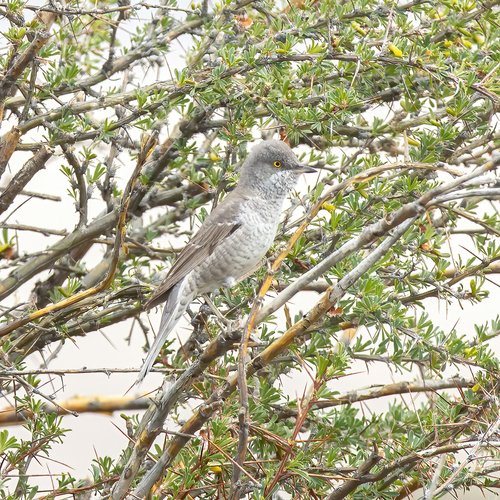 Sperwergrasmus
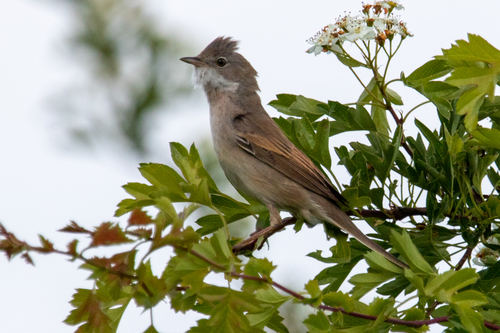 Grasmus
Kort gezegd
The most reliable field mark between Barred Warbler and Common Whitethroat is the Barred Warbler's size and, in adults, the heavy barring on the underparts. Juvenile Barred Warblers, however, can be very plain and are most often confused with Common Whitethroat, especially in autumn. Look for subtle barring on the tail coverts and pale wing feather fringes in young Barred Warbler, versus the chestnut-edged secondaries and lack of barring in Common Whitethroat. Structure and overall bulk are also helpful: Barred Warbler is noticeably larger and heavier, with a stouter bill and more robust jizz. Vocalizations and habitat overlap, but plumage and size are the best separation points.
Herkenningstips
- Size and bulk: Barred Warbler is much larger and heavier than Common Whitethroat. If a warbler appears unusually big and robust for a Curruca, consider Barred Warbler, especially if seen side-by-side with Common Whitethroat. This is most reliable in good views or with experience.
- Bill structure: Barred Warbler has a noticeably stouter, more powerful bill compared to the finer, more delicate bill of Common Whitethroat. This is best judged at close range.
- Adult underpart barring: Adult Barred Warbler males show heavy, dark barring on the underparts; females are paler but still lightly barred. Common Whitethroat never shows barring below at any age or sex.
- Juvenile/first-year confusion: Young Barred Warblers are plain and can look very like Common Whitethroat, but check for faint barring on the tail coverts and pale fringes on the wing feathers—subtle but diagnostic. Common Whitethroat juveniles lack any barring and have chestnut-edged secondaries instead.
- Wing and tail pattern (immatures): In flight, juvenile Barred Warblers may show pale wing fringes and a slightly larger, broader tail with faint barring on the coverts. Common Whitethroat shows chestnut edges to the secondaries but no barring or pale fringes.
- Head pattern (adults): Male Common Whitethroat has a distinctive grey head and white throat, while Barred Warbler is more uniformly grey above (males) or grey-brown (females/immatures) without a sharply contrasting throat.
- Iris color: Adult Barred Warbler has a yellow iris, while immatures have a dark iris. This is subtle and only visible at very close range; not noted as diagnostic for Common Whitethroat.
- Tail and wing shape: Barred Warbler has a broader, more powerful tail and wings, fitting its larger size, while Common Whitethroat is more streamlined and lightly built.
- Voice: Barred Warbler's song is harsher and less melodious than Common Whitethroat's fast, scratchy, scolding song. Calls can be similar, so use with caution.
- Habitat overlap: Both species use similar open, bushy habitats, so do not rely on habitat alone for separation.
- Seasonal context: Most Barred Warblers seen in western Europe in autumn are juveniles, which are the main confusion risk. Adults are rare on passage in Britain and Ireland.
- Sexual dimorphism: Male Common Whitethroat is more striking with its grey head and white throat; female is duller and more similar to Barred Warbler females/immatures but still lacks barring and is smaller.
- Behavior: Barred Warbler may appear slower and more deliberate, while Common Whitethroat is more active and restless, but this is subtle and variable.
- Population context: Barred Warbler is much scarcer in western Europe, especially adults; Common Whitethroat is common and widespread. If in doubt, Common Whitethroat is far more likely except in core Barred Warbler range.
- Pitfall: Do not rely on throat color alone—both can show pale throats, but only Barred Warbler (adults) shows barring below, and only Common Whitethroat (male) has a contrasting grey head.
Grootte
Barred Warbler is the largest Curruca warbler, measuring 15.5–17 cm and weighing 22–36 g (noted as much heavier than Common Whitethroat). Common Whitethroat is smaller and lighter, with a typical body mass around 14.5 g. In the field, Barred Warbler appears bulkier, with a stouter bill and more powerful build, while Common Whitethroat is more delicate and lightly built. This difference is often obvious when both species are seen in the same context, but less so with lone birds or at a distance.
Verenkleed
Juvenile and first-year Barred Warblers are the main pitfall: they are buffy grey-brown above and pale buff below, with very little barring, but can show faint barring on the tail coverts and pale fringes on the wing feathers—features not present in Common Whitethroat. Adult Barred Warblers (especially males) are dark grey above, heavily barred below, with white tips on the wing coverts and tail feathers; females are paler and less barred but still show some barring. Common Whitethroat adults are brown above and buff below, with chestnut fringes to the secondaries; males have a grey head and white throat, while females lack the grey head and have a duller throat. No barring is present on the underparts or tail coverts in Common Whitethroat at any age. The iris is yellow in adult Barred Warbler (dark in immatures), while Common Whitethroat's eye color is not specifically noted as diagnostic.
Gedrag
Both species are active and often forage in bushes or low shrubs. Barred Warbler, being larger, may appear slower and more deliberate in movement, while Common Whitethroat is more agile and restless. Barred Warbler's robust build can give it a heavier, more powerful impression when perched or moving through vegetation. In flight, Barred Warbler's size and bulk are more apparent, but both species can be elusive and skulk in dense cover.
Habitat
Both species favor open country with bushes or brambles for nesting. Barred Warbler's habitat preferences closely match those of the red-backed shrike, often in low shrubs or bramble patches. Common Whitethroat is widespread in similar habitats across Europe and western Asia. There is substantial overlap, so habitat alone is not a reliable separator where both occur.
Geluid
Barred Warbler's song is a pleasant chattering, somewhat like a garden warbler but harsher, less melodious, and slightly higher pitched, with some resemblance to Common Whitethroat. Common Whitethroat's song is fast and scratchy with a scolding tone; its call is hoarse and slightly nasal (wed-wed or woid-woid), and its warning cry is a long, rough 'tschehr'. Both can sound superficially similar, but Barred Warbler's song is harsher and less musical.