

Kleine strandloper vs Bonapartes strandloper
Calidris minuta versus Calidris fuscicollis
Speel een quiz met Kleine strandloper en Bonapartes strandloper
 Kleine strandloper
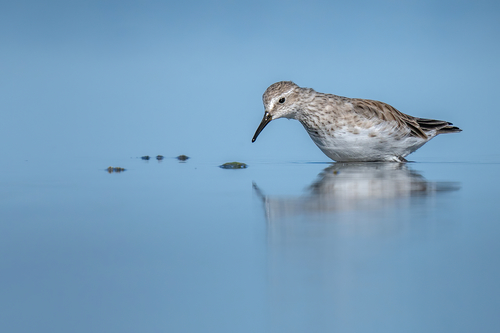 Bonapartes strandloper
Kort gezegd
Het meest betrouwbare veldkenmerk om de Kleine strandloper van de Bonapartes strandloper te scheiden, is de prominente witte staart en bovenstaartdekveren van de Bonapartes strandloper, die duidelijk zichtbaar is in de vlucht maar nooit wordt getoond door de Kleine strandloper. Voor zittende vogels is de Kleine strandloper duidelijk kleiner en delicater, met een fijnere snavel en een snellere, meer frenetic feeding action. Juveniele en niet-broedplumages kunnen verwarrend zijn, maar aandacht voor de structuur, kleur van de poten, en vooral de aanwezigheid of afwezigheid van de witte staart in de vlucht zal de meeste verwarring oplossen. Beide soorten kunnen een witte 'V' op de rug tonen in juvenile plumage, dus dit alleen is niet diagnostisch.
Herkenningstips
- Witte staart in vlucht: Alleen de Bonapartes strandloper toont een heldere witte staart en bovenstaartdekveren in de vlucht, zichtbaar in alle leeftijden en plumages. De Kleine strandloper toont deze eigenschap nooit. Probeer altijd de vogel op te jagen of let op de take-off als je twijfelt.
- Grootte en structuur: De Bonapartes strandloper is groter, langer van lichaam en zwaarder dan de Kleine strandloper. De Kleine strandloper is compact, elegant en over het algemeen delicater. Dit is het meest duidelijk in directe vergelijking.
- Snavelvorm: De Kleine strandloper heeft een fijne, naaldachtige snavel met een delicate punt, terwijl de snavel van de Bonapartes strandloper langer, van gemiddelde lengte en iets steviger is. Dit verschil is subtiel maar nuttig van dichtbij.
- Kleur van de poten: Beide soorten hebben donkere poten, dus dit is geen betrouwbare scheiding.
- Primaire projectie: Beide soorten hebben een lange primaire projectie, maar de vleugels van de Bonapartes strandloper zijn bijzonder lang, vaak ver voorbij de staart wanneer ze zitten. De projectie van de Kleine strandloper is ook lang voor zijn grootte, maar het algehele effect is minder uitgesproken door zijn kleinere lichaam.
- Juveniele plumage: Beide soorten kunnen een witte 'V' op de mantel en lichtomrande schouderveren tonen, dus dit is niet diagnostisch. Zoek naar de witte staart in de vlucht voor bevestiging.
- Borstmuster: Juveniele Kleine strandlopers hebben vaak een rozeachtige waas op de borst, terwijl juveniele Bonapartes strandlopers een fijn gestreepte borst hebben. Bij volwassenen heeft de Kleine strandloper in broedplumage een oranje waas op de borst, terwijl de Bonapartes strandloper gestreept en doffer is.
- Kroon en supercilium: Juveniele Kleine strandlopers hebben lichte kroonstrepen; juveniele Bonapartes strandlopers hebben een bruinachtige kroon en een witter, meer prominente supercilium.
- Voedingsgedrag: De Kleine strandloper is actiever en frenetic, vaak snel voedend in strakke groepen. De Bonapartes strandloper is stabieler en methodischer.
- Tenenwebbing: De Kleine strandloper heeft niet-gewelfde tenen, maar dit is zelden zichtbaar in het veld en niet praktisch voor de meeste observaties.
- Context en verspreiding: In Europa is de Kleine strandloper algemeen, terwijl de Bonapartes strandloper een zeldzame dwaalgast is. In de Amerikas is het omgekeerd. Overweeg de waarschijnlijkheid, maar vertrouw niet alleen op verspreiding voor identificatie.
- Stem: De Kleine strandloper geeft een scherpe 'stit' roep. De roep van de Bonapartes strandloper is niet beschreven hier, dus gebruik de stem niet als primaire scheiding.
- Plumage seizoensgebondenheid: Beide soorten worden grijzer en minder onderscheidend in de winter, waardoor structuur en staartpatroon nog belangrijker worden.
- Groep associatie: De Kleine strandloper is waarschijnlijker in gemengde groepen met andere kleine strandlopers; de Bonapartes strandloper is vaak met grotere peeps of alleen.
- Bij twijfel: Als je de staart in de vlucht niet kunt zien, vertrouw dan op de combinatie van grootte, snavelvorm, voedingsactie en subtiele plumage kenmerken, maar wees voorzichtig met overlap en probeer altijd te bevestigen met vluchtbeelden.
Grootte
De Bonapartes strandloper is merkbaar groter en zwaarder dan de Kleine strandloper: het gemiddelde gewicht is ongeveer 43 g versus 26 g ([wikidata]). In het veld lijkt de Bonapartes strandloper langer van lichaam en langer van vleugels, met een robuustere bouw, terwijl de Kleine strandloper compact en elegant is. Dit grootteverschil is meestal duidelijk wanneer vogels naast elkaar staan, maar kan subtiel zijn op afstand of wanneer er maar één vogel aanwezig is.
Verenkleed
- Juveniel/Eerste jaar: Beide soorten kunnen een witte 'V' op de mantel en lichtomrande schouderveren tonen, maar alleen de Bonapartes strandloper toont een heldere witte staart en bovenstaartdekveren in de vlucht in alle leeftijden. Juveniele Kleine strandlopers hebben lichte kroonstrepen en een rozeachtige waas op de borst, terwijl juveniele Bonapartes strandlopers een fijn gestreepte borst en een witter supercilium hebben.
- Volwassen broed: De Kleine strandloper heeft een sterke oranje waas op de borst en een witte keel, met een witte 'V' op de rug. De Bonapartes strandloper in broedplumage is doffer overall, met een bruinachtige kroon en gezicht, gestreepte borst en flanken, en een witte supercilium.
- Volwassen niet-broed: Beide soorten worden grijzer en minder onderscheidend, maar de Bonapartes strandloper behoudt de witte staart in de vlucht. De Kleine strandloper is eenvoudiger, met een fijne snavel en niet-gewelfde tenen, en mist de witte staart.
- In vlucht: De witte staart en bovenstaart van de Bonapartes strandloper is diagnostisch en zichtbaar in alle plumages en leeftijden. De Kleine strandloper toont deze eigenschap nooit.
Gedrag
De Kleine strandloper is actiever en beweegt met snellere, meer frenetic voedingsactie in vergelijking met de stabielere, langzamere Bonapartes strandloper. De Kleine strandloper voedt vaak in strakke groepen en is waarschijnlijker te zien in gemengde groepen met andere kleine strandlopers. De Bonapartes strandloper wordt vaak alleen of in kleine groepen aangetroffen en kan meer doordacht in zijn bewegingen lijken.
Habitat
Beide soorten zijn langeafstandsmigranten en kunnen elkaar overlappen tijdens migratie, vooral op kustmoddervlaktes en randen van wetlands. De Kleine strandloper broedt in het arctische Eurazië en overwintert in Afrika en Zuid-Azië, terwijl de Bonapartes strandloper broedt in het arctische Noord-Amerika en overwintert in Zuid-Amerika. In het West-Palearctisch gebied is de Bonapartes strandloper een zeldzame maar regelmatige dwaalgast, terwijl de Kleine strandloper algemeen is. Beide gebruiken vergelijkbare modderige of zandige habitats tijdens migratie.
Geluid
De Kleine strandloper geeft een scherpe, hoge 'stit' roep. De roep van de Bonapartes strandloper is niet beschreven in de gegeven notities, dus vocalisaties zijn geen betrouwbare scheiding op basis van de huidige informatie.
Kleine strandloper · Bonapartes strandloper · Mijn lastige vogels