
Motmot

Koperwiek vs Merel

Turdus iliacus versus Turdus merula

Speel een quiz met Koperwiek en Merel
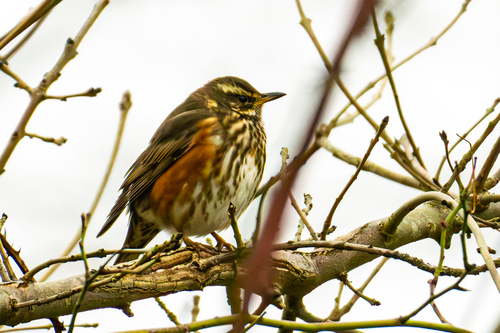
Koperwiek (Turdus iliacus) Koperwiek
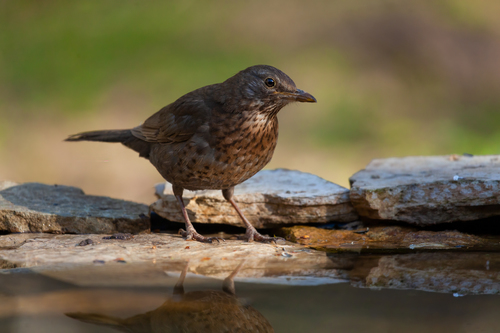
Merel (Turdus merula) Merel

Media

Laden…

Kort gezegd

The most reliable way to separate Redwing from Eurasian Blackbird is by plumage: Redwing of all ages shows a bold creamy white supercilium and distinctive red flanks and underwing, while Eurasian Blackbird lacks both features entirely. In flight, Redwing flashes reddish underwings and flanks, a feature never shown by Blackbird. Structurally, Blackbird is larger and bulkier with a longer tail and, in adult males, a striking all-black plumage with a yellow bill and eye-ring. Females and juveniles of Blackbird are brownish but still lack the Redwing’s strong face pattern and red coloration. Both species are Turdus thrushes and can be confused at a glance, especially when seen briefly or in poor light, but careful attention to face, flank, and underwing color is decisive.

Herkenningstips

  1. Redwing always shows a bold creamy white supercilium (eyebrow), visible at all ages and in all seasons; Blackbird never has a supercilium this strong.
  2. Redwing has bright reddish flanks and underwing coverts, visible both perched and especially in flight; Blackbird never shows red in these areas.
  3. Adult male Blackbird is entirely glossy black with a yellow-orange bill and eye-ring; Redwing is never black and never has a yellow bill or eye-ring.
  4. Female and juvenile Blackbird are sooty brown with a dull bill and weak mottling on the breast, lacking any red or strong face pattern; Redwing is brown above, white below with bold spots, and always has the supercilium and red flanks.
  5. Juvenile Blackbird shows pale spots on the upperparts and a speckled breast, but still lacks the Redwing’s face pattern and red coloration.
  6. Redwing is smaller and more compact, with a shorter tail and lighter build than Blackbird; Blackbird is bulkier and longer-tailed.
  7. In flight, Redwing flashes red underwings and flanks, a unique feature among European thrushes; Blackbird’s underwing is dark and unmarked.
  8. Redwing’s song is short and varied with whistling elements, while Blackbird’s song is rich, fluty, and melodious; calls also differ, with Redwing giving a thin ‘seeep’ in flight.
  9. Redwing is more likely to be seen in flocks, especially in winter, often in open fields or hedges; Blackbird is usually solitary or in pairs, especially in gardens and woodland edges.
  10. Blackbird’s bill color is a key mark in adult males (yellow-orange), but beware that first-year males and females have duller, brownish bills.
  11. Redwing’s underparts are white with bold dark spots, while Blackbird’s are uniform (male) or only weakly mottled (female/juvenile).
  12. Blackbird’s tail is longer and more prominent in flight and at rest; Redwing’s tail is shorter and less noticeable.
  13. Habitat can help: Redwing prefers northern forests and open country in winter, while Blackbird is common in gardens, parks, and urban areas.
  14. If you see a thrush with a strong face pattern and red in the wings or flanks, it is always a Redwing; if it is all black or plain brown without these features, it is a Blackbird.
  15. Both species are Turdus thrushes and share a general shape, but the combination of supercilium, red flanks, and smaller size is unique to Redwing.

Grootte

Redwing is distinctly smaller and lighter than Eurasian Blackbird. Redwing measures 20–24 cm in length with a wingspan of 33–34.5 cm and a typical mass of about 62 g. Eurasian Blackbird is larger, at 23.5–29 cm long, with a longer tail and a weight range of 80–125 g. In the field, Blackbird appears bulkier and longer-bodied, while Redwing is more compact and lighter in build.

Verenkleed

Age-specific wing or flight marks are not detailed for either species in the sources, but overall plumage is highly diagnostic. Redwing of all ages shows a bold creamy white supercilium (eyebrow) and a strong reddish patch on the flanks and underwing, visible both when perched and especially in flight. The rest of its plumage is brown above with dark spots on white underparts. Eurasian Blackbird adult males are glossy black overall with a yellow-orange bill and eye-ring, while females are sooty brown with a duller bill and some weak mottling on the breast. Juvenile Blackbirds are also brown, with pale spots on the upperparts and a speckled breast, but never show the Redwing’s supercilium or red coloration. The Redwing’s face pattern and red flanks are absent in all Blackbird ages and sexes.

Gedrag

Blackbird is often seen alone or in pairs, especially during breeding season, and is territorial, with males defending their area with threat displays and chases. Redwing is more likely to be seen in flocks, especially outside the breeding season, and is less territorial in winter. In flight, Blackbird has a strong, direct flight with bursts of rapid wingbeats and a long tail, while Redwing’s flight is more agile and less heavy, sometimes showing the red underwing as it flies. Both species forage on the ground, but Blackbird’s behavior is more solitary and bold, while Redwing is more wary and flocking.

Habitat

Redwing breeds in northern forests, especially conifer and birch woodlands and tundra, and winters in open country, fields, and hedges. Eurasian Blackbird is more of a generalist, breeding in a wide range of habitats including gardens, parks, woodlands, and urban areas across Europe, western Asia, and North Africa. In winter, Blackbirds may remain in their breeding territories if food is available, while Redwings are more migratory and often appear in large flocks in open countryside.

Geluid

Redwing’s song is a short, varied series of descending or ascending elements, often with a whistling flight call; it is less melodious than Blackbird’s song. Blackbird’s song is rich, fluty, and melodious, delivered from a perch, and the male’s alarm call is a loud, sharp ‘tchook’. Redwing’s call is more piercing and less musical. In flight, Redwing gives a thin, high ‘seeep’, while Blackbird’s flight call is less distinctive.

Stuur een betere beschrijving

Gebruik dezelfde onderdelen als de vergelijking. Je tekst staat meteen live.

The most reliable way to separate Redwing from Eurasian Blackbird is by plumage: Redwing of all ages shows a bold creamy white supercilium and distinctive red flanks and underwing, while Eurasian Blackbird lacks both features entirely. In flight, Redwing flashes reddish underwings and flanks, a feature never shown by Blackbird. Structurally, Blackbird is larger and bulkier with a longer tail and, in adult males, a striking all-black plumage with a yellow bill and eye-ring. Females and juveniles of Blackbird are brownish but still lack the Redwing’s strong face pattern and red coloration. Both species are Turdus thrushes and can be confused at a glance, especially when seen briefly or in poor light, but careful attention to face, flank, and underwing color is decisive.

  1. Redwing always shows a bold creamy white supercilium (eyebrow), visible at all ages and in all seasons; Blackbird never has a supercilium this strong.
  2. Redwing has bright reddish flanks and underwing coverts, visible both perched and especially in flight; Blackbird never shows red in these areas.
  3. Adult male Blackbird is entirely glossy black with a yellow-orange bill and eye-ring; Redwing is never black and never has a yellow bill or eye-ring.
  4. Female and juvenile Blackbird are sooty brown with a dull bill and weak mottling on the breast, lacking any red or strong face pattern; Redwing is brown above, white below with bold spots, and always has the supercilium and red flanks.
  5. Juvenile Blackbird shows pale spots on the upperparts and a speckled breast, but still lacks the Redwing’s face pattern and red coloration.
  6. Redwing is smaller and more compact, with a shorter tail and lighter build than Blackbird; Blackbird is bulkier and longer-tailed.
  7. In flight, Redwing flashes red underwings and flanks, a unique feature among European thrushes; Blackbird’s underwing is dark and unmarked.
  8. Redwing’s song is short and varied with whistling elements, while Blackbird’s song is rich, fluty, and melodious; calls also differ, with Redwing giving a thin ‘seeep’ in flight.
  9. Redwing is more likely to be seen in flocks, especially in winter, often in open fields or hedges; Blackbird is usually solitary or in pairs, especially in gardens and woodland edges.
  10. Blackbird’s bill color is a key mark in adult males (yellow-orange), but beware that first-year males and females have duller, brownish bills.
  11. Redwing’s underparts are white with bold dark spots, while Blackbird’s are uniform (male) or only weakly mottled (female/juvenile).
  12. Blackbird’s tail is longer and more prominent in flight and at rest; Redwing’s tail is shorter and less noticeable.
  13. Habitat can help: Redwing prefers northern forests and open country in winter, while Blackbird is common in gardens, parks, and urban areas.
  14. If you see a thrush with a strong face pattern and red in the wings or flanks, it is always a Redwing; if it is all black or plain brown without these features, it is a Blackbird.
  15. Both species are Turdus thrushes and share a general shape, but the combination of supercilium, red flanks, and smaller size is unique to Redwing.

Redwing is distinctly smaller and lighter than Eurasian Blackbird. Redwing measures 20–24 cm in length with a wingspan of 33–34.5 cm and a typical mass of about 62 g. Eurasian Blackbird is larger, at 23.5–29 cm long, with a longer tail and a weight range of 80–125 g. In the field, Blackbird appears bulkier and longer-bodied, while Redwing is more compact and lighter in build.

Age-specific wing or flight marks are not detailed for either species in the sources, but overall plumage is highly diagnostic. Redwing of all ages shows a bold creamy white supercilium (eyebrow) and a strong reddish patch on the flanks and underwing, visible both when perched and especially in flight. The rest of its plumage is brown above with dark spots on white underparts. Eurasian Blackbird adult males are glossy black overall with a yellow-orange bill and eye-ring, while females are sooty brown with a duller bill and some weak mottling on the breast. Juvenile Blackbirds are also brown, with pale spots on the upperparts and a speckled breast, but never show the Redwing’s supercilium or red coloration. The Redwing’s face pattern and red flanks are absent in all Blackbird ages and sexes.

Blackbird is often seen alone or in pairs, especially during breeding season, and is territorial, with males defending their area with threat displays and chases. Redwing is more likely to be seen in flocks, especially outside the breeding season, and is less territorial in winter. In flight, Blackbird has a strong, direct flight with bursts of rapid wingbeats and a long tail, while Redwing’s flight is more agile and less heavy, sometimes showing the red underwing as it flies. Both species forage on the ground, but Blackbird’s behavior is more solitary and bold, while Redwing is more wary and flocking.

Redwing breeds in northern forests, especially conifer and birch woodlands and tundra, and winters in open country, fields, and hedges. Eurasian Blackbird is more of a generalist, breeding in a wide range of habitats including gardens, parks, woodlands, and urban areas across Europe, western Asia, and North Africa. In winter, Blackbirds may remain in their breeding territories if food is available, while Redwings are more migratory and often appear in large flocks in open countryside.

Redwing’s song is a short, varied series of descending or ascending elements, often with a whistling flight call; it is less melodious than Blackbird’s song. Blackbird’s song is rich, fluty, and melodious, delivered from a perch, and the male’s alarm call is a loud, sharp ‘tchook’. Redwing’s call is more piercing and less musical. In flight, Redwing gives a thin, high ‘seeep’, while Blackbird’s flight call is less distinctive.

Wijzigingen weggooien?

Je hebt niet-opgeslagen wijzigingen. Als je nu weggaat, gaan die verloren.

Koperwiek · Merel · Mijn lastige vogels