

Saffraantroepiaal vs Bruine watertroepiaal
Xanthopsar flavus versus Pseudoleistes virescens
Speel een quiz met Saffraantroepiaal en Bruine watertroepiaal
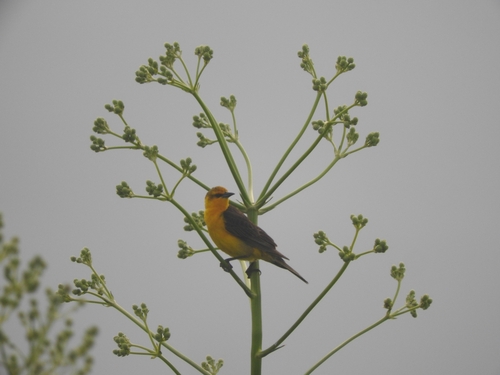 Saffraantroepiaal
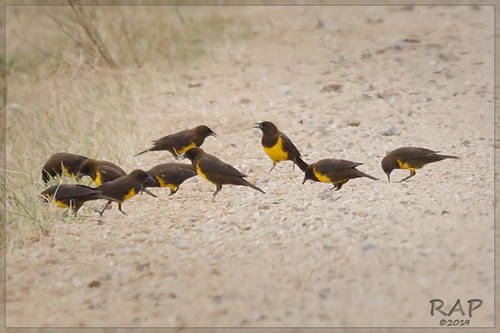 Bruine watertroepiaal
Kort gezegd
Het meest betrouwbare veldkenmerk tussen Saffraantroepiaal en Bruine watertroepiaal is de verdeling en intensiteit van geel op het lichaam en de vleugels, vooral in de vlucht en bij juvenielen. Saffraantroepiaal mannetjes tonen opvallend geel-oranje op het hoofd, de onderzijde en de staart, met een scherp contrast tegen de zwarte bovenzijde en een gele schoudervlek; vrouwtjes en juvenielen zijn doffer maar tonen nog steeds een gele staart. In tegenstelling tot de Bruine watertroepiaal is over het algemeen diep bruin met rijk geel beperkt tot de lagere borst, buik en een verborgen gele vleugelvlek die het meest zichtbaar is in de vlucht. De watertroepiaal is ook veel groter en zwaarder, en beide seksen lijken op elkaar. Juveniele verenkleed verschilt in het patroon en de omvang van geel, vooral op de borst en keel. Beide soorten kunnen voorkomen in vergelijkbaar open land, maar de troepiaal is veel zeldzamer en meer gelokaliseerd.
Herkenningstips
- Juveniele staartkleur: Saffraantroepiaal juvenielen tonen een kenmerkende citroengele staart, die ontbreekt bij watertroepiaal juvenielen, die in plaats daarvan een geelachtige keel en een gestreepte geel-bruin borst hebben.
- Volwassen mannelijke hoofd en onderzijde: Saffraantroepiaal mannetjes hebben een heldere geel-oranje hoofd, onderzijde en staart, scherp afgetekend tegen de zwarte bovenzijde en staart. Watertroepiaal volwassenen zijn nooit zo helder of contrasterend.
- Vrouwelijke/onvolwassen verwarring: Vrouwelijke Saffraantroepiaal is doffer maar toont nog steeds een gele onderzijde en staart, met bruin-grijze bovenzijde en een bleke buik. Watertroepiaal vrouwtjes zijn identiek aan mannetjes en missen elke heldere gele kleur op het hoofd of de staart.
- Vleugelpatroon in vlucht: Saffraantroepiaal toont gele epauletten (marginale en kleinere deksels) en een gele staart in de vlucht. Bruine watertroepiaal flitst een rijke gele vlek bij de buiging van de vleugel (bovenste vleugel deksels) en gele buik, maar de rest van de vleugel en rug blijft bruin.
- Snavel- en hoofdstructuur: Watertroepiaal is robuuster met een zwaardere, meer robuuste snavel en hoofd; Saffraantroepiaal is slanker en delicater over het algemeen.
- Seksueel dimorfisme: Saffraantroepiaal is seksueel dimorf (mannetjes zijn veel helderder dan vrouwtjes); watertroepiaal seksen zijn identiek.
- Lichaamsgrootte: Watertroepiaal is veel groter en zwaarder (24 cm, ~80 g) dan Saffraantroepiaal (20 cm, ~41 g). Gebruik dit wanneer beide soorten aanwezig zijn of wanneer de grootte duidelijk is ten opzichte van bekende soorten.
- Iris kleur: Saffraantroepiaal heeft een oranje-bruin tot diep rood-bruin iris; watertroepiaal's iris is bruin. Dit is subtiel en mogelijk niet zichtbaar in het veld.
- Poot- en snavelkleur: Beide soorten hebben zwartachtige snavels en poten, dus dit is niet nuttig voor scheiding.
- Veren op rug en staart: Saffraantroepiaal mannetjes hebben zwarte bovenzijde en staart; watertroepiaal is bruin tot olijfbruin boven en op de staart.
- Geel op buik: Watertroepiaal's geel is meestal beperkt tot de lagere borst en buik, en strekt zich niet uit naar het hoofd of de staart zoals bij Saffraantroepiaal.
- Habitatcontext: Saffraantroepiaal is zeldzaam en lokaal, geeft de voorkeur aan open grasland met verspreide natte gebieden; watertroepiaal is gebruikelijker in moerassen en pampas.
- Vlucht samenstelling: Saffraantroepiaal voegt zich vaak bij gemengde groepen met andere open-land vogels; watertroepiaal kan in kleine kolonies zijn, soms met helpers bij nesten.
- Zittende vs. vluchtzicht: Saffraantroepiaal's gele epaulet is zichtbaar zelfs wanneer hij zit; watertroepiaal's gele vleugelvlek is meestal verborgen in rust en het beste zichtbaar in de vlucht.
- Valstrikken: Vrouwelijke en juvenile Saffraantroepiaal kunnen worden verward met watertroepiaal vanwege doffer verenkleed, maar controleer altijd op geel op de staart (troepiaal) versus geel alleen op buik en vleugelvlek (watertroepiaal).
Grootte
Bruine watertroepiaal is aanzienlijk groter, gemiddeld 24 cm in lengte en bijna het dubbele van de massa van Saffraantroepiaal (volwassen mannetjes ~80 g vs. ~42,5 g). Saffraantroepiaal is compacter met 20 cm en 41 g. In het veld zal watertroepiaal robuuster en langer lijken, met een zwaardere bouw en proportioneel groter hoofd en snavel. Saffraantroepiaal is merkbaar slanker en delicater, vooral wanneer ze naast elkaar worden gezien.
Verenkleed
- Juvenielen: Saffraantroepiaal juvenielen lijken op volwassen vrouwtjes maar hebben een kenmerkende citroengele staart. Bruine watertroepiaal juvenielen hebben een geelachtige keel, een gele en bruin gestreepte borst, en een geelachtige onderkaak, zonder de schone gele staart van de troepiaal.
- Volwassen mannetjes: Saffraantroepiaal mannetjes zijn scherp gemarkeerd: zwarte bovenzijde (achterkruin, nek, rug, staart), zwarte lore, en een levendig geel-oranje hoofd, staart en onderzijde, met zwarte onderstaartdeksels die geel getipt zijn. Hun vleugels zijn meestal zwart maar tonen een gele epaulet (marginale en kleinere deksels) zelfs wanneer ze zitten. Bruine watertroepiaal volwassenen van beide seksen zijn diep bruin tot olijfbruin over het algemeen, met rijk geel alleen op de lagere borst en buik, en een gele vleugelvlek (bovenste vleugel deksels en buiging) die meestal verborgen is wanneer ze zitten maar flitst in de vlucht.
- Volwassen vrouwtjes: Saffraantroepiaal vrouwtjes zijn veel doffer, met bruin-grijze bovenzijde en een gele onderzijde, het bleekst op de buik, en een bruin-grijze oogstreep. Toch behouden ze meer geel in het algemeen dan watertroepiaal, vooral op de staart. Watertroepiaal vrouwtjes lijken identiek aan mannetjes.
- In vlucht: Saffraantroepiaal toont gele epauletten en staart; watertroepiaal toont een brede gele vlek bij de buiging van de vleugel en gele buik, maar de rest van de bovenzijde blijft bruin.
Gedrag
Saffraantroepiaal foerageert in rollende groepen, vaak met andere open-land soorten, en is waarschijnlijker te zien terwijl hij de grond doorzoekt naar insecten en spinnen. Bruine watertroepiaal is ook een soort die in groepen leeft, soms koloniaal nestelend en coöperatief broedgedrag vertonend. Beide soorten foerageren op de grond of in lage vegetatie, maar de watertroepiaal is waarschijnlijker te zien in of nabij moerige graslanden en pampas, soms in kleine groepen met helpers bij nesten. Saffraantroepiaal is waarschijnlijker in droger open grasland of licht moerige gebieden, vaak in gemengde soorten groepen.
Habitat
Beide soorten overlappen in hun verspreiding (Argentinië, Brazilië, Uruguay en Paraguay), maar Saffraantroepiaal is veel zeldzamer en meer gelokaliseerd, geeft de voorkeur aan open graslanden en licht moerige gebieden, soms nabij water maar niet in diepe moerassen. Bruine watertroepiaal is wijdverspreider en gebruikelijker, geeft de voorkeur aan moerassen, pampas graslanden en natte weiden, vaak in dichtere of nattere vegetatie dan de troepiaal. Als je in een echte moeras of pampas bent, is watertroepiaal waarschijnlijker; in droger of patchy grasland, vooral in het zuiden van Brazilië of Uruguay, controleer zorgvuldig op Saffraantroepiaal.
Saffraantroepiaal · Bruine watertroepiaal · Mijn lastige vogels