

brita-ossos vs grifo-comum
Gypaetus barbatus versus Gyps fulvus
Jogue um quiz com brita-ossos e grifo-comum
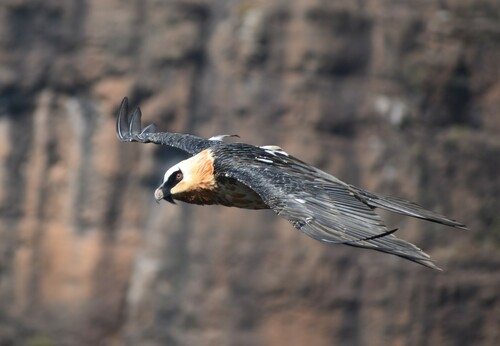 brita-ossos
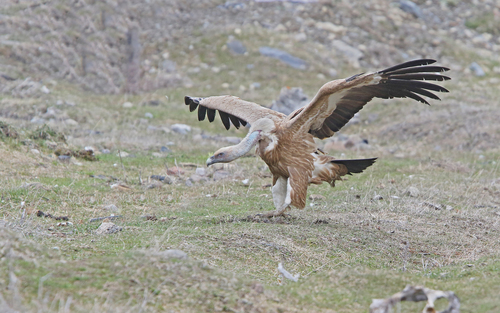 grifo-comum
Em resumo
A marca de campo mais confiável entre brita-ossos e grifo-comum é a cauda: brita-ossos tem uma cauda longa e em forma de cunha que é visivelmente mais longa do que a largura de sua asa, enquanto grifo-comum tem uma cauda curta e quadrada. Em voo, brita-ossos parece mais esbelto e semelhante a um falcão, com asas longas e estreitas e uma cabeça pequena, enquanto grifo-comum parece mais robusto, com asas largas e uma cabeça grande e pálida. Os juvenis de brita-ossos são escuros em geral, enquanto os juvenis de grifo-comum já mostram cabeças pálidas e coberturas de asa contrastantes. Essas diferenças se mantêm em todas as idades, mas são especialmente aparentes em voo. Ambas as espécies são enormes, mas grifo-comum é mais pesado e robusto.
Dicas de identificação
- Forma e comprimento da cauda: brita-ossos tem uma cauda longa e em forma de cunha que se estende bem além da largura da asa; a cauda do grifo-comum é curta e quadrada. Esta é a marca de campo mais confiável em voo para todas as idades.
- Silhueta geral em voo: brita-ossos parece esbelto e alongado, com asas longas e estreitas e uma cabeça pequena, reminiscentes de um falcão gigante. grifo-comum é mais robusto, com asas largas e uma cabeça grande e pálida que se projeta mais em voo.
- Cabeça e pescoço: brita-ossos tem uma cabeça plumosa com uma testa pálida (cremosa) e uma faixa ocular e barba pretas. grifo-comum tem uma cabeça careca e branca e um colar branco conspícuo, visível mesmo a certa distância.
- Cor da plumagem (adultos): Os adultos de brita-ossos são cinza escuro por cima, com partes inferiores avermelhadas ou cremosas (frequentemente manchadas de laranja devido ao barro ou ao banho de poeira), e uma barba preta. Os adultos de grifo-comum têm cabeças pálidas, com corpo e coberturas de asa cor de canela contrastando com penas de voo escuras.
- Plumagem juvenil: Os juvenis de brita-ossos são escuros em toda parte, com um peito marrom-cinza e sem cabeça pálida. Os juvenis de grifo-comum já mostram uma cabeça pálida e colar, com corpo cor de canela e asas escuras contrastantes.
- Bico e face: brita-ossos tem um bico relativamente pequeno e escuro e uma 'barba' preta de cerdas sob o queixo. grifo-comum tem um bico maior, amarelado e não possui barba.
- Tamanho e robustez: grifo-comum é mais pesado e robusto, tanto em voo quanto no chão. brita-ossos é grande, mas mais esbelto e alongado.
- Comportamento de voo: brita-ossos frequentemente voa sozinho ou em pares e pode ser visto carregando ossos. grifo-comum é mais propenso a ser visto em grandes bandos em voo.
- Comportamento no chão: brita-ossos tem um andar trôpego e parece ter uma cauda longa e estar curvado. grifo-comum é mais ereto e maciço.
- Contexto de habitat: brita-ossos é mais restrito a altas montanhas e terrenos acidentados, frequentemente solitário. grifo-comum pode ser encontrado em uma gama mais ampla de habitats abertos e é mais social.
- Voz: Não é uma marca de campo confiável; ambos são em sua maioria silenciosos, mas brita-ossos pode emitir apitos agudos ou um chamado semelhante ao de um falcão perto do ninho.
- Coloração cosmética: brita-ossos pode parecer laranja ou avermelhado na cabeça, peito e pernas devido a manchas de barro rico em ferro. grifo-comum nunca apresenta essa coloração.
- Sexo e estação: Não há dimorfismo sexual ou sazonal significativo nas marcas de campo para nenhuma das espécies; as diferenças estruturais e de plumagem são consistentes durante todo o ano.
- Armadilhas: A grandes distâncias, ambas as espécies podem parecer enormes e escuras, mas a longa cauda em forma de cunha de brita-ossos e a cabeça/colar pálido de grifo-comum são confiáveis mesmo em pouca luz.
- Quando as marcas falham: Em silhueta, concentre-se primeiro no comprimento e na forma da cauda; se a cabeça parecer pálida e a cauda for curta, é grifo-comum. Se o pássaro tiver cabeça escura com uma cauda longa, é brita-ossos.
Tamanho
grifo-comum é significativamente mais pesado que brita-ossos, com uma massa média de adulto de 8328 g contra 5544 g para brita-ossos [wikidata]. Ambas as espécies têm envergaduras semelhantes (cerca de 2,3–2,8 m), mas brita-ossos é mais esbelto e alongado, enquanto grifo-comum é mais robusto e de asas mais largas. No chão, brita-ossos parece mais alongado com uma cauda mais longa, enquanto grifo-comum é mais maciço e tem uma construção mais robusta.
Plumagem
- Pássaros juvenis/imaturos: Os juvenis de brita-ossos são escuros, preto-marrom na maior parte do corpo, com um peito marrom-cinza, e não possuem a cabeça pálida e o colar de grifo-comum. Os juvenis de grifo-comum, por outro lado, já têm uma cabeça e colar pálidos (brancos), com corpo cor de canela e coberturas de asa contrastando com penas de voo escuras. Esse contraste na cor da cabeça e do corpo é uma separação chave em todas as idades.
- Adultos: Os adultos de brita-ossos são principalmente cinza escuro por cima com partes inferiores cremosas ou avermelhadas, uma testa pálida e uma distinta faixa ocular e barba pretas. A cabeça nunca é careca. Os adultos de grifo-comum têm uma cabeça branca e careca, um colar branco conspícuo e um bico amarelo, com corpo e coberturas de asa cor de canela e penas de voo escuras. A cauda permanece curta e quadrada em grifo-comum, longa e em forma de cunha em brita-ossos.
- Padrão de asa e cauda em voo: As asas de brita-ossos são longas e estreitas, e a cauda é longa e em forma de cunha, enquanto as asas de grifo-comum são largas e a cauda é curta e quadrada. Nenhum padrão distinto de asa superior é descrito para nenhuma das espécies, mas a forma geral e o comprimento da cauda são diagnósticos.
Comportamento
brita-ossos é especializado em se alimentar de ossos e é frequentemente visto carregando ossos para soltá-los em rochas para quebrá-los. Seu voo é mais semelhante ao de um falcão, com um perfil esbelto e alongado e cauda longa. grifo-comum é um típico necrófago, alimentando-se de carniça, e é frequentemente visto planando em grandes grupos. No chão, brita-ossos tem um andar trôpego e parece mais alongado, enquanto grifo-comum é mais robusto e mais ereto.
Habitat
Ambas as espécies são encontradas em regiões montanhosas, mas brita-ossos é mais especializado para terrenos acidentados e de alta altitude onde pode encontrar ossos para se alimentar. grifo-comum é mais amplamente distribuído e pode ser encontrado em uma variedade de habitats abertos, incluindo penhascos, desfiladeiros e, às vezes, em altitudes mais baixas. Na Europa, grifo-comum é mais propenso a ser visto em grupos maiores, enquanto brita-ossos geralmente é solitário ou em pares.
Voz
brita-ossos é geralmente silencioso, exceto por apitos agudos durante exibições de acasalamento e um chamado semelhante ao de um falcão 'cheek-acheek' perto do ninho. As vocalizações de grifo-comum não são descritas nas notas, mas nenhuma das espécies é provavelmente identificada pela voz em campo.