

gray nightjar vs noitibó-de-cauda-larga
Caprimulgus jotaka versus Caprimulgus macrurus
Jogue um quiz com gray nightjar e noitibó-de-cauda-larga
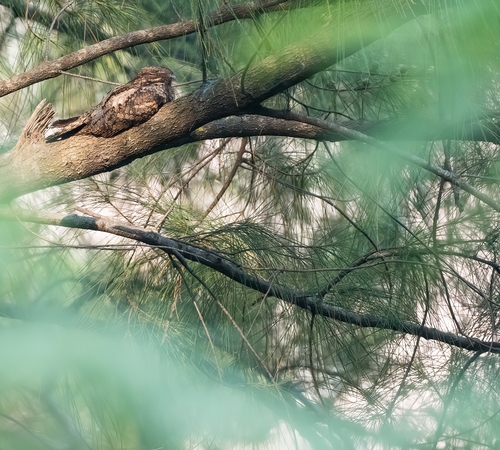 gray nightjar
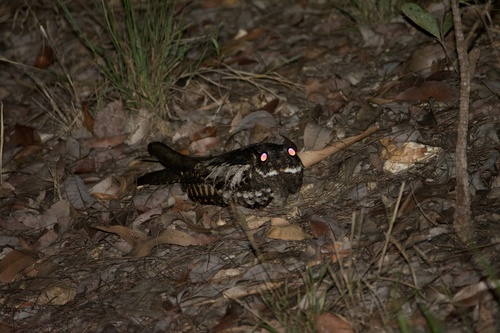 noitibó-de-cauda-larga
Em resumo
A marca de campo mais confiável entre o noitibó-de-cauda-larga e o gray nightjar é o padrão e a extensão do branco nas asas e na cauda, especialmente em voo e em machos adultos. Machos de noitibó-de-cauda-larga apresentam grandes manchas brancas óbvias nas primárias e nas penas da cauda externa, enquanto machos de gray nightjar têm branco mais limitado: uma única mancha branca na primeira primária e manchas subterminais menores na cauda. Fêmeas de ambas as espécies carecem ou reduzem muito essas áreas brancas, mas o noitibó-de-cauda-larga ainda parece ter cauda mais longa e mais robusta. A estrutura e a forma da cauda também são úteis: o noitibó-de-cauda-larga é notavelmente mais longo e com asas mais largas, enquanto o gray nightjar é mais compacto. Ambas as espécies são crípticas quando empoleiradas, mas diferenças sutis nos padrões da coroa, escapulares e garganta podem ajudar em vistas próximas.
Dicas de identificação
- Manchas brancas nas asas e cauda em voo (machos adultos): Machos de noitibó-de-cauda-larga têm grandes manchas brancas óbvias nas primárias e nas penas da cauda externa, facilmente vistas em voo ou quando o pássaro abre a cauda. Machos de gray nightjar têm uma única mancha branca na primeira primária e branco menor e mais restrito na cauda. Fêmeas de ambas as espécies carecem ou reduzem muito essas marcas, mas o contraste ainda é útil para machos e alguns imaturos.
- Comprimento e forma da cauda: O noitibó-de-cauda-larga é notavelmente mais longo e mais largo que o gray nightjar. Em voo ou empoleirado, procure uma cauda que projete bem além das pontas das asas e pareça larga e arredondada no noitibó-de-cauda-larga; a cauda do gray nightjar é mais curta e mais quadrada.
- Padrão da coroa e escapulares: Machos de noitibó-de-cauda-larga têm uma coroa pálida com uma faixa mediana escura e uma fila proeminente de escapulares pretos com largas franjas amarelas ou esbranquiçadas. A coroa do gray nightjar é mais intrincadamente vermiculada com uma faixa central preta, e os escapulares são pretos com manchas amarelo-acinzentadas, menos marcadas.
- Mancha na garganta: Ambos os machos têm uma mancha branca na garganta, mas é maior e mais brilhante no noitibó-de-cauda-larga. No gray nightjar, a mancha é menor, especialmente nas fêmeas, e pode ter um tom acastanhado.
- Partes inferiores: O gray nightjar é mais densamente riscado e vermiculado por baixo, com listras horizontais de marrom escuro e amarelo-pálido. O noitibó-de-cauda-larga é menos marcado, parecendo mais limpo por baixo, especialmente nos machos.
- Plumagem das fêmeas: As fêmeas de noitibó-de-cauda-larga são mais pálidas e acinzentadas, com manchas de asas amarelas menores e manchas de cauda menos vibrantes. As fêmeas de gray nightjar são apenas ligeiramente mais pálidas que os machos e carecem de branco nas asas e na cauda; sua mancha na garganta é menor e mais acastanhada.
- Postura de descanso: O gray nightjar frequentemente se empoleira ao longo dos galhos, misturando-se com a casca. O noitibó-de-cauda-larga é mais provável de ser encontrado no chão ou em folhas caídas, mas ambos podem usar qualquer substrato.
- Estilo de voo: O gray nightjar tem batidas de asas lentas, frequentemente planando ou pairando, e pode fazer curvas acentuadas. A cauda mais longa do noitibó-de-cauda-larga pode proporcionar um voo mais lânguido e planador, mas uma comparação direta é necessária para certeza.
- Contexto de habitat: Em florestas densas e úmidas de planície ou manguezais, especialmente no Sudeste Asiático ou na Austrália, o noitibó-de-cauda-larga é mais provável. Em florestas abertas, encostas gramadas ou bordas de florestas temperadas no Leste Asiático, o gray nightjar é favorecido.
- Distribuição geográfica: Se estiver no Japão, Coreia ou Extremo Oriente Russo, é gray nightjar. Na Austrália ou Wallacea, é noitibó-de-cauda-larga. Nos Himalaias e no Sudeste Asiático, ambos são possíveis; use a estrutura e a plumagem.
- Voz: A canção profunda e repetitiva do noitibó-de-cauda-larga é distintiva. Os chamados do gray nightjar diferem (não descritos aqui), mas a ausência de canção não é diagnóstica.
- Camuflagem e detecção: Ambos são extremamente crípticos quando empoleirados; uma varredura cuidadosa para forma, comprimento da cauda e padrão escapular é essencial.
- Impressão geral: O noitibó-de-cauda-larga dá uma impressão geral mais pesada e longa, especialmente quando empoleirado ou em voo. O gray nightjar é mais compacto e menos robusto.
- Sexo e idade: A maior parte do branco nas asas e na cauda está nos machos adultos; fêmeas e imaturos são mais complicados e requerem atenção cuidadosa à estrutura e às sutis diferenças de plumagem.
- Sobreposição e armadilhas: Em áreas de sobreposição de distribuição, especialmente nos Himalaias e no Sudeste Asiático, espere confusão. Use uma combinação de comprimento da cauda, extensão da mancha branca, padrão escapular e habitat para separá-los.
Tamanho
O noitibó-de-cauda-larga é a espécie maior, medindo cerca de 31,5–33 cm de comprimento [wikipedia], com uma cauda proporcionalmente mais longa e mais larga. O gray nightjar é de tamanho médio para um noitibó, mas é distintamente menor e mais compacto que o noitibó-de-cauda-larga. No campo, o noitibó-de-cauda-larga frequentemente parece ter corpo mais pesado e ser mais longo do bico à ponta da cauda, especialmente quando empoleirado ou em voo. Ambos têm cabeças e olhos grandes típicos dos noitibós, mas a impressão geral é mais robusta para o noitibó-de-cauda-larga.
Plumagem
- Imaturos e machos adultos em voo: Machos de noitibó-de-cauda-larga mostram grandes manchas brancas nas primárias (asa externa) e amplas manchas brancas nas penas da cauda externa, facilmente visíveis em voo. Machos de gray nightjar têm uma única mancha branca circular na primeira primária e manchas subterminais brancas menores e mais restritas nas penas da cauda externa. Fêmeas de ambas as espécies reduzem ou carecem dessas áreas brancas, mas nas fêmeas de gray nightjar, o branco está quase ausente tanto na asa quanto na cauda, e a mancha na garganta é menor e mais acastanhada.
- Coroa e escapulares: Ambas as espécies têm uma faixa mediana escura na coroa, mas machos de noitibó-de-cauda-larga têm uma coroa mais pálida e uma fila muito proeminente de escapulares pretos com largas franjas amarelas ou esbranquiçadas. Os escapulares do gray nightjar são pretos com manchas amarelo-acinzentadas e menos contrastantes.
- Garganta e partes inferiores: Ambos os machos têm uma mancha branca na garganta, mas é maior e mais brilhante no noitibó-de-cauda-larga. A mancha na garganta do gray nightjar é menor, especialmente nas fêmeas, e pode ter um tom acastanhado. As partes inferiores do gray nightjar são densamente riscada e vermiculada, enquanto o noitibó-de-cauda-larga é menos marcado por baixo.
- Padrão da cauda: A cauda do noitibó-de-cauda-larga é mais longa, com barras escuras irregulares e amplas manchas brancas (machos). A cauda do gray nightjar é mais curta, com vermiculações densas e 6–7 bandas onduladas pretas; o branco é menor e mais restrito.
- Fêmeas: As fêmeas de ambas as espécies são mais apagadas, mas as fêmeas de noitibó-de-cauda-larga são mais pálidas e acinzentadas no geral, com manchas de asas amarelas menores e manchas de cauda menos vibrantes, enquanto as fêmeas de gray nightjar são apenas ligeiramente mais pálidas que os machos e carecem de branco nas asas e na cauda.
Comportamento
Ambas as espécies são noturnas e crípticas durante o dia, frequentemente empoleirando-se no chão ou em galhos baixos. O gray nightjar é especialmente notado por descansar paralelo aos galhos, misturando-se com a casca. Em voo, o gray nightjar é silencioso, com batidas de asas lentas e planagens ou pairadas ocasionais, frequentemente voando em círculos, mas capaz de fazer curvas acentuadas ao perseguir insetos. O noitibó-de-cauda-larga também voa à noite, mas é menos descrito em detalhes; sua cauda mais longa pode proporcionar um voo mais lânguido e planador. Ambos são difíceis de detectar quando empoleirados devido à sua camuflagem.
Habitat
O gray nightjar se reproduz no Leste Asiático (sudeste da Rússia, China, Coreia, Japão, norte da Indochina, Himalaias) e é migratório no norte, hibernando ao sul até Java. Ele prefere florestas abertas, encostas gramadas e bordas de florestas. O noitibó-de-cauda-larga tem uma faixa muito mais ampla, desde os Himalaias do sul passando pelo Sudeste Asiático até o norte da Austrália, e é residente em toda a área. Ele utiliza uma variedade maior de habitats, incluindo florestas de planície e montanhas, manguezais, plantações, parques arborizados e até terras agrícolas. A sobreposição é possível no Sudeste Asiático e nas encostas dos Himalaias, mas o noitibó-de-cauda-larga é mais provável em florestas densas e baixas úmidas, enquanto o gray nightjar prefere habitats mais abertos ou temperados.
Voz
O noitibó-de-cauda-larga tem uma canção territorial distinta e monótona, descrita como uma série de notas profundas 'wroww' ou rápidas 'wrrrog', e também emite chamados guturais. As vocalizações do gray nightjar não são descritas nas notas fornecidas, mas as duas espécies foram separadas em parte por diferenças nos chamados. No campo, ouvir uma canção clássica do noitibó-de-cauda-larga é uma forte pista, mas o silêncio ou a ausência de canção não é diagnóstica.
gray nightjar · noitibó-de-cauda-larga · Minhas aves difíceis