

mergulhão-pequeno vs cagarraz
Tachybaptus dominicus versus Podiceps nigricollis
Jogue um quiz com mergulhão-pequeno e cagarraz
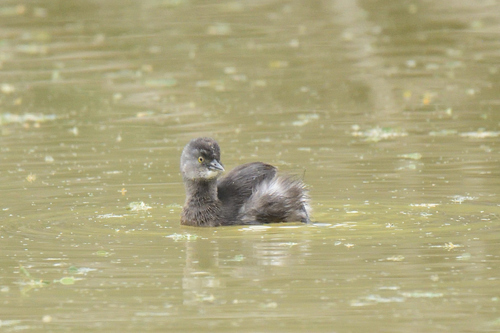 mergulhão-pequeno
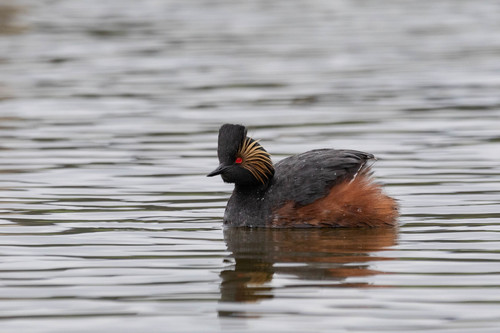 cagarraz
Em resumo
The most reliable field mark to separate Least Grebe from Black-necked Grebe is overall size and structure: Least Grebe is much smaller, plumper, and has a short, sharp-pointed bill, while Black-necked Grebe is noticeably larger with a thinner, upturned bill and a longer, more slender neck. In flight, both show a white wing patch, but Least Grebe is darker overall and lacks any chestnut or rufous tones on the neck or flanks at all ages. Black-necked Grebe, especially in breeding plumage, shows distinctive ochre feathering behind the eye and chestnut flanks, while Least Grebe remains plain and dusky. Juvenile and non-breeding birds can be confusing, but careful attention to size, bill shape, and the presence or absence of rufous or ochre tones will separate them.
Dicas de identificação
- Size is the most immediate clue: Least Grebe is much smaller and more compact than Black-necked Grebe at all ages. If the bird looks tiny and round, suspect Least Grebe.
- Bill shape: Least Grebe has a short, straight, sharp-pointed bill. Black-necked Grebe's bill is longer, thinner, and distinctly upturned, especially obvious in profile.
- Neck and body proportions: Least Grebe is short-necked and plump, with a stubby appearance. Black-necked Grebe is longer-necked and more slender, with a sleeker silhouette.
- Facial pattern in breeding plumage: Black-necked Grebe shows a striking ochre fan of feathers behind the eye and over the ear coverts—never present on Least Grebe.
- Flank color in breeding plumage: Black-necked Grebe has rich chestnut or rufous flanks. Least Grebe is always plain brownish or greyish, never showing chestnut or rufous at any age.
- Crown and throat: Least Grebe has a blackish crown and throat in breeding adults, but this is less extensive and lacks the contrast and color of Black-necked Grebe.
- Eye color: Both have bright eyes, but Least Grebe's are yellow, while Black-necked Grebe's are vivid red with a colored orbital ring (yellow to pinkish-red).
- Juvenile/immature marks: Juvenile Black-necked Grebe may show a buffy or tawny tinge on the sides of the head and upper neck, and whitish marks behind the eye. Least Grebe immatures are simply paler and greyer, with no warm tones or facial highlights.
- White wing patch in flight: Both species show this, so it is not diagnostic, but note that Least Grebe is much smaller and darker overall in flight.
- Underparts: Both have pale underparts, but Black-necked Grebe's are more sharply white, especially in non-breeding plumage, and the contrast with the darker upperparts is stronger.
- Habitat context: Least Grebe is more likely in small, vegetated, or temporary water bodies; Black-necked Grebe prefers larger, open lakes or ponds.
- Behavior on water: Least Grebe often sits higher and appears almost spherical, while Black-necked Grebe is more elongated and sits lower.
- Absence of chestnut/ochre: If you see any chestnut or ochre tones on the neck, flanks, or behind the eye, eliminate Least Grebe.
- Facial contrast in non-breeding birds: Black-necked Grebe often shows white ovals behind the ear-coverts and a more contrasting face; Least Grebe is plain-faced.
- Sexes similar: In both species, males and females look alike, so do not rely on sex for ID.
Tamanho
Least Grebe is far smaller and lighter (mean adult mass ~122.5 g [wikidata]) than Black-necked Grebe (which ranges from 215 to 450 g [wikipedia]). Least Grebe measures 21–27 cm in length, while Black-necked Grebe is 28–34 cm long. In direct comparison, Least Grebe appears distinctly petite, compact, and short-necked, while Black-necked Grebe is longer-bodied, with a more elongated neck and a bulkier impression. This size difference is striking in the field, especially when both species are seen together or with other waterbirds for scale.
Plumagem
- Juvenile/immature/non-breeding birds: Both species can appear pale-throated and greyish, but Least Grebe is always plain, lacking any rufous, ochre, or chestnut tones. Juvenile Black-necked Grebe shows a buffy or tawny tinge on the sides of the head and upper neck, and often has whitish marks behind the eye. Least Grebe immatures are simply paler and greyer than adults, with no warm tones or facial highlights.
- Flight/wing pattern: Both species show a white wing patch in flight, formed by the secondaries and some inner primaries. This is not diagnostic between them.
- Breeding adults: Black-necked Grebe is unmistakable with its ochre fan of feathers behind the eye, black neck and breast, and rich chestnut flanks. Least Grebe lacks all these features, remaining dark brownish-grey above, with a blackish crown and throat, brownish chest, and pale underparts.
- Non-breeding adults: Black-necked Grebe becomes greyer, but still often shows white ovals behind the ear-coverts and a more contrasting face pattern. Least Grebe is always plain, with a dark cap and pale throat, but no facial highlights.
Comportamento
Both species are excellent swimmers and divers, with legs set far back on the body, making them awkward on land. Least Grebe often appears even more buoyant and compact, sometimes looking almost spherical on the water. Black-necked Grebe, being larger and longer-necked, sits lower and moves with a sleeker, more elongated profile. Both may dive frequently, but Least Grebe is more likely to be found in small, vegetated pools, sometimes in complete cover.
Habitat
Least Grebe is highly adaptable and favors small, vegetated wetlands, including temporary pools, roadside ditches, and overgrown marshes—often in areas with dense emergent vegetation. Black-necked Grebe is more likely to be found on larger lakes and open water bodies, sometimes in flocks, and is less tied to dense cover. If you find a tiny grebe in a small, weedy pond, Least Grebe is far more likely; on open water or in larger groups, Black-necked Grebe is the default.