

garajau-pequeno vs garajau-real-africano
Thalasseus bengalensis versus Thalasseus albididorsalis
Jogue um quiz com garajau-pequeno e garajau-real-africano
 garajau-pequeno
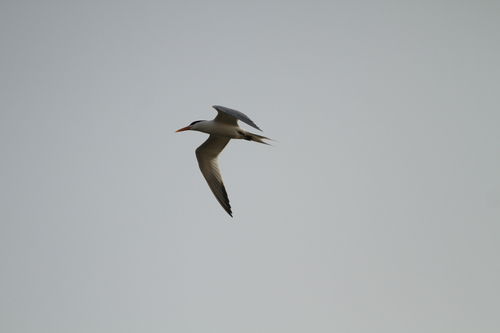 garajau-real-africano
Em resumo
A marca de campo mais confiável para separar o garajau-pequeno do garajau-real-africano é o tamanho e a estrutura: o garajau-real-africano é substancialmente maior e mais pesado, com uma envergadura maior e um bico laranja notavelmente mais robusto e longo. Ambas as espécies apresentam plumagem adulta semelhante, com toucas pretas, pernas pretas e bicos laranja, mas o garajau-pequeno é distintamente menor e mais esbelto, com um bico mais claro e delicado. Em voo, o garajau-pequeno apresenta uma região dorsal cinza, enquanto o garajau-real-africano tem uma região dorsal e cauda brancas. Os juvenis de ambas as espécies podem ser complicados, mas os juvenis do garajau-real-africano são maiores, com cor de pernas mais variável e um bico mais claro, menos distintamente laranja. Use o tamanho, a estrutura do bico e a cor da região dorsal em voo como suas principais ferramentas de separação.
Dicas de identificação
- O tamanho é a primeira verificação: O garajau-real-africano é muito maior e mais robusto que o garajau-pequeno. Se você vir um garajau grande e pesado com uma envergadura longa, prefira o garajau-real-africano.
- Estrutura do bico: O garajau-real-africano tem um bico laranja mais longo, robusto e robusto; o bico do garajau-pequeno é longo, mas mais esbelto e delicado. Isso é melhor avaliado com comparação direta ou boas vistas.
- Cor da região dorsal e cauda em voo: O garajau-pequeno apresenta uma região dorsal cinza e penas centrais da cauda, enquanto o garajau-real-africano tem uma região dorsal e cauda brancas. Esta é uma marca chave, especialmente em voo ou quando aves empoleiradas abrem suas caudas.
- Tom das partes superiores: O garajau-real-africano é mais escuro acima do que o garajau-pequeno, que pode parecer mais claro e limpo em luz forte.
- Cor das pernas em juvenis: Os juvenis do garajau-pequeno têm pernas pretas; os juvenis do garajau-real-africano podem ter pernas verdes, amarelas ou rosadas, embora isso possa ser difícil de ver à distância.
- Cor do bico em juvenis: O juvenil do garajau-pequeno tem um bico distintamente amarelo-laranja, enquanto o bico do juvenil do garajau-real-africano é amarelo mais claro e menor em proporção à cabeça.
- Partes superiores juvenis: Os juvenis do garajau-pequeno são mais claros, com crescentes escuros fracos na manta; os juvenis do garajau-real-africano são mais fortemente estriados e manchados acima.
- Forma da crista: Ambos têm uma crista desgrenhada na plumagem de reprodução, mas em uma cabeça maior no garajau-real-africano, fazendo a crista parecer mais proeminente.
- Postura empoleirada: O garajau-pequeno parece mais esbelto, mais ereto e mais delicado; o garajau-real-africano é mais robusto, com um bico mais pesado e uma postura mais horizontal.
- Postura em voo: O garajau-real-africano parece mais poderoso e estável; o garajau-pequeno é mais ágil e leve.
- Contexto sazonal: Na África Ocidental, ambas podem ocorrer, mas fora desta região, o garajau-pequeno é muito mais provável.
- Contexto de colônia: Em colônias mistas, compare diretamente o tamanho e a espessura do bico; o garajau-pequeno será visivelmente menor e com bico mais esbelto.
- Desgaste das penas primárias: As primárias de ambas as espécies escurecem com o desgaste, então não use isso sozinho para separação.
- Voz: Não é separável de forma confiável com as informações atuais; ambas emitem chamadas ásperas.
- Habitat: Ambas são costeiras; o habitat não é um separador, a menos que você esteja fora da área da África Ocidental.
Tamanho
O garajau-real-africano é muito maior: cerca de 50 cm de comprimento, com uma envergadura de 125–135 cm e um peso médio de 367 g (variação de 320–440 g). O garajau-pequeno é médio-grande para um garajau, mas menor no geral: 35–43 cm de comprimento, 88–105 cm de envergadura e massa corporal em torno de 209 g (variação de 185–242 g). Em bandos mistos ou lado a lado, o garajau-real-africano parecerá mais robusto, com asas mais longas e bico mais pesado.
Plumagem
- Juvenis/Imaturos: Ambas as espécies têm partes inferiores brancas e partes superiores estriadas/manchadas, mas os juvenis do garajau-pequeno são mais claros no geral, com apenas crescentes escuros fracos na manta e um bico distintamente amarelo-laranja. Os juvenis do garajau-real-africano são maiores, com um bico amarelo menor e mais claro e cor de pernas variável (não sempre preta; pode ser verde, amarela ou rosa), e estriação/manchas das partes superiores mais pronunciadas.
- Adultos (Reprodução): Ambos têm toucas pretas com cristas desgrenhadas, pernas pretas e longos bicos laranja. O garajau-pequeno tem uma região dorsal cinza e penas centrais da cauda, enquanto o garajau-real-africano tem uma região dorsal e cauda brancas. As partes superiores são cinza prateado em ambos, mas o garajau-real-africano é overall mais escuro acima.
- Adultos (Não-reprodução): Ambas as espécies perdem um pouco de preto da testa, mas a touca permanece na crista. A cor do bico e das pernas permanece diagnóstica (veja acima).
Comportamento
Ambas as espécies se alimentam mergulhando para pegar peixes, tipicamente mergulhando diretamente em vez de usar um voo em passo. A alimentação de cortejo (o macho oferecendo peixe à fêmea) é semelhante em ambas. Ambas nidificam em colônias densas, mas o garajau-real-africano é ainda mais colonial e suscetível a eventos de mortalidade em massa devido a doenças. Em voo, o garajau-real-africano parece mais pesado e poderoso, enquanto o garajau-pequeno é mais esbelto e ágil.
Habitat
Ambas as espécies são costeiras e nidificam em ilhas ou costas, frequentemente em colônias densas. O garajau-pequeno é mais amplamente distribuído no Oceano Índico e no Mediterrâneo, enquanto o garajau-real-africano é restrito à costa da África Ocidental, de Mauritânia a Namíbia. Se você estiver fora da África Ocidental, o garajau-pequeno é muito mais provável. Ambas preferem ambientes salinos e raramente são encontradas longe do interior.
Voz
O garajau-pequeno emite uma chamada alta e áspera semelhante à do trinta-réis-de-bando. Não há descrição específica para a chamada do garajau-real-africano nas notas, mas é provável que seja semelhante a outros grandes garajaus do gênero Thalasseus. A voz não é um separador confiável com base nas informações disponíveis.
garajau-pequeno · garajau-real-africano · Minhas aves difíceis