

purple-banded sunbird vs variable sunbird
Cinnyris bifasciatus versus Cinnyris venustus
Jogue um quiz com purple-banded sunbird e variable sunbird
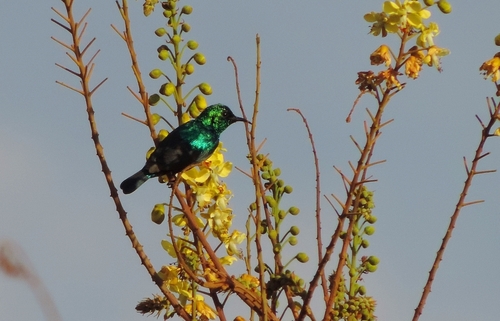 purple-banded sunbird
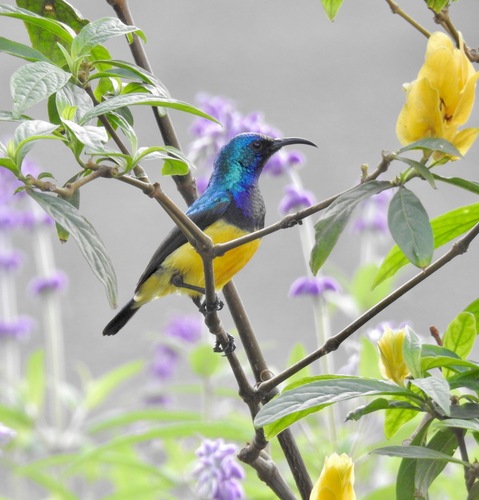 variable sunbird
Em resumo
A marca de campo mais confiável para separar o purple-banded sunbird do variable sunbird é a faixa no peito do macho: os machos purple-banded mostram uma faixa roxa distinta no peito superior, enquanto os machos variable têm uma faixa marrom e uma barriga amarela (às vezes laranja ou branca). As fêmeas são mais complicadas, mas as fêmeas do variable sunbird têm um supercílio pálido claro e partes inferiores amareladas, enquanto as fêmeas do purple-banded não têm um supercílio forte. Ambas as espécies são pequenos sunbirds que se alimentam de néctar, com estrutura e comportamento alimentar semelhantes, portanto, atenção cuidadosa aos detalhes da plumagem—especialmente a cor e a colocação das faixas no peito e das partes inferiores—é essencial. Machos imaturos e de eclipse do variable sunbird se assemelham às fêmeas, mas podem mostrar um pouco de verde na garganta, o que pode ajudar em casos sutis.
Dicas de identificação
- Cor e colocação da faixa no peito do macho: Procure uma faixa roxa larga no peito superior dos machos do purple-banded sunbird; os machos do variable sunbird têm uma faixa marrom mais estreita e mais baixa no peito.
- Cor da barriga do macho: Os machos do variable sunbird geralmente têm uma barriga amarela brilhante (às vezes laranja ou branca em algumas subespécies), enquanto os machos do purple-banded têm uma barriga mais pálida e menos colorida abaixo da faixa roxa.
- Partes superiores do macho: Ambos têm cabeças e gargantas verdes brilhantes, mas o verde do variable sunbird é mais extenso, cobrindo a nuca e às vezes o peito superior acima da faixa marrom.
- Supercílio da fêmea: As fêmeas do variable sunbird mostram um supercílio pálido forte (sobrancelha), que está ausente ou é muito menos distinto nas fêmeas do purple-banded.
- Partes inferiores da fêmea: As fêmeas do variable sunbird são amareladas abaixo; as fêmeas do purple-banded são geralmente mais opacas e menos distintamente amarelas.
- Machos de eclipse/imaturos: Os machos de eclipse do variable sunbird se parecem com fêmeas, mas podem mostrar um pouco de verde na garganta—fique atento a essa dica sutil em aves em transição.
- Formato e comprimento do bico: Ambos têm bicos de comprimento médio e curvados para baixo, típicos de sunbirds; o formato do bico não é um separador.
- Estilo de voo: Ambas as espécies têm voo rápido e direto em asas curtas e frequentemente pousam para se alimentar; o comportamento de voo não é um separador.
- Dicas de habitat: O variable sunbird é mais provável de ser encontrado em áreas cultivadas e florestas abertas, mas ambos podem se sobrepor amplamente em alcance e habitat.
- Vocalizações: Se você ouvir um claro 'tew-tew-tew-tew-tew', é o variable sunbird; o canto do purple-banded não é descrito aqui, então use com cautela.
- Plumagem juvenil/imatura: Nenhuma diferença distintiva de padrões de asas ou voo é descrita para imaturos; confie na cor das partes inferiores e no supercílio.
- Impressão geral: Se você ver um sunbird com um supercílio forte e barriga amarela, é provável que seja o variable; se a faixa no peito for larga e roxa, é o purple-banded.
- Variação de subespécies: Alguns machos do variable sunbird têm barrigas laranjas ou brancas em vez de amarelas—não confie apenas na cor da barriga nessas áreas, mas verifique a cor da faixa no peito e o supercílio da fêmea.
- Armadilhas: Machos de eclipse e imaturos do variable sunbird podem se parecer muito com fêmeas; fique atento a qualquer verde na garganta para evitar confusões.
- Quando em dúvida: Foque na combinação da cor da faixa no peito (roxa vs marrom), cor da barriga e a presença ou ausência de um supercílio forte nas fêmeas.
Tamanho
Ambas as espécies são sunbirds muito pequenos e semelhantes em tamanho, mas o variable sunbird é documentado com cerca de 5,6 gramas [wikidata]. Nenhuma massa direta é dada para o purple-banded sunbird, mas não há evidências de uma diferença de tamanho significativa em campo. Ambos têm bicos de comprimento médio, finos e curvados para baixo, típicos de sunbirds, e as proporções gerais são semelhantes.
Plumagem
- Machos adultos: Os machos do purple-banded sunbird têm uma faixa roxa distinta no peito superior, separando as partes superiores verdes metálicas da barriga mais pálida. Os machos do variable sunbird têm uma cabeça, garganta e nuca verdes brilhantes, uma faixa marrom no peito e uma barriga amarela (às vezes laranja ou branca). A faixa marrom do variable é geralmente mais estreita e mais baixa do que a ampla faixa roxa do purple-banded.
- Fêmeas: As fêmeas do variable sunbird são cinza-marrom acima com partes inferiores amareladas e um supercílio pálido proeminente. As fêmeas do purple-banded carecem do supercílio forte e são geralmente mais opacas abaixo.
- Machos de eclipse/imaturos: Os machos de eclipse do variable sunbird se assemelham às fêmeas, mas podem mostrar um pouco de verde na garganta. Não há informações específicas sobre os imaturos do purple-banded, mas espere que eles se assemelhem às fêmeas.
- Padrão de asas e voo: Nenhuma marca distintiva de asas ou voo específica para idade é descrita para nenhuma das espécies, portanto, a separação em voo depende da plumagem do corpo e da cabeça.
Comportamento
Ambas as espécies são alimentadoras de néctar ativas e rápidas que normalmente pousam para se alimentar, embora possam pairar brevemente como beija-flores. Seu voo é rápido e direto, auxiliado por asas curtas. Ambas também se alimentam de insetos, especialmente ao alimentar filhotes. O comportamento não é um separador forte em campo.
Habitat
O purple-banded sunbird é amplamente distribuído no sul e leste da África, encontrado em uma variedade de habitats em Angola, Quênia, África do Sul e países vizinhos. O variable sunbird é um reprodutor residente comum na África equatorial, favorecendo florestas abertas e áreas cultivadas. Há considerável sobreposição em alcance e habitat, portanto, o contexto sozinho não é diagnóstico, mas o variable sunbird pode ser mais provável em habitats cultivados ou de borda.
Voz
O variable sunbird emite um claro chamado 'tew-tew-tew-tew-tew'. Não há descrição vocal específica para o purple-banded sunbird nas notas fornecidas, então a voz não é um separador confiável, a menos que o chamado do variable seja ouvido distintamente.
purple-banded sunbird · variable sunbird · Minhas aves difíceis