

purple-banded sunbird vs white-bellied sunbird
Cinnyris bifasciatus versus Cinnyris talatala
Jogue um quiz com purple-banded sunbird e white-bellied sunbird
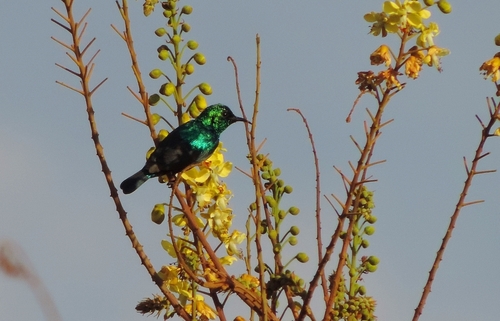 purple-banded sunbird
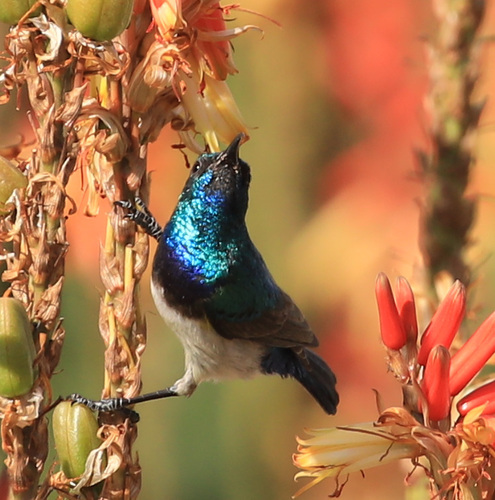 white-bellied sunbird
Em resumo
A maneira mais confiável de separar o purple-banded sunbird do white-bellied sunbird é focando na coloração das partes inferiores em machos adultos: o purple-banded apresenta uma distinta faixa peitoral arroxeada em partes inferiores brancas, enquanto o white-bellied não possui essa faixa e tem um ventre e peito brancos limpos. Ambas as espécies se sobrepõem amplamente em distribuição e habitat, e seu tamanho e estrutura são muito semelhantes, então detalhes da plumagem—especialmente nas partes inferiores—são fundamentais. Aves imaturas e fêmeas são muito mais complicadas, pois ambas são pequenos e esguios sunbirds com proporções semelhantes e diferenças sutis. No campo, sempre tente obter uma visão clara do peito e do ventre, e tenha cautela com machos não adultos.
Dicas de identificação
- O padrão das partes inferiores do macho adulto é a melhor marca de campo: Procure pela distinta e estreita faixa arroxeada no peito superior dos machos do purple-banded sunbird. Se o peito for branco limpo sem faixa, você provavelmente está vendo um macho do white-bellied sunbird.
- Fêmeas e imaturos são muito semelhantes: Ambos apresentam partes inferiores pálidas e não possuem a faixa peitoral do macho adulto. Nesses plumagens, a separação é extremamente difícil e não é confiavelmente possível no campo com as informações disponíveis.
- Sem padrões de asas juvenis ou imaturos distintos: Nenhuma das espécies é descrita como tendo marcas únicas nas asas superiores ou de voo em plumagens não adultas, então não confie no padrão das asas para separação.
- Bico e estrutura não são confiáveis: Ambas as espécies têm bicos esguios e curvados para baixo e proporções semelhantes. O comprimento do bico, a forma da cauda e a fórmula das asas não são diagnósticos.
- Armadilhas da plumagem: Cuidado, pois a iluminação pode obscurecer ou exagerar a faixa peitoral arroxeada dos machos do purple-banded sunbird. Em luz fraca, a faixa pode parecer fraca ou ausente; sempre tente confirmar com uma visão direta e bem iluminada.
- Machos do white-bellied sunbird podem mostrar uma leve lavagem esverdeada ou azulada no peito superior, mas nunca uma faixa distinta: Se você ver qualquer sugestão de uma faixa, favoreça o purple-banded, mas verifique cuidadosamente por artefatos de iluminação.
- Habitat e distribuição não são úteis na zona de sobreposição: Ambas as espécies podem ser encontradas nos mesmos habitats e regiões no sul e central da África.
- Comportamento não é diagnóstico: Ambas as espécies forrageiam de maneira semelhante e se juntam a bandos mistos; não use comportamento para separação.
- Voz não é descrita como um separador: Nenhuma diferença vocal distinta é notada nas fontes.
- Se estiver na África Oriental (por exemplo, Quênia, Etiópia, Somália), o purple-banded é mais provável, mas o white-bellied está ausente lá: Use a distribuição apenas como último recurso, e sempre confirme com a plumagem.
- Em bandos mistos de sunbirds, concentre-se no padrão das partes inferiores: Com várias espécies de Cinnyris presentes, a faixa peitoral (ou a falta dela) é a marca mais confiável para essas duas.
- Não confie no tamanho ou na aparência geral: Ambas são igualmente pequenas e ativas, e nenhuma se destaca estruturalmente.
- Se incerto e não vendo um macho adulto, considere deixar a ave não identificada: Fêmeas e sunbirds imaturos são notoriamente complicados, e essas duas não são exceção.
- Fotografe para revisão posterior: Se possível, obtenha fotos das partes inferiores, pois diferenças sutis podem ser mais fáceis de avaliar depois.
- Consulte observadores locais para divisões recentes ou mudanças taxonômicas: O tsavo sunbird às vezes é agrupado com o purple-banded; verifique listas locais se estiver na África Oriental.
Tamanho
Ambas as espécies são pequenos e esguios sunbirds típicos do gênero Cinnyris. Nenhuma diferença de tamanho confiável é notada nas fontes; ambas são semelhantes em comprimento e massa geral [wikipedia][avonet]. O comprimento e a forma do bico também são semelhantes, então o tamanho não é uma marca de campo útil para separação.
Plumagem
Machos adultos são mais facilmente separados: machos do purple-banded sunbird têm uma faixa arroxeada clara e estreita no peito superior, nitidamente destacada contra um ventre branco. Machos do white-bellied sunbird não possuem essa faixa peitoral e, em vez disso, apresentam um peito e ventre brancos uniformes, às vezes com uma leve lavagem esverdeada ou azulada no peito superior, mas nunca uma faixa distinta. Fêmeas e imaturos de ambas as espécies são sem graça, com partes inferiores pálidas e partes superiores mais opacas, tornando a separação no campo muito difícil sem a faixa peitoral do macho adulto. Nenhuma diferença de padrões de asas ou de voo juvenis ou imaturos é descrita nas fontes para qualquer uma das espécies.
Comportamento
Ambas as espécies se comportam de maneira semelhante: são ativas, frequentemente se juntando a bandos de espécies mistas e forrageando por néctar e insetos. Ambas podem ser vistas caçando insetos no final da tarde e colhendo de folhagens. Nenhuma diferença comportamental é confiavelmente descrita que ajudaria a separá-las no campo.
Habitat
A sobreposição de habitat é extensa. Ambas as espécies ocorrem em uma ampla gama de habitats arborizados e arbustivos em toda a África do Sul e Central, incluindo Angola, Botswana, RDC, Eswatini, Malaui, Moçambique, Namíbia, África do Sul, Tanzânia, Zâmbia e Zimbábue [wikipedia]. O purple-banded sunbird também se estende para a África Oriental (por exemplo, Quênia, Etiópia, Uganda, Somália, Gabão, Congo, Ruanda), mas dentro da faixa compartilhada, o habitat não é um separador útil.
purple-banded sunbird · white-bellied sunbird · Minhas aves difíceis