

vira-pedras vs garajau-de-bico-amarelo
Arenaria interpres versus Thalasseus bergii
Jogue um quiz com vira-pedras e garajau-de-bico-amarelo
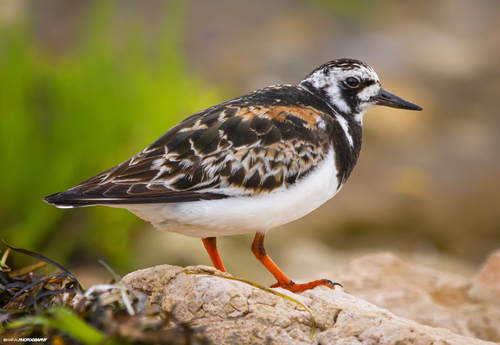 vira-pedras
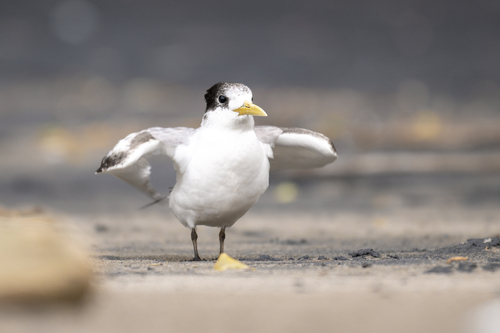 garajau-de-bico-amarelo
Em resumo
A marca de campo mais confiável para separar o vira-pedras do garajau-de-bico-amarelo é a estrutura geral e o bico: os vira-pedras são aves costeiras robustas, de pernas curtas, com um bico curto, escuro e ligeiramente curvado para cima, enquanto os garajaus-de-bico-amarelo são muito maiores, com asas longas e são aves marinhas com um bico longo, reto e amarelo e uma crista negra desgrenhada. Em voo, os vira-pedras juvenis e não reprodutores mostram uma faixa branca ousada na asa e um dorso e rabo brancos, enquanto os garajaus juvenis têm uma asa superior variegada com barras escuras e não apresentam o padrão de arlequim do vira-pedras. Os vira-pedras são frequentemente vistos correndo em costas rochosas ou arenosas, virando detritos, enquanto os garajaus geralmente voam sobre a água ou estão empoleirados em praias e ilhas. Se você vê pernas laranjas, é um vira-pedras; se você vê um bico longo e amarelo e uma crista negra, é um garajau.
Dicas de identificação
- Formato e cor do bico: O vira-pedras tem um bico curto, escuro e ligeiramente curvado para cima; o garajau-de-bico-amarelo tem um bico longo, reto e amarelo (com um toque esverdeado). Isso é visível em todas as idades e estações.
- Cor das pernas: As pernas do vira-pedras são laranjas brilhantes (todas as idades, todas as estações); as pernas do garajau são pretas. Se você vê pernas laranjas, é um vira-pedras.
- Estrutura geral: O vira-pedras é robusto, de pernas curtas e compacto; o garajau é de asas longas, cauda longa e esbelto, com um pescoço e bico muito mais longos. Em voo, os garajaus têm asas pontudas e um voo leve, enquanto os vira-pedras têm asas curtas e largas e um voo direto e rápido.
- Crista: O garajau-de-bico-amarelo adulto tem uma crista negra desgrenhada na parte de trás da cabeça (reprodutor e não reprodutor); o vira-pedras nunca apresenta uma crista.
- Padrão de plumagem (adultos): O vira-pedras reprodutor tem um padrão de arlequim (preto, branco, marrom-avermelhado, com uma faixa peitoral preta e partes inferiores brancas); o garajau é cinza por cima, branco por baixo, com uma testa branca e crista negra. O vira-pedras não reprodutor é mais apagado, mas ainda apresenta padrão; o garajau torna-se mais claro com uma coroa branca e crista salpicada.
- Plumagem juvenil/imatura: Os juvenis de vira-pedras têm a parte superior escamosa, com uma cabeça pálida e uma faixa branca ousada na asa em voo; os juvenis de garajau têm asas superiores listradas e uma coroa branca, mas sem faixa ousada na asa. Se você vê uma ave escamosa, com cabeça pálida e uma faixa branca na asa, é um vira-pedras.
- Padrão de voo: O garajau tem asas longas e pontudas e uma cauda profundamente bifurcada, proporcionando um voo leve e deslizante; o vira-pedras tem asas curtas e largas e uma cauda curta, com um voo rápido e direto.
- Branco na asa e cauda (em voo): O vira-pedras mostra uma faixa branca ousada na asa, dorso branco, rabo e cauda com bandas escuras; o garajau não apresenta isso, mostrando asas superiores cinzas uniformes com algumas barras escuras em juvenis.
- Habitat e comportamento: O vira-pedras está quase sempre no chão, correndo e virando objetos; o garajau geralmente voa sobre a água ou está empoleirado com outros garajaus, raramente no chão, exceto em colônias.
- Tamanho: O garajau é mais de duas vezes mais pesado e muito mais longo em envergadura; a confusão é mais provável à distância ou com aves solitárias, mas o tamanho é óbvio se ambos estiverem presentes.
- Voz: O chamado do vira-pedras é um estalo agudo; o garajau emite chamados altos, semelhantes a corvos ou gaivotas. Se você ouvir um alto 'kerrak', é um garajau.
- Sexo e variação sazonal: Ambas as espécies têm pouco dimorfismo sexual; as fêmeas de vira-pedras são ligeiramente mais apagadas, mas isso é sutil. Os sexos do garajau são idênticos.
- Armadilhas: Aves distantes e solitárias em uma praia podem confundir pelo tamanho; sempre verifique o bico, a cor das pernas e a forma do corpo. Garajaus imaturos podem parecer ter padrão na parte superior, mas não têm a faixa branca do vira-pedras e as pernas laranjas.
- Associações: Os vira-pedras podem se misturar com outros pequenos limícolas; os garajaus geralmente estão com outros garajaus ou gaivotas.
- Quando em dúvida: Concentre-se no comprimento e na cor do bico, na cor das pernas e na presença ou ausência de uma crista. Estes são visíveis mesmo à distância com binóculos.
Tamanho
O vira-pedras é um limícola pequeno e robusto: 22–24 cm de comprimento, 50–57 cm de envergadura, 85–150 g. O garajau-de-bico-amarelo é muito maior e mais esbelto: 46–49 cm de comprimento, 125–130 cm de envergadura, 325–397 g. O garajau é mais de duas vezes a massa e tem uma envergadura muito maior, tornando a confusão improvável se vistos lado a lado. As longas asas pontudas e a longa cauda do garajau contrastam com as asas curtas e largas e a cauda curta do vira-pedras.
Plumagem
-
Aves juvenis/imaturas: Os juvenis de vira-pedras têm uma cabeça marrom pálido e partes superiores com aparência escamosa devido às franjas pálidas, com uma faixa branca ousada, dorso branco, rabo e cauda em voo. Os juvenis de garajau têm um padrão de cabeça semelhante ao dos adultos de inverno (coroa branca, máscara escura), e as asas superiores são fortemente padronizadas com cinza, marrom e branco, mostrando barras escuras, mas não uma única faixa ousada; a asa fechada parece listrada, não escamosa.
-
Adulto não reprodutor: Os vira-pedras são mais apagados, com partes superiores cinza-escuras e marrons e uma cabeça escura com pouco branco, mas ainda mostram a faixa branca e o rabo em voo. Os garajaus em plumagem não reprodutora têm uma coroa e testa brancas, crista preta salpicada e partes superiores cinza mais claras, mas sempre mantêm o bico longo e amarelo e as pernas pretas.
-
Adulto reprodutor: Os vira-pedras são strikingly patterned with reddish-brown upperparts, black-and-white head and breast, and white underparts. Os garajaus têm uma crista negra brilhante e desgrenhada, testa branca e costas e asas cinza-batalha. O bico do garajau é sempre amarelado, nunca escuro ou laranja, e as pernas são pretas, nunca laranjas.
Comportamento
Os vira-pedras forrageiam correndo ao longo da costa, virando pedras, algas e detritos com seu bico para encontrar invertebrados. Eles podem cavar, sondar ou martelar a presa, e são frequentemente vistos em pequenos grupos em costas rochosas ou arenosas. Os garajaus-de-bico-amarelo são pescadores aéreos, voando sobre a água e mergulhando para pegar peixes, ou descansando em colônias densas em bancos de areia, ilhas ou praias. Os garajaus raramente andam ou correm no chão e quase nunca são vistos virando objetos ou forrageando na costa como os vira-pedras.
Habitat
Os vira-pedras são quase sempre encontrados em costas rochosas ou arenosas, flats de maré e praias, frequentemente perto da linha d'água e entre detritos. Os garajaus-de-bico-amarelo são encontrados ao longo de costas e ilhas, mas são muito mais propensos a serem vistos voando sobre águas abertas, empoleirados em bancos de areia ou em grandes colônias de reprodução. Se a ave estiver forrageando ativamente entre rochas ou detritos, é quase certamente um vira-pedras; se estiver voando sobre o mar ou empoleirado com outros garajaus, é um garajau.
Voz
O vira-pedras tem um chamado estacado e ruidoso e um chamado de alarme tagarelando, especialmente na época de reprodução. O garajau-de-bico-amarelo é altamente vocal em colônias, emitindo um alto e raucoso 'kerrak', um 'korrkorrkorr' no ninho e um forte 'wep wep' em voo. Os chamados do garajau são muito mais altos e mais semelhantes a gaivotas, enquanto os do vira-pedras são mais agudos e mais ruidosos.
vira-pedras · garajau-de-bico-amarelo · Minhas aves difíceis