

rabirruivo-de-eversmann vs white-capped redstart
Phoenicurus erythronotus versus Phoenicurus leucocephalus
Jogue um quiz com rabirruivo-de-eversmann e white-capped redstart
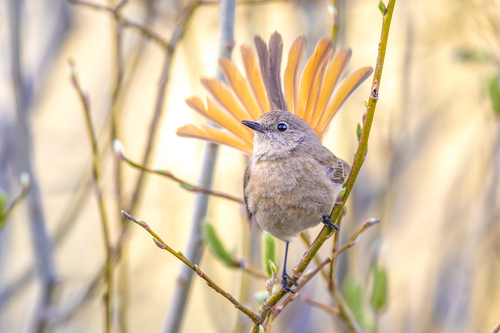 rabirruivo-de-eversmann
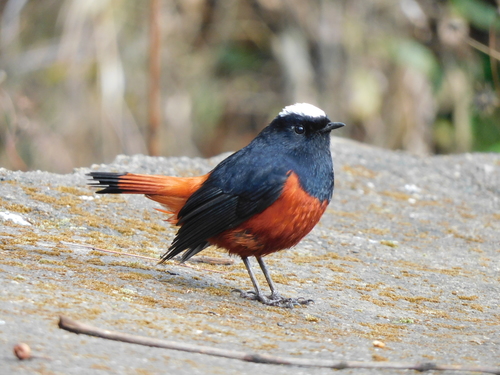 white-capped redstart
Em resumo
The most reliable field mark between Rufous-backed Redstart and White-capped Redstart is the presence of a bold white crown patch on both sexes of White-capped, which is completely absent in Rufous-backed. In all ages and sexes, White-capped shows a striking contrast of black upperparts, white crown, and rich red underparts, while Rufous-backed lacks the white crown and instead has a rufous back and tail with a grey crown and nape in males. Juvenile and female Rufous-backed can appear dull, but never show the black-and-white head pattern of White-capped. Size difference is also notable, with White-capped being much heavier-bodied. In flight or perched, focus first on the head pattern and overall color contrast.
Dicas de identificação
- White crown patch: Only White-capped Redstart of any age or sex shows a bold white crown. Rufous-backed never has a white crown—this is the best single field mark.
- Overall color contrast: White-capped is black above (except the white crown) and red below, with a sharp division. Rufous-backed males have a grey crown/nape, black mask, and rufous back, lacking the stark black-and-white head.
- Female/immature confusion: Female and immature Rufous-backed are grey-brown with two buff wingbars and a rufous tail with a dark center. White-capped females are not brownish; they are black and red with a white crown, matching the male in pattern.
- Wingbars and tertial edges: Only Rufous-backed females/immatures show two buff wingbars and buff tertial edges. If you see these, rule out White-capped.
- Tail pattern: Both have rufous tails, but Rufous-backed shows a dark central tail, especially in females and immatures. White-capped's tail is more uniformly red.
- Size and structure: White-capped is much heavier and bulkier than Rufous-backed, which is slimmer and smaller overall. In mixed flocks, White-capped stands out by size.
- White scapular/wing patches: Rufous-backed males show white patches on scapulars and primary-coverts, but these are subtle and can be missed at a distance or in poor light.
- Back color: Rufous-backed has a rufous back and rump, while White-capped is black-backed.
- Eye-ring: Rufous-backed females/immatures may show a pale eye-ring, absent in White-capped.
- Habitat context: If seen near fast-flowing water, especially in Southeast Asia or the Himalayas, White-capped is much more likely. Rufous-backed is less tied to water.
- Tail-flicking: Both species flick their tails, so this is not diagnostic.
- Vocalizations: Rufous-backed has a loud, lively song and croaking/whistling calls, but White-capped's voice is not described here—do not rely on voice for separation.
- Seasonal dullness: Non-breeding and first-winter Rufous-backed males are duller and browner but still lack the white crown and black upperparts of White-capped.
- Underwing color: White-capped males may show brown or red spots under the wings, but this is subtle and rarely visible in the field.
- If in doubt: Always check for the white crown first; if absent, look for rufous back and tail with dark center (Rufous-backed), or black-and-red with white crown (White-capped).
Tamanho
White-capped Redstart is substantially heavier, with a body mass of about 33 g, making it noticeably bulkier than Rufous-backed Redstart (which is 15–22 g based on typical Phoenicurus redstarts). Rufous-backed is also slightly shorter in length (15–16 cm) and has a smaller wingspan (25.5–27 cm). In the field, White-capped tends to look more robust and broad-bodied, while Rufous-backed appears slimmer and more delicate.
Plumagem
- Juvenile/First-winter/Immature: No direct notes on juvenile-specific upperwing patterns for either species, but female and immature Rufous-backed show two buff wingbars and buff-edged tertials, which are not present in White-capped. White-capped of all ages and sexes has a white crown and black upperparts, with red underparts, while Rufous-backed immatures are dull grey-brown with a rufous tail and no white crown.
- Adult males: Rufous-backed shows a black mask, grey crown and nape, rufous back and rump, and rufous tail with dark central feathers. White-capped males have a bold white crown, black upperparts, and red underparts, with possible brown or red spots under the wings.
- Females: Rufous-backed females are grey-brown with a rufous tail (dark center), pale eye-ring, and two buff wingbars. White-capped females, unlike most Phoenicurus, are also black and red with a white crown, not brownish or drab.
- Tail: Both species have rufous in the tail, but only Rufous-backed has a dark center; White-capped's tail is more uniformly red.
- Wing pattern: Rufous-backed has white patches on scapulars and primary-coverts (mainly in males), which can be a subtle field mark, but not as obvious as the white crown of White-capped.
Comportamento
Both species are active and flick their tails, but specific behavioral differences are not noted in the sources. Rufous-backed is described as often flicking its tail up and down. No unique flight or foraging jizz is described that would reliably separate them in the field.
Habitat
White-capped Redstart is most often found near water in temperate forests across the Indian subcontinent, Southeast Asia, and parts of Central Asia. Rufous-backed Redstart's habitat is not detailed here, but it generally prefers drier, open areas and is less tied to water than White-capped. If the bird is seen along a fast-flowing stream or river, White-capped is much more likely.
Voz
Rufous-backed Redstart has a loud, lively song, a soft croaking call, and a whistling call. No vocal details are given for White-capped Redstart, so voice is not a reliable separator without further information.
rabirruivo-de-eversmann · white-capped redstart · Minhas aves difíceis