
Motmot

batuíra-de-bando vs murphy's petrel

Charadrius semipalmatus versus Pterodroma ultima

Jogue um quiz com batuíra-de-bando e murphy's petrel
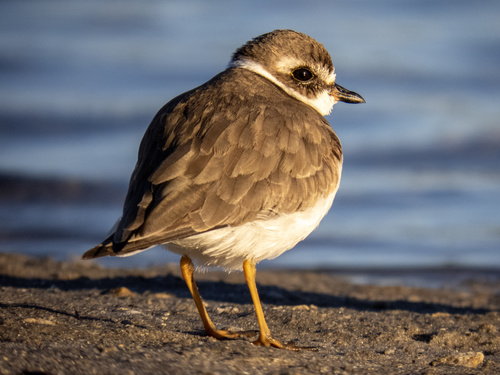
batuíra-de-bando (Charadrius semipalmatus) batuíra-de-bando
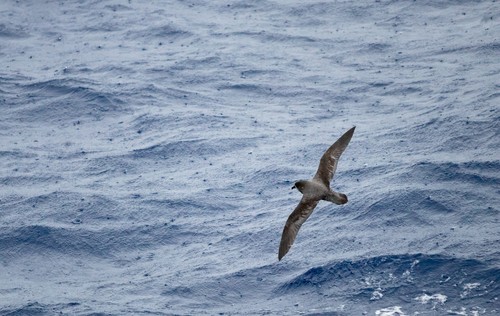
murphy's petrel (Pterodroma ultima) murphy's petrel

Mídia

Carregando…

Em resumo

The most reliable way to separate Semipalmated Plover from Murphy's Petrel in the field is by overall size and structure: Murphy's Petrel is a large, long-winged, all-dark seabird, while Semipalmated Plover is a small, compact shorebird with a distinctive single black breast band and contrasting white underparts. Even at a distance or in flight, the plover’s bold head pattern and white belly stand out against the petrel’s uniform sooty-grey plumage. If you see a small, short-billed bird running on the shore, it’s the plover; a large, dark bird gliding over the open ocean is the petrel. There is no overlap in habitat or silhouette, and confusion is most likely in poor viewing conditions or with distant birds.

Dicas de identificação

  1. Size and shape: Murphy's Petrel is much larger and longer-winged than Semipalmated Plover. If the bird looks gull-sized or larger, it cannot be a plover.
  2. Plumage contrast: Semipalmated Plover always shows a white belly and a single black breast band, with a brownish back and a striking head pattern. Murphy's Petrel is uniformly sooty-grey with a slightly paler chin and no contrasting markings.
  3. Head pattern: The plover has a white forehead and black mask, easily visible even at a distance. The petrel’s head is the same color as its body, lacking any mask or forehead patch.
  4. Bill: Semipalmated Plover has a short, stubby, orange-and-black bill. Murphy's Petrel’s bill is longer, all dark, and more hooked (typical of petrels), but this may be hard to see at a distance.
  5. Leg color: The plover’s legs are not described in detail here, but Murphy's Petrel has pinkish legs, usually only visible at close range.
  6. Flight style: Plovers fly with rapid, shallow wingbeats and often land on the ground. Petrels soar and glide on long, stiff wings, rarely landing except at breeding sites.
  7. Habitat: Plovers are found on beaches, mudflats, and open ground; petrels are only seen over open ocean. If you see a bird on land, it is almost certainly not Murphy's Petrel.
  8. Behavior: Plovers run and pick at food on the ground; petrels are never seen foraging on land.
  9. Underwing and upperwing pattern: No distinctive age-specific wing patterns are described for either species, but the plover’s white underparts are always visible in flight, unlike the petrel’s uniform darkness.
  10. Breast band: Only the plover has a single, bold black breast band; the petrel has a plain breast.
  11. Context: If you are in the Northern Hemisphere on a beach, you are likely seeing a plover. If you are in the tropical Pacific, far from land, a dark, long-winged bird is likely a petrel.
  12. Sex and age: Neither species shows sexual dimorphism, and the petrel’s plumage does not vary with age. The plover’s key field marks are present in all plumages.
  13. Confusion risk: The only plausible confusion is with distant, poorly seen birds, or in photos without scale. Always use size, habitat, and plumage together.
  14. Voice: Not described here, but not needed for separation given the other differences.
  15. Pitfalls: Do not confuse the plover’s single breast band with the double bands of Killdeer or the all-dark look of distant petrels; check for white underparts and head pattern.

Tamanho

Murphy's Petrel is dramatically larger: it measures 38–41 cm in length with a 97 cm wingspan and weighs about 360 g [wikipedia]. In contrast, Semipalmated Plover is only 17–19 cm long with a 12–13 cm wing length and weighs 37.6–54.7 g [wikipedia]. The petrel is nearly twice as long and many times heavier, with long, pointed wings and a robust body, while the plover is small, compact, and short-winged. This size difference is obvious even at a distance.

Plumagem

No matter the age or season, Semipalmated Plover and Murphy's Petrel are instantly separated by plumage. The plover (adult and immature) always shows a brownish-grey back, white underparts, and a single bold black breast band, with a white forehead and black mask. Its bill is short, orange with a black tip. There are no age-specific upperwing patterns described for either species, but the plover’s white belly and breast band are visible in all plumages. Murphy's Petrel is uniform sooty-grey all over, with only a slightly paler chin and pinkish legs; there is no breast band, no white on the belly, and no contrasting head pattern. The petrel’s plumage does not vary by age or sex. In flight, the plover’s white underparts and compact wings contrast sharply with the petrel’s long, dark wings and body.

Comportamento

Semipalmated Plover is a shorebird, typically seen running on beaches, tidal flats, or open ground, picking at food on the surface. Its movements are quick, with frequent stops and starts, and it may perform distraction displays if disturbed. Murphy's Petrel is a pelagic seabird, rarely seen near land except at breeding sites. It soars and glides over open ocean, often far from shore, with strong, direct flight and little interaction with the ground. Their behaviors are so different that confusion is only possible with distant or poorly seen birds.

Habitat

Habitat is a nearly foolproof separator. Semipalmated Plover breeds and forages on open ground, beaches, and tidal flats, and winters along coasts and mudflats. It is never found far from land. Murphy's Petrel is strictly oceanic, seen over deep water far from shore, and only comes to land to breed on remote islands. If you are on a beach or mudflat, you are looking at a plover; if you are at sea, especially far offshore, you are seeing a petrel.

Enviar uma descrição melhor

Use as mesmas seções da comparação. Seu texto é publicado na hora.

The most reliable way to separate Semipalmated Plover from Murphy's Petrel in the field is by overall size and structure: Murphy's Petrel is a large, long-winged, all-dark seabird, while Semipalmated Plover is a small, compact shorebird with a distinctive single black breast band and contrasting white underparts. Even at a distance or in flight, the plover’s bold head pattern and white belly stand out against the petrel’s uniform sooty-grey plumage. If you see a small, short-billed bird running on the shore, it’s the plover; a large, dark bird gliding over the open ocean is the petrel. There is no overlap in habitat or silhouette, and confusion is most likely in poor viewing conditions or with distant birds.

  1. Size and shape: Murphy's Petrel is much larger and longer-winged than Semipalmated Plover. If the bird looks gull-sized or larger, it cannot be a plover.
  2. Plumage contrast: Semipalmated Plover always shows a white belly and a single black breast band, with a brownish back and a striking head pattern. Murphy's Petrel is uniformly sooty-grey with a slightly paler chin and no contrasting markings.
  3. Head pattern: The plover has a white forehead and black mask, easily visible even at a distance. The petrel’s head is the same color as its body, lacking any mask or forehead patch.
  4. Bill: Semipalmated Plover has a short, stubby, orange-and-black bill. Murphy's Petrel’s bill is longer, all dark, and more hooked (typical of petrels), but this may be hard to see at a distance.
  5. Leg color: The plover’s legs are not described in detail here, but Murphy's Petrel has pinkish legs, usually only visible at close range.
  6. Flight style: Plovers fly with rapid, shallow wingbeats and often land on the ground. Petrels soar and glide on long, stiff wings, rarely landing except at breeding sites.
  7. Habitat: Plovers are found on beaches, mudflats, and open ground; petrels are only seen over open ocean. If you see a bird on land, it is almost certainly not Murphy's Petrel.
  8. Behavior: Plovers run and pick at food on the ground; petrels are never seen foraging on land.
  9. Underwing and upperwing pattern: No distinctive age-specific wing patterns are described for either species, but the plover’s white underparts are always visible in flight, unlike the petrel’s uniform darkness.
  10. Breast band: Only the plover has a single, bold black breast band; the petrel has a plain breast.
  11. Context: If you are in the Northern Hemisphere on a beach, you are likely seeing a plover. If you are in the tropical Pacific, far from land, a dark, long-winged bird is likely a petrel.
  12. Sex and age: Neither species shows sexual dimorphism, and the petrel’s plumage does not vary with age. The plover’s key field marks are present in all plumages.
  13. Confusion risk: The only plausible confusion is with distant, poorly seen birds, or in photos without scale. Always use size, habitat, and plumage together.
  14. Voice: Not described here, but not needed for separation given the other differences.
  15. Pitfalls: Do not confuse the plover’s single breast band with the double bands of Killdeer or the all-dark look of distant petrels; check for white underparts and head pattern.

Murphy's Petrel is dramatically larger: it measures 38–41 cm in length with a 97 cm wingspan and weighs about 360 g [wikipedia]. In contrast, Semipalmated Plover is only 17–19 cm long with a 12–13 cm wing length and weighs 37.6–54.7 g [wikipedia]. The petrel is nearly twice as long and many times heavier, with long, pointed wings and a robust body, while the plover is small, compact, and short-winged. This size difference is obvious even at a distance.

No matter the age or season, Semipalmated Plover and Murphy's Petrel are instantly separated by plumage. The plover (adult and immature) always shows a brownish-grey back, white underparts, and a single bold black breast band, with a white forehead and black mask. Its bill is short, orange with a black tip. There are no age-specific upperwing patterns described for either species, but the plover’s white belly and breast band are visible in all plumages. Murphy's Petrel is uniform sooty-grey all over, with only a slightly paler chin and pinkish legs; there is no breast band, no white on the belly, and no contrasting head pattern. The petrel’s plumage does not vary by age or sex. In flight, the plover’s white underparts and compact wings contrast sharply with the petrel’s long, dark wings and body.

Semipalmated Plover is a shorebird, typically seen running on beaches, tidal flats, or open ground, picking at food on the surface. Its movements are quick, with frequent stops and starts, and it may perform distraction displays if disturbed. Murphy's Petrel is a pelagic seabird, rarely seen near land except at breeding sites. It soars and glides over open ocean, often far from shore, with strong, direct flight and little interaction with the ground. Their behaviors are so different that confusion is only possible with distant or poorly seen birds.

Habitat is a nearly foolproof separator. Semipalmated Plover breeds and forages on open ground, beaches, and tidal flats, and winters along coasts and mudflats. It is never found far from land. Murphy's Petrel is strictly oceanic, seen over deep water far from shore, and only comes to land to breed on remote islands. If you are on a beach or mudflat, you are looking at a plover; if you are at sea, especially far offshore, you are seeing a petrel.

Descartar as alterações?

Você tem edições não salvas. Se sair agora, elas serão perdidas.

batuíra-de-bando · murphy's petrel · Minhas aves difíceis