

wandering tattler vs gaivina-de-nuca-preta
Tringa incana versus Sterna sumatrana
Jogue um quiz com wandering tattler e gaivina-de-nuca-preta
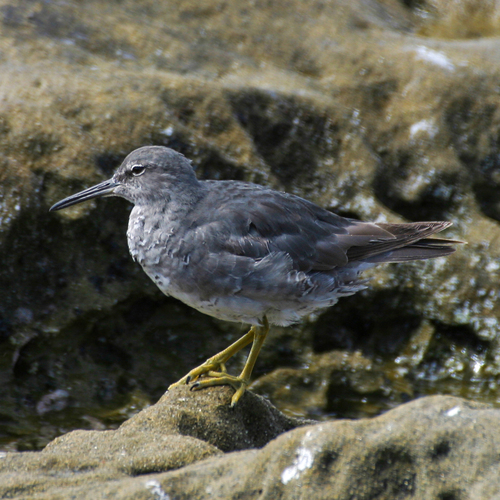 wandering tattler
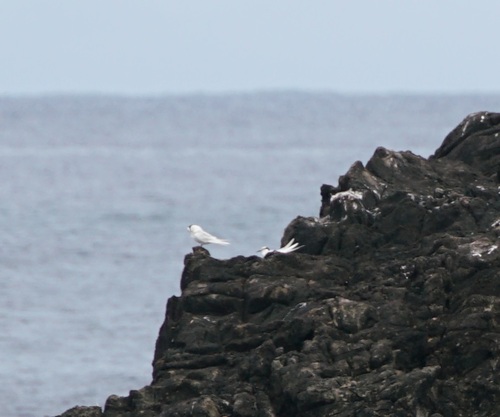 gaivina-de-nuca-preta
Em resumo
A maneira mais confiável de separar o wandering tattler da gaivina-de-nuca-preta é pela estrutura geral e padrão das asas: o wandering tattler é uma ave costeira robusta e acinzentada com asas sem padrão e um padrão de partes inferiores escamoso em plumagem de reprodução, enquanto a gaivina-de-nuca-preta é uma ave marinha esbelta e branca com uma impressionante faixa negra na nuca e uma cauda profundamente bifurcada. Em voo, as longas asas pontudas e os streamers da cauda da gaivina são distintos, enquanto o tattler apresenta asas cinzas largas e sem marcas e uma cauda mais curta e com ponta quadrada. Se você ver uma ave empoleirada, note as pernas amarelas do tattler e as partes superiores cinzas em comparação com a plumagem totalmente branca da gaivina, que possui pernas e bico pretos. O habitat também é uma forte pista: os tattlers são encontrados em costas rochosas e margens de rios, enquanto as gaivinas-de-nuca-preta são estritamente oceânicas, raramente vistas no interior.
Dicas de identificação
- Formato das asas e cauda em voo: A gaivina-de-nuca-preta tem asas longas e pontudas e uma cauda profundamente bifurcada que se estende além das pontas das asas quando empoleirada; o wandering tattler tem asas mais curtas e largas e uma cauda com ponta quadrada. Isso é mais óbvio em voo ou em vistas laterais de aves empoleiradas.
- Cor da plumagem: O tattler é cinza por cima e branco por baixo (com barras escamosas em adultos em reprodução); a gaivina-de-nuca-preta é completamente branca com asas prateadas pálidas e uma faixa negra na nuca.
- Padrão da cabeça: A gaivina-de-nuca-preta tem uma linha negra distinta do olho atravessando a nuca, formando um efeito de 'boné'; o wandering tattler tem um supercílios proeminente (sobrancelha) mas não possui faixa negra na nuca.
- Cor do bico e das pernas: O tattler tem um bico cinza escuro e pernas curtas e amarelas escuras; a gaivina-de-nuca-preta tem um bico preto e pernas pretas. A cor das pernas é melhor vista em aves empoleiradas.
- Padrão das partes inferiores: Na época de reprodução, o wandering tattler apresenta barras pesadas ou um padrão escamoso no peito e na barriga; a gaivina-de-nuca-preta é sempre branca limpa por baixo.
- Padrão da asa superior: Ambas as espécies têm asas relativamente simples, mas as asas da gaivina são mais claras e prateadas, com uma borda negra estreita na primária mais externa; as asas do tattler são cinzas sem padrão e sem borda negra.
- Projeção da cauda: Em aves empoleiradas, os streamers da cauda da gaivina se estendem bem além das pontas das asas; a cauda do tattler é mais curta e não se projeta além das asas.
- Formato do corpo: O tattler é compacto e robusto; a gaivina é esbelta e alongada, especialmente em voo.
- Contexto do habitat: Se a ave estiver em uma costa rochosa, margem de rio ou lamaçal, suspeite do tattler. Se estiver em uma rocha offshore, ilha ou sobre o oceano aberto, suspeite da gaivina-de-nuca-preta.
- Comportamento: O tattler caminha ou se balança ao longo das costas; a gaivina é frequentemente vista voando, pairando ou mergulhando sobre a água.
- Confusão juvenil: A gaivina-de-nuca-preta juvenil é marrom manchado, ao contrário de qualquer plumagem de tattler. Os jovens tattlers são cinzas mais apagados, mas nunca marrons e manchados.
- Vocalização: Um trinado rápido aponta para o wandering tattler; chamadas agudas e estridentes são mais típicas das gaivinas.
- Tamanho em contexto: Se vistos juntos, a gaivina parecerá mais longa e mais esbelta, com uma envergadura maior, mas ambas são semelhantes em massa.
- Estação: As barras das partes inferiores do wandering tattler estão presentes apenas em adultos em reprodução; em não-reprodução, ambas as espécies tornam-se mais simples, então confie mais na estrutura e no habitat.
- Supercílios vs. faixa na nuca: A sobrancelha do tattler nunca é tão ousada ou tão escura quanto a faixa negra da nuca da gaivina—procure por esse contraste no padrão da cabeça.
Tamanho
Ambas as espécies são semelhantes em massa (Wandering Tattler: 108,5g, gaivina-de-nuca-preta: 106g [wikidata]), mas a gaivina é ligeiramente mais longa (30–35 cm vs. 26–30 cm do tattler) e tem uma envergadura visivelmente maior (66 cm vs. 50–55 cm). No campo, a gaivina-de-nuca-preta parece mais alongada e esbelta, com asas mais longas e uma cauda que se estende bem além das pontas das asas quando empoleirada. O wandering tattler é mais compacto e robusto, com asas e cauda mais curtas em relação ao seu corpo.
Plumagem
-
Aves juvenis/imaturas: Nenhum padrão de asa superior específico para a idade é descrito para ambas as espécies, mas ambas carecem das marcas de asas ousadas típicas de muitas aves costeiras e gaivinas. As gaivinas-de-nuca-preta juvenis são marrons manchadas, enquanto os jovens tattlers se assemelham a adultos, mas podem ser mais apagados.
-
Adultos, plumagem de reprodução: O wandering tattler apresenta um padrão escamoso e barrado que se estende do peito até a barriga, com partes superiores e asas cinzas simples. A gaivina-de-nuca-preta é completamente branca, exceto pelas asas e manto cinza-prateado pálido, e uma linha preta nítida do olho atravessando a nuca. As asas da gaivina são mais claras, e a primária mais externa tem uma borda negra estreita, mas, de outra forma, as asas são limpas e prateadas. As asas do tattler são cinzas sem padrão, sem qualquer borda ou contraste negro.
-
Adultos, não-reprodução: Ambas as espécies tornam-se mais simples, mas o tattler mantém partes superiores cinzas e perde grande parte da barragem das partes inferiores, enquanto a gaivina permanece branca com a faixa negra na nuca.
Comportamento
O wandering tattler é tipicamente visto caminhando ou se balançando ao longo de costas rochosas, margens de rios ou lamaçais, frequentemente sozinho ou em pequenos grupos. Ele se alimenta pegando invertebrados e pode ser cauteloso, levantando voo com um voo rápido e direto. A gaivina-de-nuca-preta é quase sempre vista voando graciosamente sobre o oceano aberto ou empoleirada em rochas e ilhas offshore, raramente indo para a terra, exceto para reproduzir. Seu voo é leve, com asas longas e pontudas e uma cauda profundamente bifurcada, frequentemente vista mergulhando para pegar peixes ou pairando brevemente sobre a água.
Habitat
O habitat é um separador importante: o wandering tattler frequenta costas rochosas, margens de rios e, às vezes, lamaçais—quase sempre perto de costas ou água doce. A gaivina-de-nuca-preta é estritamente oceânica, reproduzindo e pousando em ilhas e rochas offshore, e raramente, se é que alguma vez, encontrada no interior. Se você ver uma ave no interior ou em um rio, quase certamente não é uma gaivina-de-nuca-preta.
Voz
O wandering tattler emite um trinado rápido de notas aceleradas e staccato, frequentemente ouvido quando se levanta voo. A voz da gaivina-de-nuca-preta não é descrita nas notas fornecidas, mas as gaivinas geralmente têm chamadas agudas e nítidas, bem diferentes do trinado do tattler. Se você ouvir um trinado, suspeite do tattler; se ouvir uma chamada aguda e estridente, considere a gaivina.
wandering tattler · gaivina-de-nuca-preta · Minhas aves difíceis