
Motmot

Alpine Accentor vs Dunnock

Prunella collaris versus Prunella modularis

Play a quiz with Alpine Accentor and Dunnock
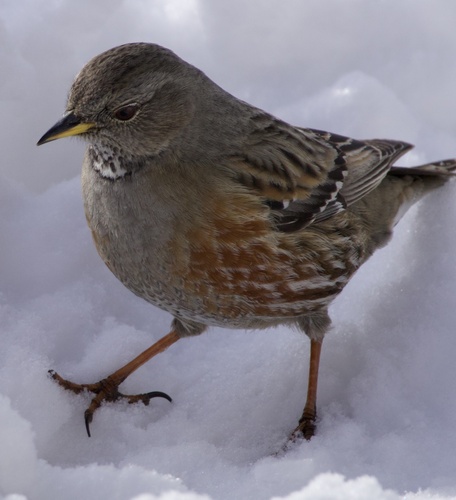
Alpine Accentor (Prunella collaris) Alpine Accentor
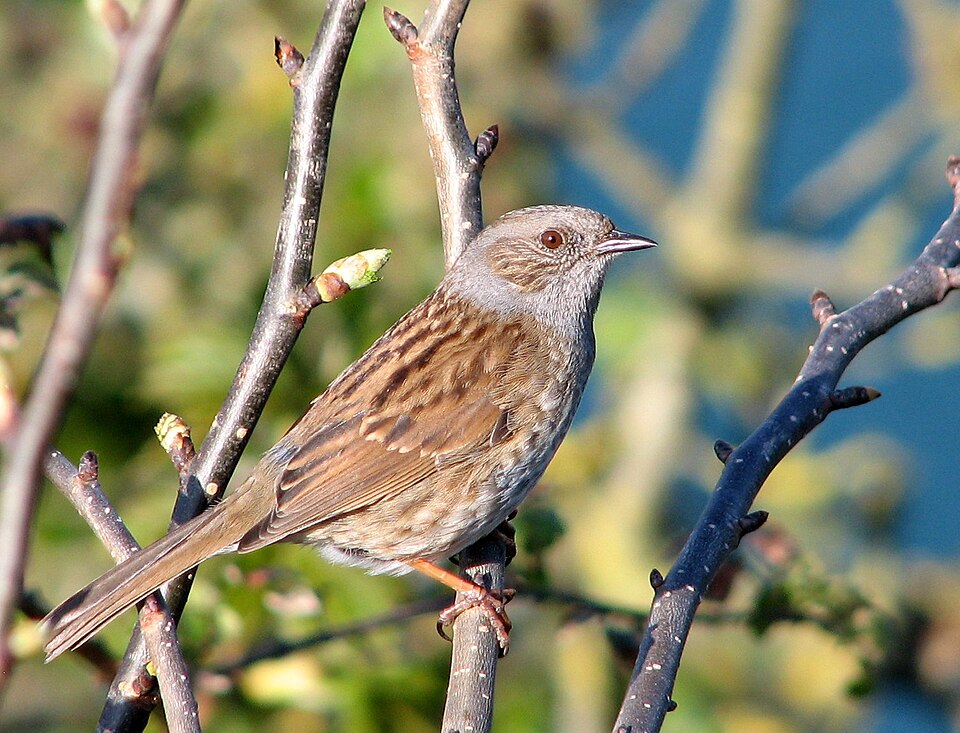
Dunnock (Prunella modularis) Dunnock

Media

Loading…

In short

The most reliable way to separate Alpine Accentor from Dunnock is by looking for the Alpine Accentor’s all-grey adult head and prominent reddish-brown spotting on the underparts, which are never shown by Dunnock. Juvenile and immature birds of both species are browner, but Alpine Accentor still tends to show a paler, less streaked face and some reddish tones below. Alpine Accentor is also distinctly larger and bulkier, with a slightly longer bill and a more robust, upright stance. Dunnock is smaller, slimmer, and overall plainer, with a dull grey head and brownish underparts lacking any reddish spotting. Both species have streaked brown backs, but their head and underpart patterns are key. Habitat can help: Alpine Accentor is a high-altitude specialist, while Dunnock is widespread in lowlands.

Identification tips

  1. Adult head color: Alpine Accentor adults have an all-grey head and throat, sharply contrasting with the streaked brown back. Dunnock adults have a dull grey head, but it is less clean and more blended into the brown back.
  2. Underpart spotting: Alpine Accentor shows reddish-brown spotting or streaking on the flanks and lower breast (adults), never shown by Dunnock, which is plain brownish below.
  3. Juvenile/immature plumage: Juvenile Alpine Accentors are browner on the head and underparts but lack the heavy streaking and loose, fluffy feathering of juvenile Dunnocks. Juvenile Dunnocks are more streaked and overall drabber.
  4. Size and structure: Alpine Accentor is larger and bulkier (15–17.5 cm) than Dunnock (13–14.5 cm), with a more robust, upright stance. Dunnock is slimmer and more delicate.
  5. Bill shape: Both have fine, pointed bills, but Alpine Accentor’s is slightly longer and more downcurved; this is subtle and best seen at close range.
  6. Back pattern: Both have brown, streaked backs reminiscent of a House Sparrow, but this is not diagnostic between the two.
  7. Behavior: Dunnock frequently flicks its wings, especially during disputes or courtship (all ages/seasons); Alpine Accentor does not.
  8. Habitat: Alpine Accentor is found in high-altitude, rocky, open mountain areas above 2,000 m; Dunnock is in lowland and foothill habitats, gardens, hedges, and woodlands.
  9. Sociability: Alpine Accentor may be seen in small groups, especially outside the breeding season; Dunnock is usually solitary or in pairs.
  10. Voice: Dunnock gives a sharp 'tseep' call and a rapid, tinkling warble; Alpine Accentor’s voice is not described here, so use caution with this mark.
  11. Sexes: Both species are similar in appearance between sexes; male Alpine Accentors may be slightly more contrasted, but this is subtle.
  12. Flight views: No distinctive upperwing or flight pattern differences are described for either species in the provided notes; focus on head and underpart pattern even in flight if possible.
  13. Context: If you encounter a streaked brown accentor in a high mountain environment, Alpine Accentor is far more likely; in lowland gardens or hedges, expect Dunnock.
  14. Pitfalls: Juvenile and immature birds of both species can be confusingly brown and streaked; look for the presence (Alpine Accentor) or absence (Dunnock) of reddish underpart spotting, and check head color and habitat.
  15. When in doubt: If the bird is large, upright, with a clean grey head and reddish flanks in a rocky alpine setting, it is Alpine Accentor. If it is smaller, drabber, with a dull grey head and plain brown underparts in a lowland setting, it is Dunnock.

Size

Alpine Accentor is noticeably larger, measuring 15–17.5 cm in length, compared to Dunnock’s 13–14.5 cm [wikipedia]. This size difference is often apparent in direct comparison or with experience. Alpine Accentor also appears bulkier and more robust, while Dunnock is slimmer and more delicate. Both have fine, pointed bills, but Alpine Accentor’s is slightly longer and more downcurved, fitting its insectivorous diet. In the field, Alpine Accentor may look closer to a small thrush or a large robin, whereas Dunnock is closer to a sparrow in size.

Plumage

Juvenile and immature Alpine Accentors have browner heads and underparts than adults, but still lack the heavy streaking and overall drabness of young Dunnocks. Juvenile Dunnocks are more obviously streaked overall, with a fluffy appearance and a brownish, streaked head. Adult Alpine Accentors are distinctive: they have an all-grey head and throat, contrasting with a streaked brown back and prominent reddish-brown spotting or streaking on the flanks and lower breast. Adult Dunnocks have a dull grey head and brown streaked back, but their underparts are plain brownish without any reddish spotting. Both species have fine, pointed bills and similar streaked brown backs, but the head and underpart differences are diagnostic. No distinctive age-specific upperwing or flight marks are described for either species in the sources.

Behaviour

Dunnocks are known for their frequent wing-flicking, especially during territorial disputes or courtship, which can be a useful behavioral clue. This behavior is so characteristic that it earned them the nickname 'shufflewing.' Alpine Accentors do not show this behavior. Alpine Accentors are often seen foraging on the ground in open, rocky areas or low vegetation, sometimes in small groups. Dunnocks are more secretive, often skulking in dense low vegetation and hedges, and are usually solitary or in pairs. Alpine Accentor tends to be more confiding and less shy than Dunnock.

Habitat

Habitat is a strong separator. Alpine Accentor is a specialist of high-altitude, bare mountain areas above 2,000 m, often with sparse low vegetation or rocky outcrops. It is mainly resident in these habitats, descending only slightly in winter. Dunnock is widespread in lowland and foothill habitats across temperate Europe and Asia, including gardens, hedgerows, woodlands, and parks. It is absent from the high mountain zones favored by Alpine Accentor. If you see a streaked brown accentor in an alpine or subalpine rocky area, Alpine Accentor is far more likely; in lowland scrub or gardens, Dunnock is the default.

Voice

Dunnock’s main call is a sharp, persistent 'tseep' and a short, weak trill, with a rapid, thin, tinkling warble as its song. Alpine Accentor’s vocalizations are not described in the provided notes, so voice is not a reliable separator based on these sources. In practice, Dunnock’s song is more commonly heard in lowland habitats, while Alpine Accentor is generally silent or gives thin, high calls in its mountain environment.

Submit a better description

Use the same sections as the comparison. Your text is published immediately.

The most reliable way to separate Alpine Accentor from Dunnock is by looking for the Alpine Accentor’s all-grey adult head and prominent reddish-brown spotting on the underparts, which are never shown by Dunnock. Juvenile and immature birds of both species are browner, but Alpine Accentor still tends to show a paler, less streaked face and some reddish tones below. Alpine Accentor is also distinctly larger and bulkier, with a slightly longer bill and a more robust, upright stance. Dunnock is smaller, slimmer, and overall plainer, with a dull grey head and brownish underparts lacking any reddish spotting. Both species have streaked brown backs, but their head and underpart patterns are key. Habitat can help: Alpine Accentor is a high-altitude specialist, while Dunnock is widespread in lowlands.

  1. Adult head color: Alpine Accentor adults have an all-grey head and throat, sharply contrasting with the streaked brown back. Dunnock adults have a dull grey head, but it is less clean and more blended into the brown back.
  2. Underpart spotting: Alpine Accentor shows reddish-brown spotting or streaking on the flanks and lower breast (adults), never shown by Dunnock, which is plain brownish below.
  3. Juvenile/immature plumage: Juvenile Alpine Accentors are browner on the head and underparts but lack the heavy streaking and loose, fluffy feathering of juvenile Dunnocks. Juvenile Dunnocks are more streaked and overall drabber.
  4. Size and structure: Alpine Accentor is larger and bulkier (15–17.5 cm) than Dunnock (13–14.5 cm), with a more robust, upright stance. Dunnock is slimmer and more delicate.
  5. Bill shape: Both have fine, pointed bills, but Alpine Accentor’s is slightly longer and more downcurved; this is subtle and best seen at close range.
  6. Back pattern: Both have brown, streaked backs reminiscent of a House Sparrow, but this is not diagnostic between the two.
  7. Behavior: Dunnock frequently flicks its wings, especially during disputes or courtship (all ages/seasons); Alpine Accentor does not.
  8. Habitat: Alpine Accentor is found in high-altitude, rocky, open mountain areas above 2,000 m; Dunnock is in lowland and foothill habitats, gardens, hedges, and woodlands.
  9. Sociability: Alpine Accentor may be seen in small groups, especially outside the breeding season; Dunnock is usually solitary or in pairs.
  10. Voice: Dunnock gives a sharp 'tseep' call and a rapid, tinkling warble; Alpine Accentor’s voice is not described here, so use caution with this mark.
  11. Sexes: Both species are similar in appearance between sexes; male Alpine Accentors may be slightly more contrasted, but this is subtle.
  12. Flight views: No distinctive upperwing or flight pattern differences are described for either species in the provided notes; focus on head and underpart pattern even in flight if possible.
  13. Context: If you encounter a streaked brown accentor in a high mountain environment, Alpine Accentor is far more likely; in lowland gardens or hedges, expect Dunnock.
  14. Pitfalls: Juvenile and immature birds of both species can be confusingly brown and streaked; look for the presence (Alpine Accentor) or absence (Dunnock) of reddish underpart spotting, and check head color and habitat.
  15. When in doubt: If the bird is large, upright, with a clean grey head and reddish flanks in a rocky alpine setting, it is Alpine Accentor. If it is smaller, drabber, with a dull grey head and plain brown underparts in a lowland setting, it is Dunnock.

Alpine Accentor is noticeably larger, measuring 15–17.5 cm in length, compared to Dunnock’s 13–14.5 cm [wikipedia]. This size difference is often apparent in direct comparison or with experience. Alpine Accentor also appears bulkier and more robust, while Dunnock is slimmer and more delicate. Both have fine, pointed bills, but Alpine Accentor’s is slightly longer and more downcurved, fitting its insectivorous diet. In the field, Alpine Accentor may look closer to a small thrush or a large robin, whereas Dunnock is closer to a sparrow in size.

Juvenile and immature Alpine Accentors have browner heads and underparts than adults, but still lack the heavy streaking and overall drabness of young Dunnocks. Juvenile Dunnocks are more obviously streaked overall, with a fluffy appearance and a brownish, streaked head. Adult Alpine Accentors are distinctive: they have an all-grey head and throat, contrasting with a streaked brown back and prominent reddish-brown spotting or streaking on the flanks and lower breast. Adult Dunnocks have a dull grey head and brown streaked back, but their underparts are plain brownish without any reddish spotting. Both species have fine, pointed bills and similar streaked brown backs, but the head and underpart differences are diagnostic. No distinctive age-specific upperwing or flight marks are described for either species in the sources.

Dunnocks are known for their frequent wing-flicking, especially during territorial disputes or courtship, which can be a useful behavioral clue. This behavior is so characteristic that it earned them the nickname 'shufflewing.' Alpine Accentors do not show this behavior. Alpine Accentors are often seen foraging on the ground in open, rocky areas or low vegetation, sometimes in small groups. Dunnocks are more secretive, often skulking in dense low vegetation and hedges, and are usually solitary or in pairs. Alpine Accentor tends to be more confiding and less shy than Dunnock.

Habitat is a strong separator. Alpine Accentor is a specialist of high-altitude, bare mountain areas above 2,000 m, often with sparse low vegetation or rocky outcrops. It is mainly resident in these habitats, descending only slightly in winter. Dunnock is widespread in lowland and foothill habitats across temperate Europe and Asia, including gardens, hedgerows, woodlands, and parks. It is absent from the high mountain zones favored by Alpine Accentor. If you see a streaked brown accentor in an alpine or subalpine rocky area, Alpine Accentor is far more likely; in lowland scrub or gardens, Dunnock is the default.

Dunnock’s main call is a sharp, persistent 'tseep' and a short, weak trill, with a rapid, thin, tinkling warble as its song. Alpine Accentor’s vocalizations are not described in the provided notes, so voice is not a reliable separator based on these sources. In practice, Dunnock’s song is more commonly heard in lowland habitats, while Alpine Accentor is generally silent or gives thin, high calls in its mountain environment.

Discard your changes?

You have unsaved edits. If you leave now, those changes will be lost.

Alpine Accentor · Dunnock · My Tricky Birds