
Motmot

Band-winged Nightjar vs Common Pauraque

Systellura longirostris versus Nyctidromus albicollis

Play a quiz with Band-winged Nightjar and Common Pauraque
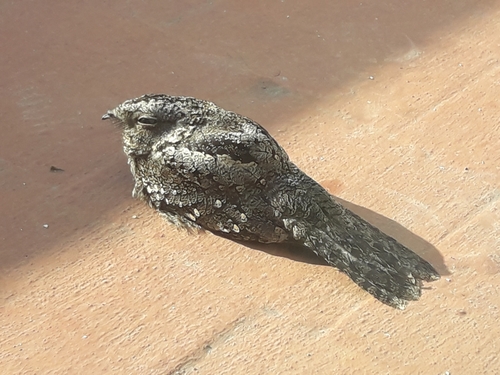
Band-winged Nightjar (Systellura longirostris) Band-winged Nightjar
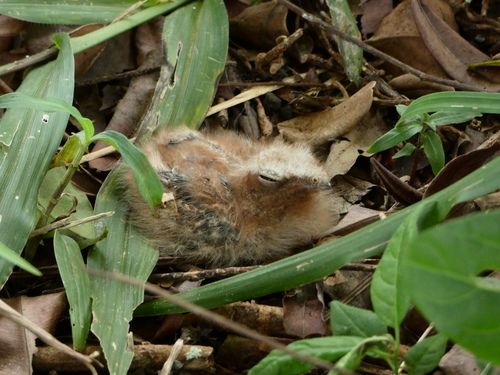
Common Pauraque (Nyctidromus albicollis) Common Pauraque

Media

Loading…

In short

The most reliable field mark between Band-winged Nightjar and Common Pauraque is the wing and tail pattern in flight, especially in adult males: Band-winged Nightjar males show a bold white band across the wing and white marks on the outer tail feathers, while male Pauraques have a white wing band near the tips and broad white outer tail feathers. Juveniles and females of both species are trickier, but the Band-winged Nightjar (all ages) always shows a pale band in the wing, while the Pauraque's wing band is less extensive and its tail pattern is more pronounced in males. Structurally, Pauraque is longer-tailed and more terrestrial, often seen running rather than flying. Both species are nocturnal and cryptic, but habitat and behavior can help: Pauraque prefers denser cover and is more likely to flush from roads or tracks, while Band-winged Nightjar is more aerial and often perches on open ground or rocks. Size is similar, but Pauraque is slightly heavier on average.

Identification tips

  1. Male wing and tail in flight: Adult male Band-winged Nightjar shows a bold white band across the wing (on first four primaries) and white marks on the first and fourth tail feathers; male Pauraque has a white wing band near the tips and broad white outer tail feathers. These are the best marks in flight for adult males.
  2. Female and immature wing pattern: Female Band-winged Nightjar has a buff (not white) wing band and lacks white in the tail; female Pauraque's wing band is narrower and the tail has only limited white. Juvenile Band-winged Nightjars show a narrow brownish-orange band on the primaries, while young Pauraques are less well described but lack the bold wing band.
  3. Facial pattern: Pauraque has a buff eye-ring and a distinct facial stripe contrasting with reddish sides of the face; Band-winged Nightjar's face is more uniform, with less contrast and a yellowish-brown to brownish-orange collar on the neck.
  4. Throat color: Male Band-winged Nightjar has a prominent white throat band; female shows yellowish-brown. Pauraque's throat is less distinctly banded, and the facial stripe is more prominent.
  5. Tail shape and pattern: Pauraque's tail is longer and more rounded, with broad white on the outer feathers in males. Band-winged Nightjar's tail is shorter, with white marks only on certain rectrices in males and none in females.
  6. Wing shape and structure: Pauraque has broader, more rounded wings and a longer tail, giving a different jizz in flight. Band-winged Nightjar is slimmer and more agile.
  7. Legs and terrestrial behavior: Pauraque has longer legs and bare tarsi, often running on the ground when disturbed. Band-winged Nightjar flushes into flight rather than running.
  8. Perched posture: Pauraque often sits lengthwise on roads or tracks, sometimes in denser cover. Band-winged Nightjar is more likely to perch on open ground, rocks, or bare soil.
  9. Plumage color morphs: Pauraque can be greyish-brown or rufous; Band-winged Nightjar is more consistently greyish-brown to brownish-orange, with less variation.
  10. Habitat: Pauraque prefers mixed habitats with dense cover and open foraging areas, often near water or forest edge. Band-winged Nightjar is more typical of open, rocky, or upland habitats.
  11. Voice: If you hear a whistled 'weeeow wheeooo' or 'puk puk', it's Pauraque. Band-winged Nightjar's vocalizations are not described in the provided notes.
  12. Size and bulk: Pauraque is slightly heavier and bulkier, but size overlap is considerable; use only as a supporting mark.
  13. Sex differences: Both species show sexual dimorphism in wing and tail pattern, but the extent and placement of white is more pronounced in male Pauraque (tail) and male Band-winged Nightjar (wing and tail). Female marks are subtler and more easily confused.
  14. Juvenile confusion: Young Band-winged Nightjars have a narrow orange band on the primaries and less speckling; juvenile Pauraques are not as well described but lack the bold wing band.
  15. Flush behavior: If the bird runs before flying, suspect Pauraque; if it flushes directly into flight, Band-winged Nightjar is more likely.

Size

Both species are medium-sized nightjars with overlapping length (Band-winged Nightjar: 20–27 cm; Common Pauraque: 22–28 cm) [wikipedia]. However, Pauraque is slightly heavier (mean adult mass 53 g [wikidata]) and appears bulkier, with a longer tail and broader wings. Band-winged Nightjar is often a bit slimmer and less robust in build. These differences are subtle and not always reliable in the field, especially at a distance or in poor light.

Plumage

Juvenile and immature Band-winged Nightjars show a narrow brownish-orange band on the primaries, less speckling overall, and a pale band in the wing visible in flight. Adult males have a bold white band across the wing (on the first four primaries) and white marks on the first and fourth rectrices (tail feathers), while females have a buff (not white) wing band and lack white in the tail. Pauraque males also have a white wing band, but it is near the wing tips and the outer tail feathers are mostly white, creating a striking tail contrast in flight. Female Pauraques show a narrower wing band and less white in the tail. Both species are mottled brown above, but Pauraque is more variable (greyish-brown or rufous morphs) and has a buff eye-ring and facial stripe that contrast with reddish sides of the face. Band-winged Nightjar has a more uniform greyish-brown or brownish-orange upper side, with a yellowish-brown collar on the neck and less facial contrast. In perched birds, the facial pattern and throat color are more useful: Pauraque shows a bold facial stripe and eye-ring, while Band-winged Nightjar has a less distinct face and a prominent white (male) or yellowish-brown (female) throat band.

Behaviour

Pauraque is notably more terrestrial, often running on the ground when disturbed and frequently resting on roads, tracks, or open ground. It has long legs (for a nightjar) and bare tarsi, which aid its terrestrial habits. Band-winged Nightjar is more aerial, typically flushing into flight rather than running, and often perches on rocks or bare ground. Both species are nocturnal and cryptic by day, but Pauraque is more likely to be found in dense cover or mixed habitats, while Band-winged Nightjar is more open-country oriented. In flight, Pauraque appears broader-winged and longer-tailed, while Band-winged Nightjar is slimmer and more agile.

Habitat

Band-winged Nightjar is widespread in South America, especially in the Andes, mountain ranges, and open habitats such as rocky slopes, grasslands, and sometimes urban areas. Pauraque is found from southern Texas through much of Central and South America, preferring subtropical and tropical regions with a mix of dense cover and open spaces for foraging. Pauraque adapts well to secondary growth, forest edges, and even lightly disturbed areas, but avoids heavily urbanized or clear-cut zones. Band-winged Nightjar is more likely in open or rocky uplands, while Pauraque favors lowland forests, scrub, and areas near water.

Voice

Pauraque has a variable song, including a whistled 'weeeow wheeooo' ("who-r-you"), soft 'puk puk', and a whip-like call during courtship flights. The female gives rapid whip sounds. No specific vocalizations are described for Band-winged Nightjar in the provided notes, so voice is more useful for confirming Pauraque than for separating these two if only one is calling.

Submit a better description

Use the same sections as the comparison. Your text is published immediately.

The most reliable field mark between Band-winged Nightjar and Common Pauraque is the wing and tail pattern in flight, especially in adult males: Band-winged Nightjar males show a bold white band across the wing and white marks on the outer tail feathers, while male Pauraques have a white wing band near the tips and broad white outer tail feathers. Juveniles and females of both species are trickier, but the Band-winged Nightjar (all ages) always shows a pale band in the wing, while the Pauraque's wing band is less extensive and its tail pattern is more pronounced in males. Structurally, Pauraque is longer-tailed and more terrestrial, often seen running rather than flying. Both species are nocturnal and cryptic, but habitat and behavior can help: Pauraque prefers denser cover and is more likely to flush from roads or tracks, while Band-winged Nightjar is more aerial and often perches on open ground or rocks. Size is similar, but Pauraque is slightly heavier on average.

  1. Male wing and tail in flight: Adult male Band-winged Nightjar shows a bold white band across the wing (on first four primaries) and white marks on the first and fourth tail feathers; male Pauraque has a white wing band near the tips and broad white outer tail feathers. These are the best marks in flight for adult males.
  2. Female and immature wing pattern: Female Band-winged Nightjar has a buff (not white) wing band and lacks white in the tail; female Pauraque's wing band is narrower and the tail has only limited white. Juvenile Band-winged Nightjars show a narrow brownish-orange band on the primaries, while young Pauraques are less well described but lack the bold wing band.
  3. Facial pattern: Pauraque has a buff eye-ring and a distinct facial stripe contrasting with reddish sides of the face; Band-winged Nightjar's face is more uniform, with less contrast and a yellowish-brown to brownish-orange collar on the neck.
  4. Throat color: Male Band-winged Nightjar has a prominent white throat band; female shows yellowish-brown. Pauraque's throat is less distinctly banded, and the facial stripe is more prominent.
  5. Tail shape and pattern: Pauraque's tail is longer and more rounded, with broad white on the outer feathers in males. Band-winged Nightjar's tail is shorter, with white marks only on certain rectrices in males and none in females.
  6. Wing shape and structure: Pauraque has broader, more rounded wings and a longer tail, giving a different jizz in flight. Band-winged Nightjar is slimmer and more agile.
  7. Legs and terrestrial behavior: Pauraque has longer legs and bare tarsi, often running on the ground when disturbed. Band-winged Nightjar flushes into flight rather than running.
  8. Perched posture: Pauraque often sits lengthwise on roads or tracks, sometimes in denser cover. Band-winged Nightjar is more likely to perch on open ground, rocks, or bare soil.
  9. Plumage color morphs: Pauraque can be greyish-brown or rufous; Band-winged Nightjar is more consistently greyish-brown to brownish-orange, with less variation.
  10. Habitat: Pauraque prefers mixed habitats with dense cover and open foraging areas, often near water or forest edge. Band-winged Nightjar is more typical of open, rocky, or upland habitats.
  11. Voice: If you hear a whistled 'weeeow wheeooo' or 'puk puk', it's Pauraque. Band-winged Nightjar's vocalizations are not described in the provided notes.
  12. Size and bulk: Pauraque is slightly heavier and bulkier, but size overlap is considerable; use only as a supporting mark.
  13. Sex differences: Both species show sexual dimorphism in wing and tail pattern, but the extent and placement of white is more pronounced in male Pauraque (tail) and male Band-winged Nightjar (wing and tail). Female marks are subtler and more easily confused.
  14. Juvenile confusion: Young Band-winged Nightjars have a narrow orange band on the primaries and less speckling; juvenile Pauraques are not as well described but lack the bold wing band.
  15. Flush behavior: If the bird runs before flying, suspect Pauraque; if it flushes directly into flight, Band-winged Nightjar is more likely.

Both species are medium-sized nightjars with overlapping length (Band-winged Nightjar: 20–27 cm; Common Pauraque: 22–28 cm) [wikipedia]. However, Pauraque is slightly heavier (mean adult mass 53 g [wikidata]) and appears bulkier, with a longer tail and broader wings. Band-winged Nightjar is often a bit slimmer and less robust in build. These differences are subtle and not always reliable in the field, especially at a distance or in poor light.

Juvenile and immature Band-winged Nightjars show a narrow brownish-orange band on the primaries, less speckling overall, and a pale band in the wing visible in flight. Adult males have a bold white band across the wing (on the first four primaries) and white marks on the first and fourth rectrices (tail feathers), while females have a buff (not white) wing band and lack white in the tail. Pauraque males also have a white wing band, but it is near the wing tips and the outer tail feathers are mostly white, creating a striking tail contrast in flight. Female Pauraques show a narrower wing band and less white in the tail. Both species are mottled brown above, but Pauraque is more variable (greyish-brown or rufous morphs) and has a buff eye-ring and facial stripe that contrast with reddish sides of the face. Band-winged Nightjar has a more uniform greyish-brown or brownish-orange upper side, with a yellowish-brown collar on the neck and less facial contrast. In perched birds, the facial pattern and throat color are more useful: Pauraque shows a bold facial stripe and eye-ring, while Band-winged Nightjar has a less distinct face and a prominent white (male) or yellowish-brown (female) throat band.

Pauraque is notably more terrestrial, often running on the ground when disturbed and frequently resting on roads, tracks, or open ground. It has long legs (for a nightjar) and bare tarsi, which aid its terrestrial habits. Band-winged Nightjar is more aerial, typically flushing into flight rather than running, and often perches on rocks or bare ground. Both species are nocturnal and cryptic by day, but Pauraque is more likely to be found in dense cover or mixed habitats, while Band-winged Nightjar is more open-country oriented. In flight, Pauraque appears broader-winged and longer-tailed, while Band-winged Nightjar is slimmer and more agile.

Band-winged Nightjar is widespread in South America, especially in the Andes, mountain ranges, and open habitats such as rocky slopes, grasslands, and sometimes urban areas. Pauraque is found from southern Texas through much of Central and South America, preferring subtropical and tropical regions with a mix of dense cover and open spaces for foraging. Pauraque adapts well to secondary growth, forest edges, and even lightly disturbed areas, but avoids heavily urbanized or clear-cut zones. Band-winged Nightjar is more likely in open or rocky uplands, while Pauraque favors lowland forests, scrub, and areas near water.

Pauraque has a variable song, including a whistled 'weeeow wheeooo' ("who-r-you"), soft 'puk puk', and a whip-like call during courtship flights. The female gives rapid whip sounds. No specific vocalizations are described for Band-winged Nightjar in the provided notes, so voice is more useful for confirming Pauraque than for separating these two if only one is calling.

Discard your changes?

You have unsaved edits. If you leave now, those changes will be lost.

Band-winged Nightjar · Common Pauraque · My Tricky Birds