
Motmot

Black Vulture vs Griffon Vulture

Aegypius monachus versus Gyps fulvus

Play a quiz with Black Vulture and Griffon Vulture
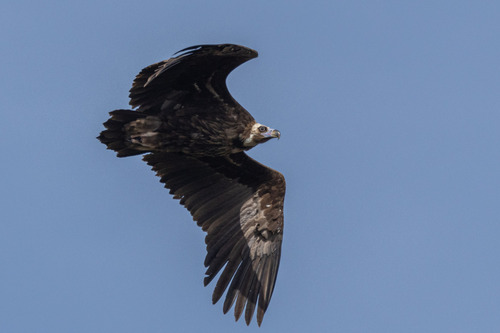
Black Vulture (Aegypius monachus) Black Vulture
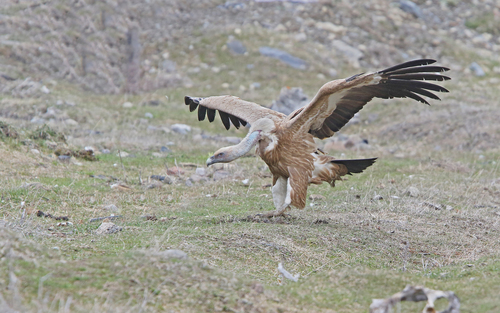
Griffon Vulture (Gyps fulvus) Griffon Vulture

Media

Loading…

In short

The most reliable field mark between Black (Cinereous) and Griffon Vultures is overall color: adult Black Vultures are uniformly very dark brown to blackish, while adult Griffon Vultures show a contrasting pale head, white neck ruff, buff body, and dark flight feathers. In flight, Black Vultures appear bulkier and more uniformly dark, while Griffon Vultures show strong contrast between pale coverts and dark flight feathers. Juvenile and immature birds can be trickier, but the Black Vulture remains darker overall, with a paler head only in adults. Structure also helps: Black Vultures are heavier, with a massive bill and broader, straighter wings. Both species are large soaring scavengers, but the Black Vulture is the largest Old World vulture, noticeably bulkier than the Griffon.

Identification tips

  1. Overall color in flight (all ages): Black Vulture is uniformly dark brown to blackish, with little contrast between body, coverts, and flight feathers. Griffon Vulture shows a pale head, white neck ruff, buff body and wing coverts, and dark flight feathers, creating a strong two-tone effect.
  2. Head and neck (adult): Black Vulture has a pale bluish-grey head covered in fine blackish down (not bare), with a purplish cere and brown eyes. Griffon Vulture has a white, bare head and a conspicuous white neck ruff.
  3. Juvenile/immature plumage: Young Black Vultures are sepia-brown above and paler below, but still much darker and more uniform than Griffon Vultures. Juvenile Griffon Vultures are pale-headed and show strong contrast between pale coverts and dark flight feathers.
  4. Bill size and color: Black Vulture has a massive, blue-grey bill (culmen 8–9 cm), one of the largest among raptors. Griffon Vulture has a yellow bill, less massive in proportion.
  5. Wing shape and flight style: Black Vulture has very broad, straight-edged wings ("barn door"), held flat or slightly arched, and a slow, heavy flight. Griffon Vulture has broad wings but with more visible contrast and a slightly more agile flight.
  6. Tail shape: Black Vulture has a relatively short, broad tail. Griffon Vulture has a short tail, but the difference is subtle and less useful than color and wing shape.
  7. Leg color: Black Vulture has pale blue-grey legs; Griffon Vulture's leg color is not as distinctive in the field.
  8. Perched appearance: Black Vulture appears bulkier, darker, and more hunched, with a massive bill and a pale, downy head. Griffon Vulture appears paler, with a white neck ruff and a more slender bill.
  9. Relative size: Black Vulture is noticeably larger and heavier than Griffon Vulture, but size can be hard to judge unless both are together.
  10. Flight feather contrast: Black Vulture's flight feathers are black, blending with the rest of the wing. Griffon Vulture's dark flight feathers contrast with pale coverts and body.
  11. Neck ruff: Only Griffon Vulture has a conspicuous white neck ruff; Black Vulture lacks this feature at all ages.
  12. Eye color: Black Vulture has brown eyes; Griffon Vulture's eye color is less distinctive in the field.
  13. Habitat overlap: Both species can occur in similar open or upland habitats, so do not rely on location alone.
  14. Behavior at carcasses: Black Vulture may dominate due to its size, but both species are social scavengers.
  15. Beware of lighting: In poor light, Griffon Vulture can appear darker, but the pale head and neck ruff usually remain visible. Always look for contrast, not just overall darkness.

Size

Black Vulture (Aegypius monachus) is significantly larger and heavier than Griffon Vulture (Gyps fulvus). Black Vulture averages 9.4–9.6 kg (20.8–21.1 lb) in wild adults, with a length of 98–120 cm (39–47 in) and a wingspan of 2.5–3.1 m (8 ft 2 in – 10 ft 2 in). Griffon Vulture averages about 8.3 kg (18.3 lb) per AVONET/Wikidata, with a length of 93–122 cm (37–48 in) and a wingspan of 2.3–2.8 m (7.5–9.2 ft). The Black Vulture is heavier and has a more massive bill, broader wings, and a generally bulkier appearance in flight and perched.

Plumage

Juvenile and immature Black Vultures are sepia-brown above with a paler underside than adults, but still much darker overall than Griffon Vultures of any age. Adult Black Vultures are dark blackish-brown all over, with a pale bluish-grey head covered in fine blackish down, and dark brown eyes. Their flight feathers are black, and the wings are broad and barn door-like. Immature Black Vultures have grey down on the head and a pale mauve cere. In contrast, adult Griffon Vultures have a white head, white neck ruff, yellow bill, buff body and wing coverts, and dark flight feathers, creating a strong contrast in flight. Juvenile Griffon Vultures are also pale-headed and show contrast between paler coverts and dark flight feathers. The Black Vulture never shows the white neck ruff or the pale head/neck contrast of the Griffon. In all ages, the Black Vulture appears much darker and more uniform, especially in flight.

Behaviour

Both species are soaring scavengers, often seen circling high on thermals. Black Vultures have a slow, heavy, and buoyant flight with deep, heavy flaps when necessary, and their wings are held straight or slightly arched. Griffon Vultures also soar but may appear slightly more agile and less ponderous, with less heavy wingbeats. Both species are social at carcasses, but Black Vultures may dominate due to their size.

Habitat

Both species are found in open country, mountains, and steppe with access to carrion. Black Vultures are distributed through temperate Eurasia, often in more wooded or remote upland areas, while Griffon Vultures are widespread in southern Europe and parts of Asia, often in open rocky or mountainous terrain. There is considerable overlap in range and habitat, so habitat alone is rarely diagnostic.

Submit a better description

Use the same sections as the comparison. Your text is published immediately.

The most reliable field mark between Black (Cinereous) and Griffon Vultures is overall color: adult Black Vultures are uniformly very dark brown to blackish, while adult Griffon Vultures show a contrasting pale head, white neck ruff, buff body, and dark flight feathers. In flight, Black Vultures appear bulkier and more uniformly dark, while Griffon Vultures show strong contrast between pale coverts and dark flight feathers. Juvenile and immature birds can be trickier, but the Black Vulture remains darker overall, with a paler head only in adults. Structure also helps: Black Vultures are heavier, with a massive bill and broader, straighter wings. Both species are large soaring scavengers, but the Black Vulture is the largest Old World vulture, noticeably bulkier than the Griffon.

  1. Overall color in flight (all ages): Black Vulture is uniformly dark brown to blackish, with little contrast between body, coverts, and flight feathers. Griffon Vulture shows a pale head, white neck ruff, buff body and wing coverts, and dark flight feathers, creating a strong two-tone effect.
  2. Head and neck (adult): Black Vulture has a pale bluish-grey head covered in fine blackish down (not bare), with a purplish cere and brown eyes. Griffon Vulture has a white, bare head and a conspicuous white neck ruff.
  3. Juvenile/immature plumage: Young Black Vultures are sepia-brown above and paler below, but still much darker and more uniform than Griffon Vultures. Juvenile Griffon Vultures are pale-headed and show strong contrast between pale coverts and dark flight feathers.
  4. Bill size and color: Black Vulture has a massive, blue-grey bill (culmen 8–9 cm), one of the largest among raptors. Griffon Vulture has a yellow bill, less massive in proportion.
  5. Wing shape and flight style: Black Vulture has very broad, straight-edged wings ("barn door"), held flat or slightly arched, and a slow, heavy flight. Griffon Vulture has broad wings but with more visible contrast and a slightly more agile flight.
  6. Tail shape: Black Vulture has a relatively short, broad tail. Griffon Vulture has a short tail, but the difference is subtle and less useful than color and wing shape.
  7. Leg color: Black Vulture has pale blue-grey legs; Griffon Vulture's leg color is not as distinctive in the field.
  8. Perched appearance: Black Vulture appears bulkier, darker, and more hunched, with a massive bill and a pale, downy head. Griffon Vulture appears paler, with a white neck ruff and a more slender bill.
  9. Relative size: Black Vulture is noticeably larger and heavier than Griffon Vulture, but size can be hard to judge unless both are together.
  10. Flight feather contrast: Black Vulture's flight feathers are black, blending with the rest of the wing. Griffon Vulture's dark flight feathers contrast with pale coverts and body.
  11. Neck ruff: Only Griffon Vulture has a conspicuous white neck ruff; Black Vulture lacks this feature at all ages.
  12. Eye color: Black Vulture has brown eyes; Griffon Vulture's eye color is less distinctive in the field.
  13. Habitat overlap: Both species can occur in similar open or upland habitats, so do not rely on location alone.
  14. Behavior at carcasses: Black Vulture may dominate due to its size, but both species are social scavengers.
  15. Beware of lighting: In poor light, Griffon Vulture can appear darker, but the pale head and neck ruff usually remain visible. Always look for contrast, not just overall darkness.

Black Vulture (Aegypius monachus) is significantly larger and heavier than Griffon Vulture (Gyps fulvus). Black Vulture averages 9.4–9.6 kg (20.8–21.1 lb) in wild adults, with a length of 98–120 cm (39–47 in) and a wingspan of 2.5–3.1 m (8 ft 2 in – 10 ft 2 in). Griffon Vulture averages about 8.3 kg (18.3 lb) per AVONET/Wikidata, with a length of 93–122 cm (37–48 in) and a wingspan of 2.3–2.8 m (7.5–9.2 ft). The Black Vulture is heavier and has a more massive bill, broader wings, and a generally bulkier appearance in flight and perched.

Juvenile and immature Black Vultures are sepia-brown above with a paler underside than adults, but still much darker overall than Griffon Vultures of any age. Adult Black Vultures are dark blackish-brown all over, with a pale bluish-grey head covered in fine blackish down, and dark brown eyes. Their flight feathers are black, and the wings are broad and barn door-like. Immature Black Vultures have grey down on the head and a pale mauve cere. In contrast, adult Griffon Vultures have a white head, white neck ruff, yellow bill, buff body and wing coverts, and dark flight feathers, creating a strong contrast in flight. Juvenile Griffon Vultures are also pale-headed and show contrast between paler coverts and dark flight feathers. The Black Vulture never shows the white neck ruff or the pale head/neck contrast of the Griffon. In all ages, the Black Vulture appears much darker and more uniform, especially in flight.

Both species are soaring scavengers, often seen circling high on thermals. Black Vultures have a slow, heavy, and buoyant flight with deep, heavy flaps when necessary, and their wings are held straight or slightly arched. Griffon Vultures also soar but may appear slightly more agile and less ponderous, with less heavy wingbeats. Both species are social at carcasses, but Black Vultures may dominate due to their size.

Both species are found in open country, mountains, and steppe with access to carrion. Black Vultures are distributed through temperate Eurasia, often in more wooded or remote upland areas, while Griffon Vultures are widespread in southern Europe and parts of Asia, often in open rocky or mountainous terrain. There is considerable overlap in range and habitat, so habitat alone is rarely diagnostic.

Discard your changes?

You have unsaved edits. If you leave now, those changes will be lost.

Black Vulture · Griffon Vulture · My Tricky Birds